🍓 Yam: Season, Storage, Nutrition, and Cooking Guide
Yams are a staple food for many cultures, celebrated for their versatility and impressive nutritional profile. From their earthy flavor to their robust nutrient content, yams are increasingly gaining popularity worldwide. In this comprehensive guide, we delve into everything you need to know about yams — their characteristics, benefits, varieties, and how to make the most of this root vegetable in your kitchen.
✨ Characteristics
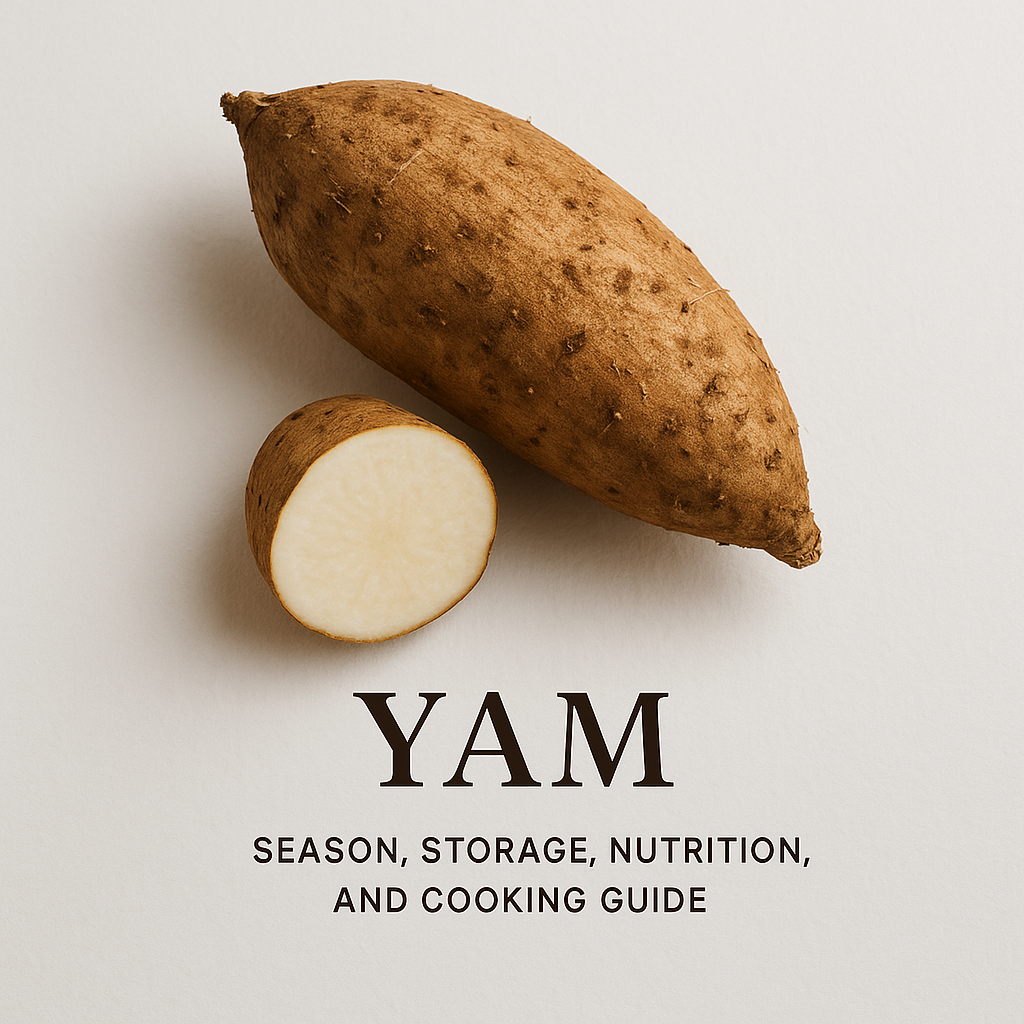
Yams are starchy tubers, native to Africa and Asia but now enjoyed globally. They belong to the Dioscorea genus and are known for their rough, bark-like skin, which encases a range of flesh colors from white to deep purple. They differ from sweet potatoes, both in texture and flavor, offering a drier, earthier taste compared to the sweet, moist characteristics of sweet potatoes.
The flesh of yams varies greatly, influencing how they can be used in cooking. Some varieties are firm and dry, making them ideal for frying and grilling, while others are softer, perfect for mashing or puréeing. Their ability to absorb spices and flavors makes them a popular choice for savory dishes worldwide.
💪 Benefits
Yams are not only delicious but packed with a host of nutrients that contribute to their health benefits. They are a good source of dietary fiber, providing beneficial effects for digestion and helping to maintain a healthy weight. Furthermore, they are rich in vitamins and minerals, including vitamin C, vitamin B6, potassium, and manganese, all vital for various bodily functions.
The antioxidants present in yams may help support overall health by combating oxidative stress within the body. Additionally, their high fiber content is associated with heart health due to its ability to lower cholesterol levels. While yams are enveloped in many traditional beliefs around health, it is important to enjoy them as part of a balanced diet.
🌍 Origin
Yams originated from Africa, where they have been cultivated and consumed for over 11,000 years. They played a significant role in the establishment of agriculture in West Africa and have since been spread around the world due to their ease of cultivation and storage. Over the millennia, they have become integral to numerous culinary traditions, particularly in African and Asian cuisines.
Today, yams are grown in over 60 countries, with Nigeria, Ghana, and Côte d'Ivoire being the top producers worldwide. They are celebrated for their cultural and economic significance and remain a million-dollar industry in many regions.
📅 Harvest Season
The harvest season for yams is primarily dependent on the region in which they are grown. In the tropics, yams are usually planted at the beginning of the rainy season and harvested during the drier months. Depending on the variety and climate, this typically occurs between August and November.
Freshly harvested yams are often celebrated with festivals in their native regions, highlighting their importance in local culture and cuisine. These celebrations usually not only mark the beginning of the harvest but also thank the earth for the produce.
🧺 Varieties
There are over 600 varieties of yams, each with different attributes, flavors, and culinary uses. Some of the most popular varieties include:
- White Yam (Dioscorea rotundata): Known as the "true yam," it is the most widely cultivated and consumed variety. It is often used for making yam flour and fufu.
- Yellow Yam (Dioscorea cayenensis): Typically has a smoother, creamier texture and is preferred in certain culinary applications like yam porridge.
- Water Yam (Dioscorea alata): Recognized for its light, easily digestible flesh, making it a popular choice in soups and gravies.
- Chinese Yam (Dioscorea polystachya): Often used in Traditional Chinese Medicine, it is valued for its various health-promoting properties.
🛒 How to Choose (Checklist)
Selecting the right yam from your local market or supermarket is crucial for getting the best flavor and nutritional benefits. Here’s a checklist to ensure you pick the freshest yams:
- Choose firm yams over soft or mushy ones — a firm texture indicates freshness.
- Inspect the skin for any cuts, blemishes, or signs of mold.
- Look for yams with a dry and rough outer skin; glossy or slimy skins may suggest poor structural quality.
- Heavier yams often have more moisture, offering a better taste and texture for cooking.
- Avoid yams with a strong smell, which could indicate spoilage or improper storage. Natural yams should have a mild aroma.
🍽 Cooking & Eating Methods
The versatility of yams makes them a favorite ingredient in kitchens around the globe. They can be prepared in numerous ways to suit different tastes and dietary needs. Here are some popular cooking and eating methods for yams:
- Boiling: A simple method that brings out the natural sweetness of yams. Boiled yams can be served with various sauces or mashed.
- Frying: Fried yams, often seen in street food, are crispy on the outside and soft on the inside. They can be seasoned with spices for an extra kick.
- Grilling: Grilled yams make a wonderful accompaniment to barbecued meats. Their natural sugars caramelize, enhancing their flavor profile.
- Steaming: Steaming retains the most nutrients, making it an excellent method for health-conscious individuals.
- Roasting: This method brings out a deep, earthy flavor in yams, preferable for hearty dishes during cooler months.
❄ Storage Tips
Proper storage is key to extending the shelf-life of yams and maintaining their nutritional value. Here are a few tips to keep your yams fresh:
- Store yams in a cool, dark place with good ventilation, ideally in a pantry or cellar.
- Avoid exposure to direct sunlight or moisture, as these conditions can lead to sprouting or spoilage.
- If cut, store unused portions wrapped in a damp paper towel inside the fridge for up to a week.
- Do not refrigerate whole yams, as this can change their texture and alter their flavor.
- For longer storage, consider freezing cooked yams that have been thoroughly cooled.
❓ FAQ (3 questions)
Q: Are yams and sweet potatoes the same thing?
A: Although often confused, yams and sweet potatoes are different species. Yams are typically starchier and drier with a rough, woody exterior, while sweet potatoes have a sweeter taste and smoother skin.
Q: Can yams be eaten raw?
A: It is not advisable to eat yams raw, as they may contain naturally occurring compounds that can be toxic when uncooked. Cooking neutralizes these compounds and enhances their flavor and digestibility.
Q: Are there different colors of yam flesh?
A: Yes, yams can range in color from white to yellow to purple, depending on the variety. Each offers unique flavors and is used in various culinary traditions worldwide.