🍓 Watercress: Season, Storage, Nutrition, and Cooking Guide
Watercress, often known for its small, round leaves and pungent flavor, is a powerhouse of nutrition and culinary delight. From its seasonal availability to proper storage techniques and creative cooking ideas, this guide aims to deliver a comprehensive look at everything watercress has to offer.
✨ Characteristics
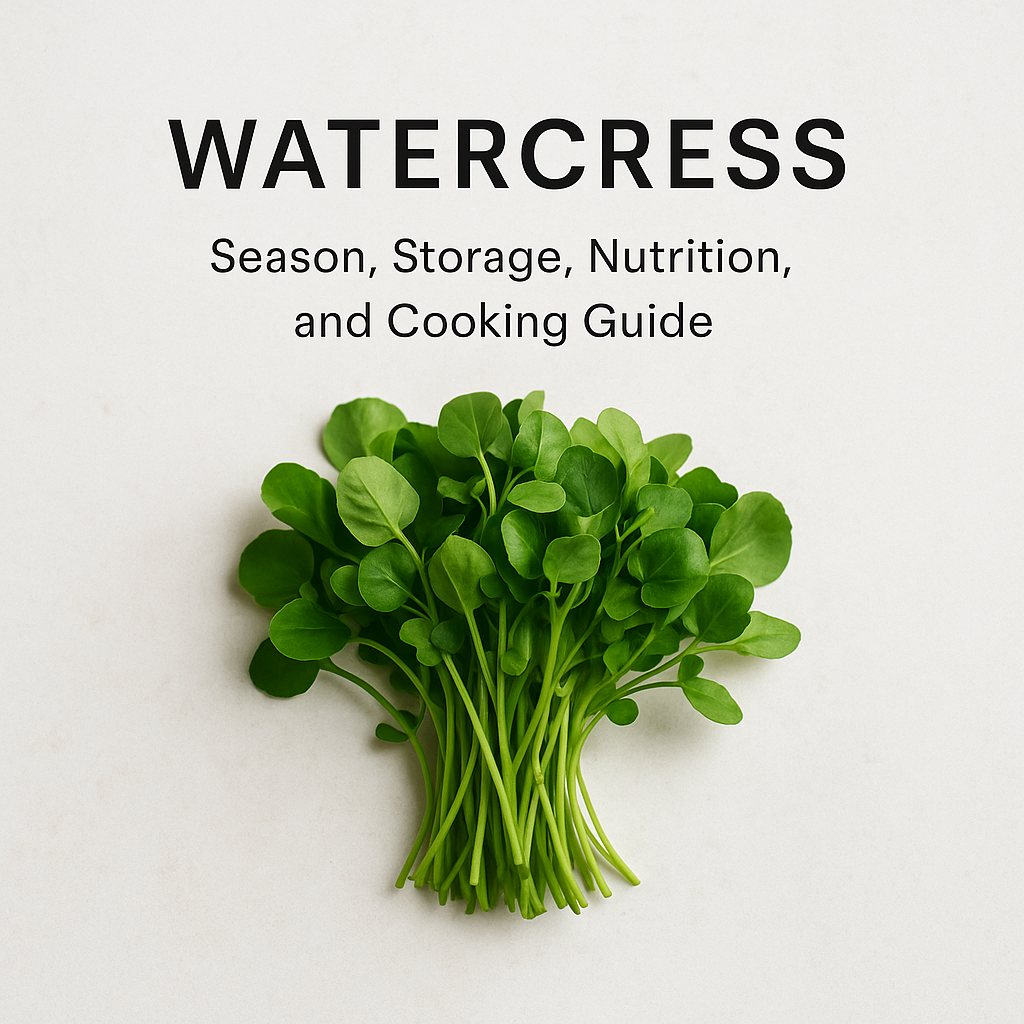
Watercress (Nasturtium officinale) is a semi-aquatic perennial plant native to Europe and Asia. It thrives in cool, clear waters, making it one of the oldest known leaf vegetables consumed by humans. The plant is characterized by its small, deep green leaves and crisp, hollow stems. Watercress has a distinct peppery taste that adds a vibrant, zesty element to any dish. Its texture is crunchy, especially when fresh, making it a favored ingredient in salads, sandwiches, and soups.
💪 Benefits
Packed with an impressive range of nutrients, watercress is celebrated for its health benefits. It is low in calories yet high in antioxidants and critical vitamins such as A, C, and K. The generous vitamin K content supports bone health and promotes proper blood clotting mechanisms. The peppery leaves are rich in beta-carotene, lutein, and zeaxanthin which contribute to eye health and immune function. Additionally, the natural plant compounds present in watercress may have anti-inflammatory properties and support overall health and wellness.
🌍 Origin
Watercress has been cultivated since ancient times, with origins tracing back to Europe and parts of Asia. As an aquatic plant, watercress naturally grows alongside streams and ponds. Historically, watercress was consumed by ancient Greeks and Romans who recognized its medicinal and culinary uses. Over time, its cultivation spread worldwide, and today, watercress farms can be found across various continents, particularly in regions conducive to its water-loving nature.
📅 Harvest Season
The prime season for watercress is during the cooler months, typically from early spring through autumn. It is during this time that the plant flourishes and its flavor is at its best. While it can be grown year-round in controlled environments, naturally grown watercress is tastiest when harvested in the lower temperature seasons, avoiding the harsh extremes of summer heat.
🧺 Varieties
Several varieties of watercress are cultivated, each with slight variations in flavor and texture while offering similar nutritional benefits. The common type known as garden cress or curly cress boasts a milder flavor compared to its more pungent counterpart, upland cress. Another popular variant, true watercress, produces a bolder taste and is often preferred by chefs for its robust pepperiness. Other variants such as wintercress have gained popularity in particular regions for their unique traits.
🛒 How to Choose (Checklist)
- Color: Look for vibrant, deep green leaves without any yellowing or signs of wilting.
- Freshness: Ensure that the stems are crisp and snap easily rather than being limp.
- Aroma: A fresh, peppery scent indicates high quality.
- No Browning: Avoid bunches with brown, slimy, or decayed spots.
- Organic Labels: Consider organic options to avoid potential pesticide residues.
🍽 Cooking & Eating Methods
Watercress is extremely versatile and can be used in a variety of cooking methods. Its peppery flavor elevates any dish, from salads to cooked meals. Here are some popular methods to enjoy watercress:
- Raw in Salads: Add freshly washed watercress to salads for a sharp, zesty bite.
- Sandwiches: Use it as a fresh green addition in sandwiches, offering a nutrient-dense crunch.
- Soups: Wilt watercress into soups at the last minute to preserve its delicate flavor and nutrients.
- Smoothies: Blend into smoothies for an antioxidant and vitamin boost.
- Stir-fry: Add to stir-fries for a quick-fix meal that is both delicious and healthy.
❄ Storage Tips
Proper storage is crucial to maintain the tensile crispness and flavor of watercress. Here are some tips:
- Refrigerate Immediately: Store watercress in the refrigerator crisper drawer within a perforated plastic bag to allow airflow.
- Keep Moist: Wrap the stems in a damp paper towel to retain moisture.
- Short-Term: Use watercress within 3-5 days for maximum freshness and quality.
- Avoid Freezing: Watercress does not freeze well as it turns to mush upon thawing. Use immediately instead of storing long-term in a freezer.
❓ FAQ (3 questions)
Q1: Is watercress suitable for cooking?
A: Yes, watercress can be sautéed, used in soups, or added to stir-fries. Its peppery flavor complements many cooked dishes, although it should be added towards the end of cooking to retain its taste and nutrients.
Q2: Can I grow watercress at home?
A: Absolutely! Watercress can be grown at home in a hydroponic setup or a pot with continuously moist soil. Choose a spot that receives partial sunlight for optimal growth.
Q3: Is watercress safe for all diets?
A: Generally, watercress is safe for most diets due to its low calorie and high nutrient profile. However, individuals on blood thinners should consult a healthcare professional due to the high vitamin K content.