🍓 Water Chestnut: Season, Storage, Nutrition, and Cooking Guide
Water chestnuts are a versatile and nutritious ingredient that can add both crunch and subtle sweetness to a variety of dishes. Despite their name, they are not nuts but aquatic vegetables that grow in marshes, under water, in the mud. Let's delve into their characteristics, origin, how to best store them, and tasty methods to incorporate them into your meals.
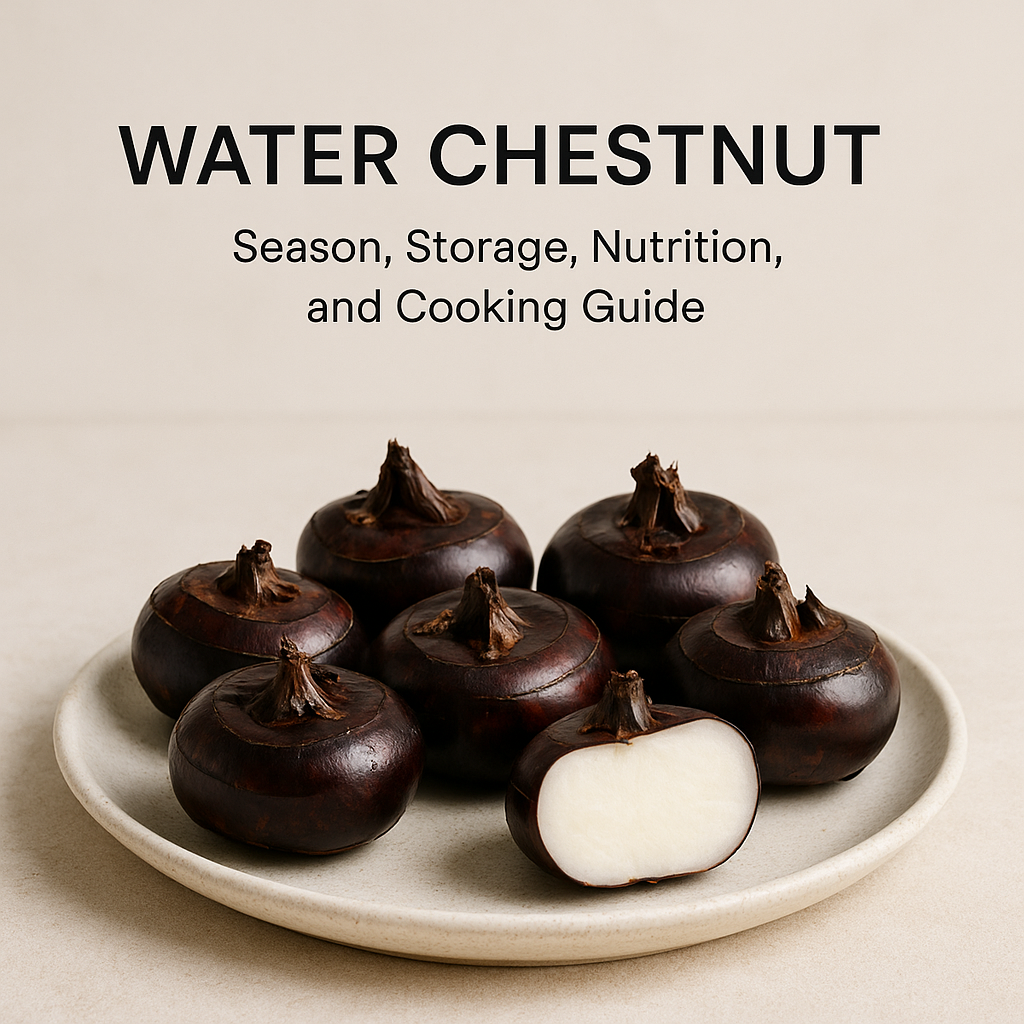
✨ Characteristics
Water chestnuts are known for their unique crunch, even after cooking. They have a thin, brown outer skin that can be easily peeled, revealing the white, crispy flesh underneath. The taste is mild and slightly sweet, lending itself well to a variety of culinary uses. Often appearing in stir-fries, they add texture and a refreshing contrast to soft-textured dishes.
💪 Benefits
While they might be small, water chestnuts pack a punch in terms of nutrients. They are low in calories, virtually fat-free, and provide a modest amount of dietary fiber. This makes them an excellent choice for those looking to maintain a healthy diet. Moreover, they have a decent amount of potassium, which is essential for heart health and maintaining fluid balance in the body.
🌍 Origin
Aquatic by nature, water chestnuts originate from Southeast Asia and are particularly popular in China and India. They have been cultivated for thousands of years and have become a staple in many Asian cuisines. Their ability to thrive in wet and marshy conditions makes them naturally abundant in regions with these environments.
📅 Harvest Season
Water chestnuts are typically harvested during the cooler months, from late autumn to early spring. The exact timing can vary depending on the geographical region and climate conditions. During harvest, the plants are often pulled entirely from the water so that the corms can be collected from the roots.
🧺 Varieties
There are several varieties of water chestnuts, the most common being the Chinese water chestnut or Eleocharis dulcis. Less commonly found are the European water chestnut, known as Trapa natans, which is different in appearance and cultivation. Both variations offer similar culinary applications, although they might differ slightly in taste and texture.
🛒 How to Choose (Checklist)
- Check the skin: Look for water chestnuts with a firm and smooth skin. Avoid any with mold, wrinkles, or soft spots.
- Weight: They should feel heavy for their size, indicating they are fresh and juicy.
- Sound: Tap on them gently; a good water chestnut should sound solid, not hollow.
- Color: Look for a uniform brownish tint across the skin.
🍽 Cooking & Eating Methods
Water chestnuts can be eaten raw, boiled, grilled, or stir-fried. When raw, they retain maximum crunch and can be added to salads or as a refreshing bite in fruit bowls. When cooked, they maintain their texture, making them ideal for stir-fries, soups, and as stuffing for dumplings. Due to their versatility, they can blend well with various sauces and spices, absorbing flavors while adding a crisp contrast to the dish. Consider these methods:
- Stir-Frying: Add sliced or diced water chestnuts into your favorite stir-fry to enhance texture.
- Salads: Thinly slice and add to salads for extra crunch and a hint of sweetness.
- Boiling: Boil water chestnuts until softened, then use them in soups and stews.
- Grilling: Skewer and grill to bring out a smoky flavor that complements other grilled vegetables or meats.
- Purees: Boil and blend into a purée for a sweet and creamy base to sauces and desserts.
❄ Storage Tips
Fresh water chestnuts can be stored in the refrigerator for up to two weeks. Keep them in a perforated plastic bag in the vegetable crisper section to prolong their freshness. Once peeled, submerge them in water and refrigerate, changing the water daily to keep them crisp. Alternatively, cooked water chestnuts can be stored in the refrigerator for a few days or frozen for a longer shelf life by spreading them on a baking sheet before transferring them to freezer bags.
❓ FAQ
Can water chestnuts be eaten raw?
Yes, water chestnuts can be eaten raw and are a popular addition to salads and fruit bowls for their crisp texture and slightly sweet flavor.
Are canned water chestnuts as good as fresh?
While canned water chestnuts are convenient and have a longer shelf life, fresh ones offer a superior crunch and flavor. However, canned varieties are still a good option when fresh ones are unavailable.
How do I peel fresh water chestnuts?
To peel fresh water chestnuts, slice off both ends with a sharp knife and then use a peeler to remove the brown skin, exposing the white, crunchy flesh underneath.