🍓 Turnip: Season, Storage, Nutrition, and Cooking Guide
Turnips, with their crisp texture and mildly sweet flavor, are a versatile and nutritious root vegetable. Popular in various global cuisines, turnips are not only easy to incorporate into meals but also offer several health benefits. This guide will explore the characteristics, benefits, origin, harvest season, varieties, selection tips, cooking methods, storage tips, and answer some frequently asked questions about turnips.
✨ Characteristics
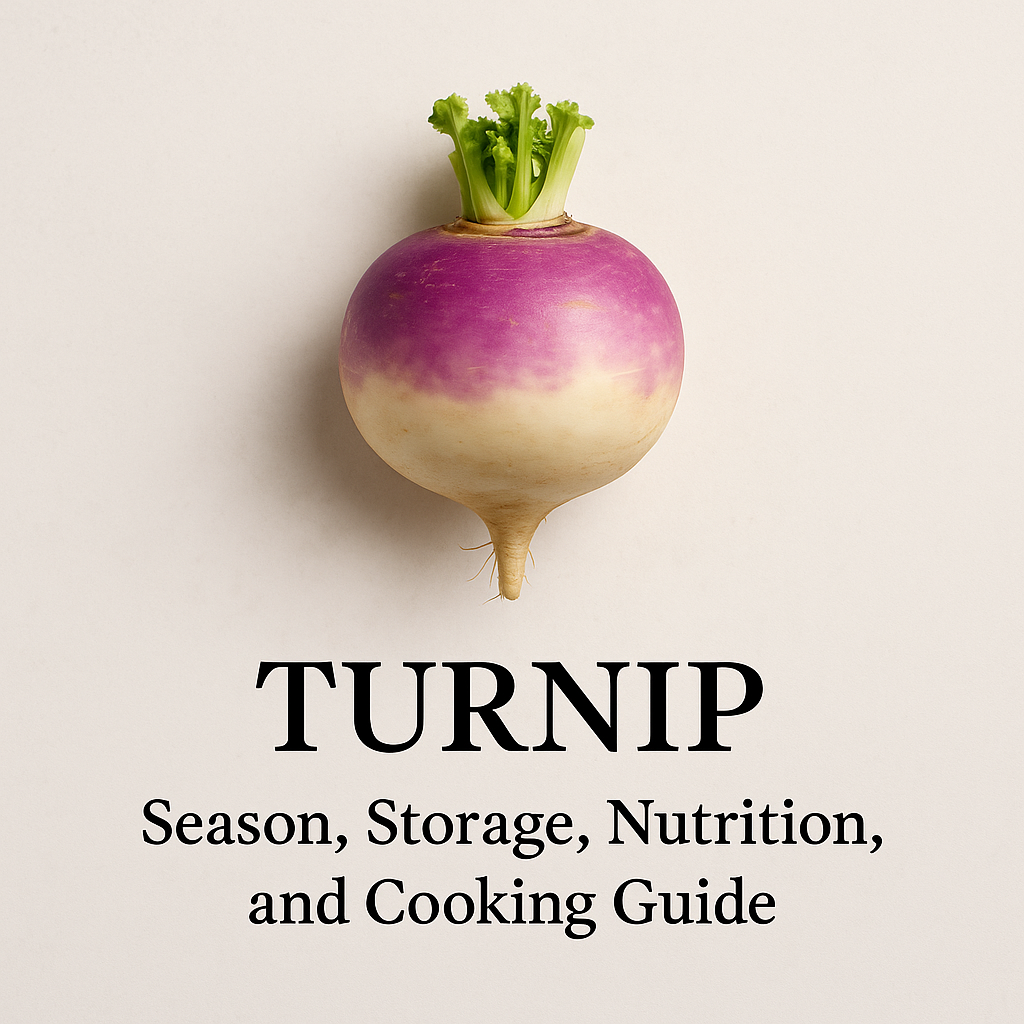
Turnips are a part of the Brassicaceae family, closely related to other vegetables such as cabbage, broccoli, and Brussels sprouts. They are typically characterized by their round shape, purple-tinged white skin, and white flesh. The leaves of the turnip are also edible and are often referred to as turnip greens.
The flavor of turnips can vary depending on their maturity. Young turnips tend to be sweet and juicy, while older turnips can be woody and more pungent. Their texture is crisp when raw but becomes tender when cooked.
💪 Benefits
Turnips are low in calories yet rich in nutrients, making them an excellent addition to a balanced diet. They are a good source of vitamin C, which is essential for a healthy immune system, and a host of B vitamins that support energy production in the body.
The high fiber content in turnips aids in digestion and contributes to the feeling of fullness, potentially helping with weight management. Additionally, turnip greens are abundant in antioxidants, which are known to reduce oxidative stress in the body.
🌍 Origin
The turnip has a long history that traces back to ancient civilizations. It is believed to have originated in the Middle East or Central Asia and was one of the earliest cultivated root vegetables. Throughout history, turnips have been popular across Europe and Asia, often used as a staple food during winter months.
Today, turnips are grown around the world and continue to be a vital part of many traditional dishes. Their versatility and adaptability have contributed to their enduring presence in various cultures.
📅 Harvest Season
Turnips are cool-weather crops that thrive in temperatures ranging from 40°F to 75°F. They are generally planted in early spring for a summer harvest or in late summer for a fall harvest.
In regions with mild climates, turnips can also be grown in winter. The best time to harvest turnips is when they reach maturity, which is typically 60 to 70 days after planting. Freshly harvested turnips should have a firm texture and vibrant color.
🧺 Varieties
Several varieties of turnips are available, each with distinctive characteristics. Some popular varieties include:
- Tokyo Cross: Known for its mild flavor and rapid growth, ready for harvest in just over a month.
- Golden Ball: Recognized by its vivid yellow flesh, this variety is sweet and slightly nutty.
- Purple Top White Globe: A classic variety with white flesh and a purple hue near the top.
- White Egg: This variety has egg-shaped roots and is known for its tender texture and mild taste.
🛒 How to Choose (Checklist)
When selecting turnips, consider the following checklist:
- Opt for small to medium-sized turnips, as they tend to be sweeter and less woody.
- Look for smooth, firm skin free from blemishes or cuts.
- Check that the turnips feel heavy for their size, indicating freshness.
- If purchasing turnip greens, ensure they are bright and firm, not wilted.
🍽 Cooking & Eating Methods
Turnips are highly versatile and can be prepared in numerous ways. They can be eaten raw, roasted, boiled, mashed, or added to soups and stews. Here are some popular methods of consuming turnips:
- Raw: Sliced or grated turnips can add crunchiness to salads and slaws.
- Roasting: Roasted turnips develop a caramelized exterior and soft interior, making them a delicious side dish.
- Boiling or Steaming: Simmering turnips until tender allows their flavors to be showcased in pureed forms or added to casseroles.
- Mashing: Turnips can be mashed similar to potatoes for a lower-carb side dish.
- Sautéing: Sautéed turnip greens with garlic and olive oil make for a nutrient-rich addition to meals.
❄ Storage Tips
Proper storage ensures turnips maintain their flavor and nutritional quality. Here are some tips for storing both turnip roots and greens:
- Turnip Roots: Remove the greens and store the roots in a cool, dark place for up to two weeks. For longer storage, keep them in a refrigerator’s vegetable drawer.
- Turnip Greens: Store greens in a damp paper towel inside a plastic bag in the refrigerator. Use them within a few days for the best quality.
Consider freezing turnips if you have an abundance. Peel, dice, and blanch them before transferring to a freezer-safe bag. Blanched turnips can be stored in the freezer for up to 8 months.
❓ FAQ
- Q: Can you eat turnips raw?
A: Yes, turnips can be eaten raw and are often used in salads or as crunchy snacks. - Q: Are turnips the same as rutabagas?
A: No, while they are similar, rutabagas are larger and have a sweeter flavor. Rutabagas also have yellow flesh, whereas turnips have white flesh. - Q: Can turnips be grown in containers?
A: Yes, turnips can be grown in large containers as long as they have sufficient depth for root development and adequate drainage.