🍓 Tomato: Season, Storage, Nutrition, and Cooking Guide
Tomatoes are among the most popular and versatile ingredients in the culinary world. Known for their vibrant color and juicy texture, they are not only a staple in many dishes but also a source of essential nutrients. This guide delves into the characteristics, benefits, origins, and uses of tomatoes, as well as offers practical advice on selecting, storing, and cooking them.
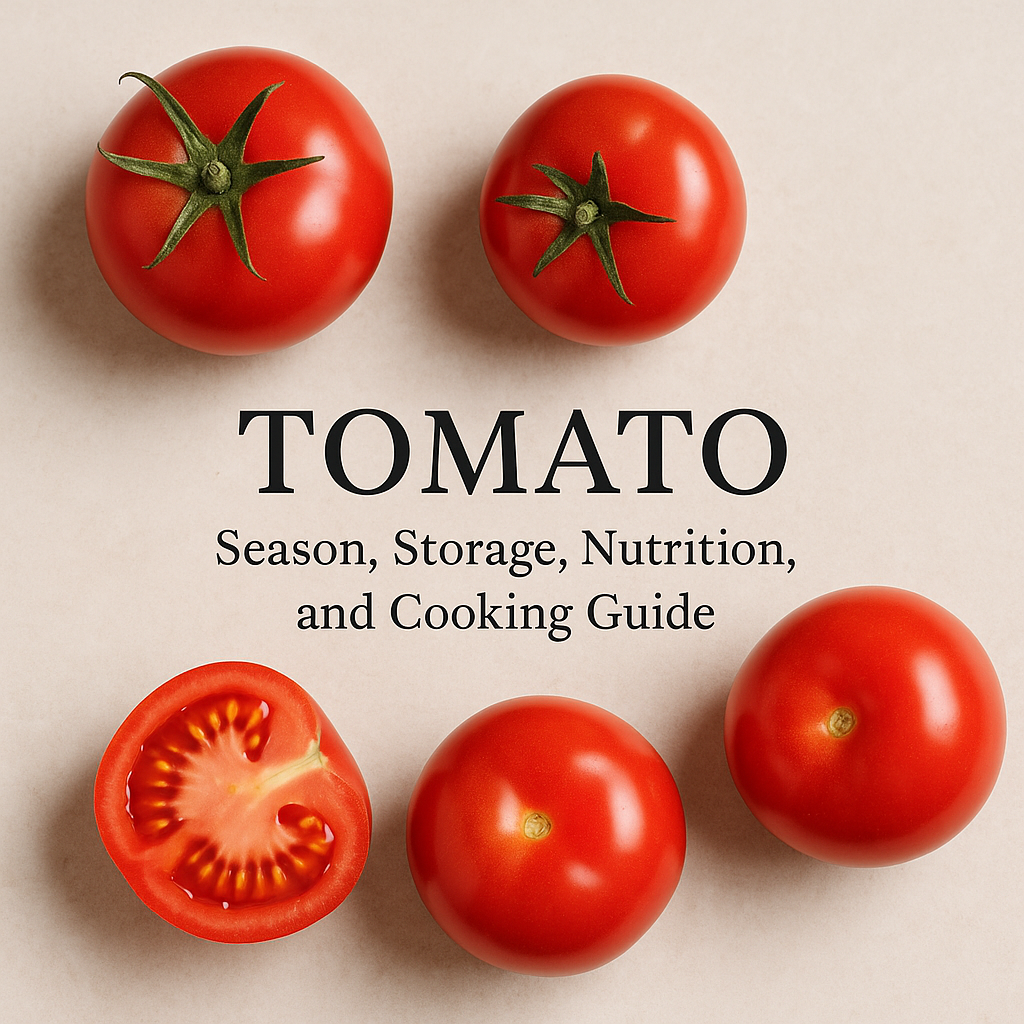
✨ Characteristics
Tomatoes, scientifically known as Solanum lycopersicum, belong to the Solanaceae family, which includes other edible plants like potatoes, peppers, and eggplants. They are actually berries by botanical classification, boasting a fleshy interior filled with seeds. Their flavor profile ranges from sweet to tangy depending on the variety and ripeness, making them suitable for both savory and sweet dishes.
💪 Benefits
Consuming tomatoes can contribute positively to a balanced diet. They are rich in vitamin C, potassium, folate, and vitamin K. Additionally, tomatoes are a significant source of antioxidants, such as lycopene, which is linked to various health benefits. While tomatoes contribute to nutrient intake, they are low in calories, making them a weight-friendly food when consumed as part of a healthy lifestyle.
🌍 Origin
The tomato plant originated in western South America and later spread to Central America. It became an integral part of the Mesoamerican diet. European explorers brought the tomato to Europe following the Columbian Exchange, where it was initially met with suspicion. Over time, the tomato gained popularity and spread worldwide, being adopted into numerous culinary traditions.
📅 Harvest Season
Tomatoes are generally harvested during the warmer months. In most regions, the peak season occurs from late spring to early fall. However, the specific timing may vary based on the local climate and the specific tomato variety. In areas with milder climates, such as the Mediterranean, tomatoes may be available fresh for a longer duration.
🧺 Varieties
There are thousands of tomato varieties, each with unique attributes. Here are some popular types:
- Roma: Known for their dense flesh and low moisture, they are ideal for sauces and pastes.
- Cherry: Small, round, and sweet, these are perfect for salads and snacking.
- Beefsteak: Large and juicy, these are commonly used in sandwiches and burgers.
- Heirloom: Known for their unique shapes and colors, they offer diverse flavors.
🛒 How to Choose (Checklist)
When selecting tomatoes at the market, consider the following checklist to ensure the best quality:
- Look for vibrant color, indicating ripeness.
- Check for a firm but slightly yielding touch.
- Inspect for smooth skin without blemishes or wrinkles.
- Ensure the tomato feels heavy for its size.
- Smell the tomato; it should have a fresh fragrance.
🍽 Cooking & Eating Methods
Tomatoes can be enjoyed in various forms and cooking methods:
- Raw: Slice and add to salads, sandwiches, or salsas for a refreshing crunch.
- Roasted: Enhance flavor by roasting them with herbs and spices.
- Sautéed: Quickly sauté for a flavorful pasta sauce or a side dish.
- Grilled: Grill slices or halves for a smoky and sweet taste.
- Stewed: Use in stews, soups, or sauces where their acidity balances other ingredients.
❄ Storage Tips
Proper storage of tomatoes can significantly impact their shelf life and flavor:
- Store unripe tomatoes at room temperature, away from direct sunlight, to allow them to ripen naturally.
- Once ripe, use them immediately or store them in the refrigerator in a single layer to slow down further ripening.
- For longer preservation, tomatoes can be made into sauces or pastes and then frozen.
❓ FAQ
- Q: Can I eat tomatoes every day? A: Yes, tomatoes can be part of a daily diet, offering vitamins and minerals, though variety in food choices is also recommended.
- Q: Why are some tomatoes green and are they safe to eat? A: Green tomatoes are simply unripe; while safe to eat when cooked, they are less suitable for raw consumption due to their tanginess.
- Q: Are canned tomatoes as nutritious as fresh ones? A: Canned tomatoes can retain much of their nutritional value, especially in terms of lycopene, though the fresh taste might vary.