🍓 Taro: Season, Storage, Nutrition, and Cooking Guide
Taro is a versatile and nutrient-rich root vegetable, enjoyed across various cultures for its unique flavor and adaptability to many dishes. This guide covers everything you need to know about taro—from its characteristics to cooking methods.
✨ Characteristics
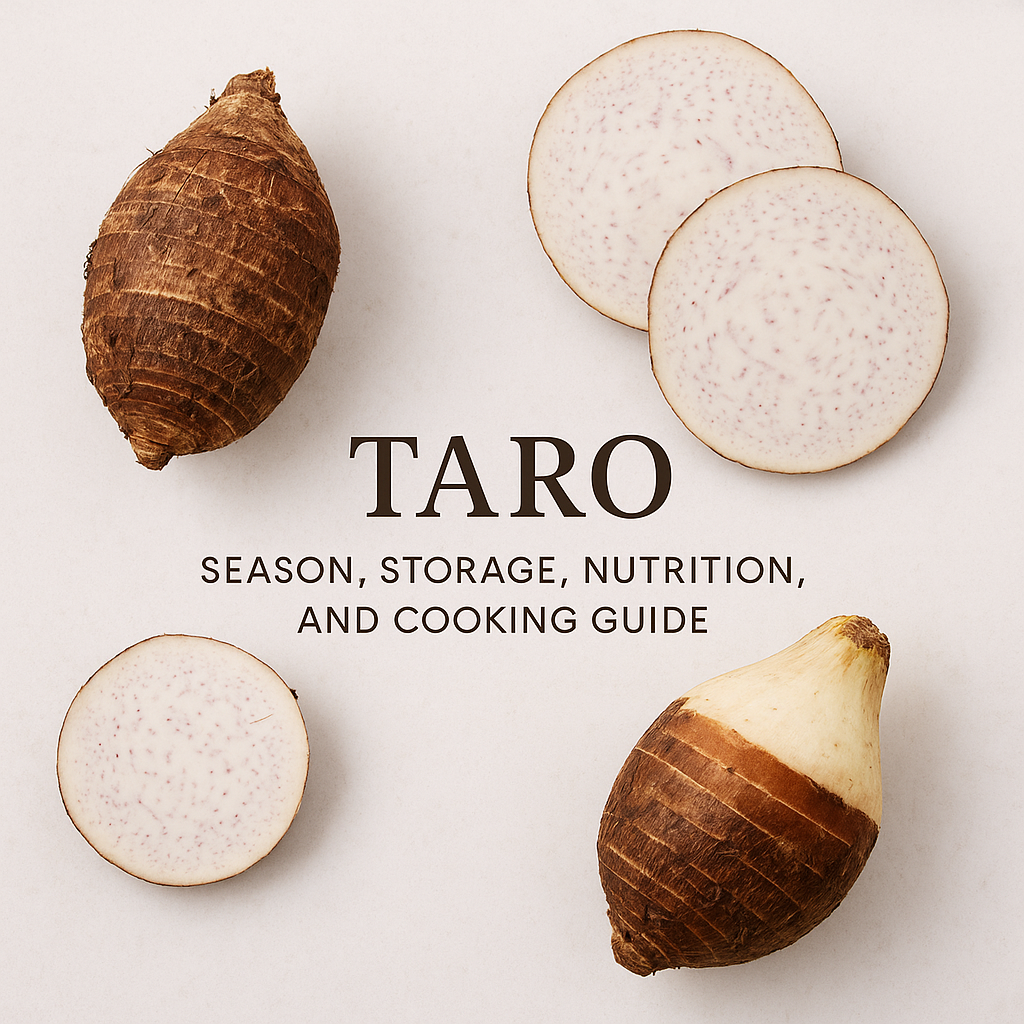
Taro is a starchy root vegetable, recognized for its brown, fibrous skin and delicate, nutty aroma. Its flesh varies from white to purple, speckled textures, offering a slightly sweet, crisp taste. When cooked, taro delivers a creamy consistency, making it a favorite substitute for potatoes.
💪 Benefits
Taro is rich in essential nutrients, including dietary fiber, vitamins, and minerals. Its high fiber content supports digestion and general gut health, while its abundant potassium contributes to optimal heart function. Moreover, taro's vitamin C content aids in boosting the immune system.
🌍 Origin
Taro finds its genesis in Southeast Asia and India, but has spread globally due to its adaptability and nutritional benefits. It thrives in tropical and subtropical environments and extensively features in Pacific island, Southeast Asian, and African cuisines.
📅 Harvest Season
Although taro can be grown year-round in warm climates, its prime harvest season occurs between late spring and early fall. Regions with consistent rainfall and temperatures between 77°F and 95°F present ideal conditions for optimal growth and yield.
🧺 Varieties
Taro presents a delightful variety array, each unique in flavor and texture:
- Dasheen: Widely cultivated with a slightly acrid taste when raw.
- Edible Taro: Commonly used in Hawaiian dishes like poi.
- Malanga: Enthralled with a nutty flavor, perfect for fritters.
🛒 How to Choose (Checklist)
- Firm Texture: Look for taro roots that are firm to the touch, avoiding any soft spots or blemishes.
- Even Color: Choose roots with a consistent brown color free from discoloration.
- Size Preference: Select smaller to medium-sized roots as they tend to have a more concentrated flavor.
🍽 Cooking & Eating Methods
Taro's culinary applications are vast, suiting both savory and sweet dishes:
Boiling: Peel and boil taro in salted water until tender for a creamy texture. Perfect as a mashed side dish.
Steaming: Retain its nutrients by steaming sliced taro, commonly used in stir-fry dishes.
Baking: Create taro chips by thinly slicing and baking in the oven till crisp—a healthy alternative to traditional fries.
❄ Storage Tips
Proper storage ensures taro's longevity and taste:
- Room Temperature: Store unpeeled taro in a cool, dry place, away from direct sunlight.
- Refrigeration: Once peeled or cut, wrap in plastic and refrigerate to prevent drying, ideally using within a week.
- Freezing: For extended storage, boil till tender, mash, and freeze in airtight containers for up to three months.
❓ FAQ
Q: Can you eat taro raw?
A: No, raw taro contains compounds that can cause irritation. It must be cooked thoroughly to ensure safety and palatability.
Q: Is taro suitable for a gluten-free diet?
A: Yes, taro is naturally gluten-free and provides a nutritious alternative to grains in such diets.
Q: How do you know when taro is fully cooked?
A: Properly cooked taro becomes tender and loses its initial fibrous texture, similar to a perfectly boiled potato.