🍓 Sweet Potato: Season, Storage, Nutrition, and Cooking Guide
The sweet potato, a root vegetable with a starchy consistency and a sweet flavor, has garnered attention as a nutritious and versatile food item. Its vibrant colors and multitude of benefits make it a staple in many kitchens around the world. In this comprehensive guide, we explore the characteristics, benefits, origin, varieties, and culinary uses of sweet potatoes, along with tips on how to select and store them properly.
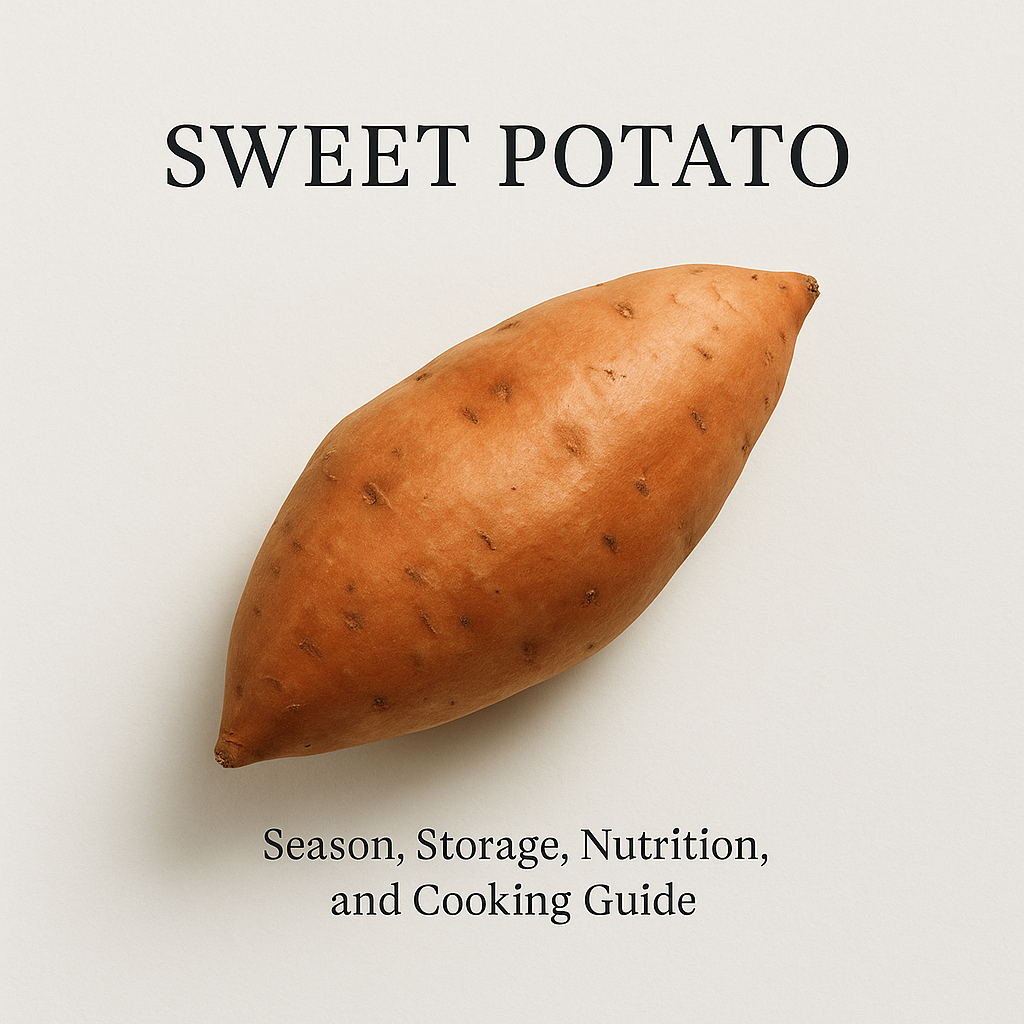
✨ Characteristics
Sweet potatoes, often confused with yams, are distinguished by their bright orange flesh and sweet taste. They belong to the Convolvulaceae family and are scientifically known as Ipomoea batatas. Their skin can range from creamy white to deep purple or brown, and their shape is typically oblong with tapered ends. Sweet potatoes are popular for their smooth texture and sweet, earthy flavor, making them a favorite in both savory and sweet dishes.
💪 Benefits
Sweet potatoes are highly valued for their nutritional profile. They are a rich source of dietary fiber, vitamins, and minerals. High in vitamin A, in the form of beta-carotene, they support vision and immune function. Vitamin C, present in moderate amounts, contributes to skin health, while potassium aids in regulating blood pressure. The high fiber content promotes digestive health and may aid in weight management by creating a feeling of fullness. Furthermore, sweet potatoes contain antioxidants that help protect against free radical damage.
🌍 Origin
Believed to have originated in Central or South America, sweet potatoes have been cultivated for thousands of years. Archaeological evidence suggests that the root vegetable was domesticated around 5,000 years ago. Explorers, including Christopher Columbus, are credited with introducing sweet potatoes to Europe following their voyages to the New World. Today, sweet potatoes are grown in many countries across the globe, including the United States, China, and parts of Africa, where they play a crucial role in nutrition and food security.
📅 Harvest Season
Sweet potatoes are typically harvested in late summer to early fall, depending on the region. They are a warm-weather crop and require a long growing season of approximately 100 to 150 days of frost-free weather. After harvesting, sweet potatoes undergo a curing process, which enhances their sweetness and improves storage capability. The cured sweet potatoes are then stored and made available to consumers throughout the year, although they are most commonly associated with fall and winter seasonal cuisines.
🧺 Varieties
There are several varieties of sweet potatoes, each with distinct characteristics. The most popular types include:
- Beauregard: Known for its reddish skin and deep orange flesh, Beauregard is one of the most common sweet potato varieties in North America.
- Jewel: Featuring orange flesh and copper-colored skin, Jewel sweet potatoes are popular for their moist texture and sweet taste.
- Garnet: Characterized by dark reddish-purple skin and vibrant orange flesh, Garnet sweet potatoes offer a slightly fuller flavor.
- Hannah: Also known as white sweet potatoes, Hannahs have pale golden flesh and a drier, crumbly texture.
- Purple: These have a distinctive purple flesh and skin, and they are often richer in antioxidants than their orange-fleshed counterparts.
🛒 How to Choose (Checklist)
When selecting sweet potatoes at the market or grocery store, consider the following checklist to ensure quality:
- Look for firm sweet potatoes with smooth, unblemished skin.
- Avoid sweet potatoes that have cuts, bruises, or signs of decay.
- Purple and orange-fleshed varieties should have vibrant and consistent colors.
- Opt for medium-sized sweet potatoes, as they are generally sweeter and less fibrous.
- Ensure that the skin is dry and not moist, as moisture can lead to spoilage.
🍽 Cooking & Eating Methods
Sweet potatoes are versatile in the kitchen and can be cooked in various ways to suit different dietary preferences and culinary traditions. Here are some popular techniques:
- Baking: Whole sweet potatoes can be baked in the oven until tender. This method brings out their natural sweetness and results in a creamy texture.
- Roasting: Cut into chunks or slices and roasted with a drizzle of olive oil and seasoning, sweet potatoes become caramelized and flavorful.
- Boiling: Sweet potatoes can be boiled until soft and then mashed or pureed. They can also be boiled and added to soups or stews.
- Frying: Slices or wedges can be fried to make crispy sweet potato fries or chips.
- Steaming: Steaming retains the most nutrients and produces soft sweet potatoes that are great for mashing.
- Pureeing: Cooked sweet potatoes can be pureed and used in baking for pies, muffins, and other desserts.
❄ Storage Tips
Proper storage is crucial to extend the shelf life of sweet potatoes:
- Store sweet potatoes in a cool, dark, and well-ventilated place, ideally between 55°F and 60°F (12°C and 15°C).
- Avoid storing sweet potatoes in the refrigerator, as cold temperatures can alter their texture and taste.
- Keep them away from sources of moisture and sunlight, which can cause sprouting and spoilage.
- Do not wash sweet potatoes before storing, as moisture can promote decay.
- If properly stored, sweet potatoes can last several weeks to a few months.
❓ FAQ
Q1: Are sweet potatoes and yams the same?
A: No, they are not the same. Sweet potatoes are often mistakenly called yams in parts of North America. True yams are a different species, native to Africa and Asia, and have a drier, starchier texture.
Q2: Can you eat sweet potato skin?
A: Yes, sweet potato skin is edible and contains additional fiber and nutrients. Ensure the skin is thoroughly cleaned before consumption.
Q3: Is it necessary to cure sweet potatoes before consuming?
A: While it’s not necessary, curing is recommended as it enhances the sweetness and storage potential. Freshly harvested sweet potatoes can still be eaten, but they might be less sweet and more perishable.