🍓 Squash: Season, Storage, Nutrition, and Cooking Guide
Squash is a versatile vegetable that is valued in many cuisines worldwide. Offering a range of tastes and textures, it stands out in the culinary world not only for its culinary versatility but also for its many nutritional benefits. This guide explores the charm of squash, diving into its characteristics, nutritional benefits, origins, best cooking practices, and tips for storage and selection.
✨ Characteristics
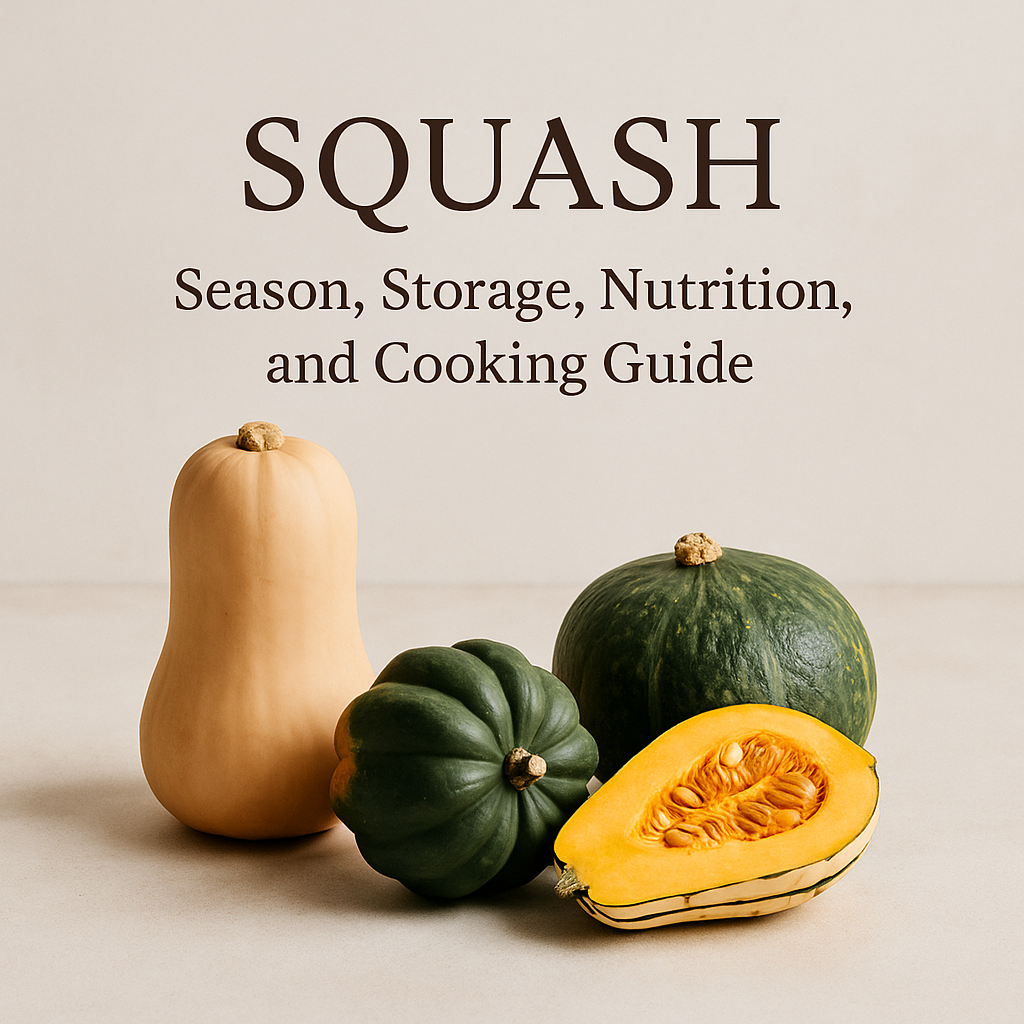
Squash is a member of the gourd family (Cucurbitaceae), encompassing a wide variety of species and cultivars. It is generally categorized into two main types: summer squash and winter squash. Summer squashes like zucchini and yellow squash typically have soft, edible skins and tender flesh. They are harvested while immature. Winter squashes, such as butternut and acorn, feature hard rinds and tougher flesh, having longer storage capabilities since they are harvested when fully mature.
💪 Benefits
Packed with essential nutrients, squash is more than just a tasty addition to meals. It is a low-calorie food filled with vitamins A, C, and E, and it also contains a good supply of fiber and antioxidants. These nutrients play significant roles in supporting vision, boosting immune function, and promoting skin health. Additionally, the fiber content aids in digestion and helps maintain a feeling of fullness, which can support weight management.
🌍 Origin
The origin of squash is deeply rooted in the Americas, with historical evidence suggesting its cultivation dating back to ancient times. Most squash varieties, particularly winter squashes, were initially domesticated in North and South America. Indigenous peoples valued squash for its nutritional value and its storage capabilities during the winter months. Today, squash is grown all over the world, thriving in a variety of climates.
📅 Harvest Season
For squash lovers, the availability of this versatile vegetable is almost year-round thanks to its diverse varieties. Summer squashes are typically harvested between June and October, while winter squashes are cultivated from September through March. The timing ensures that there is always some form of squash available, whether fresh during its season or in storage during off-peak months.
🧺 Varieties
The world of squash is vast and explorable, encompassing an array of colors, shapes, and flavors. Here are some of the most popular varieties:
- Zucchini: A popular summer squash, known for its mild flavor and soft texture.
- Butternut: A nutty, sweet winter squash with a pale skin and orange flesh.
- Acorn: Recognizable by its dark green rind, it has a sweet, slightly peppery flavor.
- Spaghetti Squash: Known for its pasta-like strands once cooked, providing a low-carb alternative to noodles.
- Kabocha: A sweet, flavorful Japanese pumpkin with a deep green skin.
🛒 How to Choose (Checklist)
Choosing the right squash is essential for maximizing its flavor and longevity. Here's a quick checklist to help you select the perfect squash:
- Look for firm squash with no soft spots or blemishes.
- Check the stem; it should be intact and firm, as this indicates freshness.
- Pick up the squash; it should feel heavy for its size, an indicator of good moisture content.
- Ensure the skin is uniformly colored and free from cracks.
🍽 Cooking & Eating Methods
Squash is incredibly versatile and can be prepared in numerous ways to suit different dishes:
- Roasting: Enhance its natural sweetness by cutting squash into cubes and roasting with olive oil, salt, and herbs.
- Grilling: Slices of zucchini or other summer squashes benefit from the added smokiness of grilling.
- Sautéing: It’s a quick method perfect for thinly sliced squash, retaining its flavor and color.
- Soups: Puree roasted squash for hearty, warming soups packed with flavor.
- Stuffing: Hollow out acorn or butternut squash for stuffing with grains, veggies, or meat.
- Baking: Use for desserts like pumpkin pie or savory baked dishes with cheese or herbs.
❄ Storage Tips
Proper storage of squash extends its shelf life and preserves its flavor and texture:
- Store summer squash in the refrigerator's crisper drawer where it can stay fresh for about 1-2 weeks.
- Keep winter squash in a cool, dark place with good ventilation. Stored this way, they can last up to 3 months.
- Don't wash squash until you're ready to use it since moisture can encourage decay.
- If you cut squash and don’t use it all, wrap it tightly in plastic wrap and refrigerate. Use it within a few days.
❓ FAQ (3 questions)
- What is the difference between summer and winter squash? Summer squash is harvested while immature, with soft skin and tender flesh, while winter squash is harvested when mature, with a hard rind that allows longer storage.
- Can you eat squash skin? The skin of most summer squashes, like zucchini, is edible and becomes tender when cooked. However, the skin of winter squash is usually tougher and often peeled before eating, unless cooked well.
- How do I avoid watery zucchini? To minimize zucchini's water content in dishes, slice it, sprinkle it with salt, and let it sit for 15-20 minutes to draw out excess moisture. Pat it dry before cooking.