🍓 Spinach: Season, Storage, Nutrition, and Cooking Guide
Spinach is a leafy green vegetable that has been enjoyed in various cuisines around the world for its mild flavor and numerous culinary applications. Known for its vibrant green leaves, spinach is often hailed not only for its versatility in cooking but also for its impressive nutritional profile. Whether you're a dedicated home cook or someone exploring healthier meal options, understanding spinach's characteristics, benefits, and best uses is a great step towards enhancing your diet.
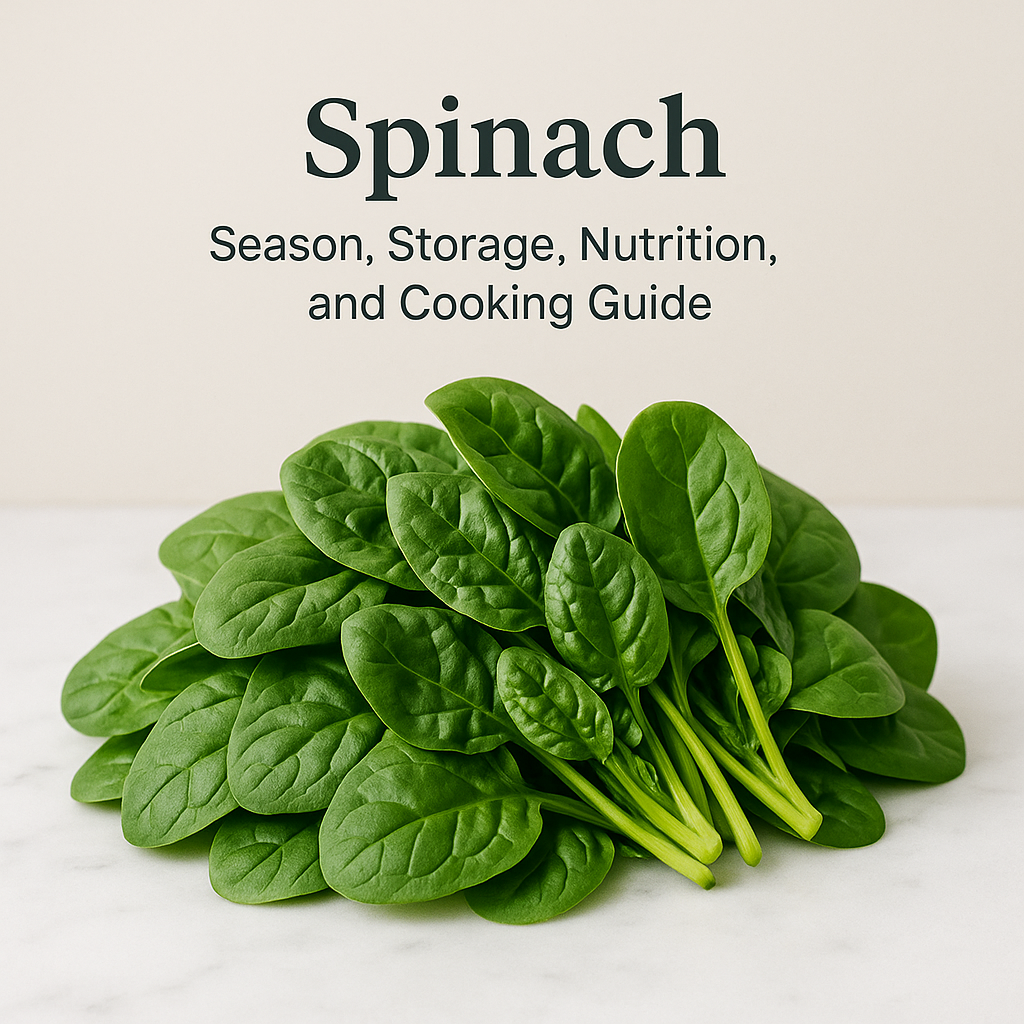
✨ Characteristics
Spinach, belonging to the Amaranthaceae family, is typically recognized for its lush, tender leaves. These leaves can be flat, savoyed (curly), or semi-savoyed (a mix of the two). The vegetable features a slightly earthy, fresh flavor that complements a wide variety of dishes. Spinach thrives in temperate climates and can be grown almost year-round, especially when planted in cooler weather.
💪 Benefits
Spinach is packed with a plethora of nutrients that can contribute positively to your health. It's incredibly low in calories yet high in vitamins and minerals. A single cup of spinach provides ample amounts of Vitamin A, Vitamin C, Vitamin K1, folate, and iron, alongside being an excellent source of dietary fiber.
Though spinach is often linked to strong muscles due to iron content, it’s important to note the presence of oxalates that may hinder iron absorption to some degree. Nonetheless, its overall nutrient composition makes it a valuable addition to a balanced diet. Always aim for variety and moderation in food intake to maximize nutritional benefits.
🌍 Origin
Spinach is native to central and western Asia and is believed to have originated from ancient Persia (modern-day Iran). It gradually spread to Nepal and was later introduced to China, where it became known as the "Persian vegetable" by the 7th century. Spinach made its way to Europe in the 11th century, thanks in part to the Moors of North Africa, and became a staple across various European countries.
📅 Harvest Season
Spinach can be grown throughout much of the year, dependent on the local climate. Generally, it is considered a cool-season vegetable that prospers most during the spring and fall months. For optimal growth, spinach prefers temperatures between 50°F to 60°F (10°C to 15°C). In hotter climates, it can bolt, or flower, quickly, which may reduce leaf quality and taste.
🧺 Varieties
There are several varieties of spinach, each with unique characteristics suited to different culinary uses and growing conditions. The most common types include:
- Flat-leaf spinach: Known for its smooth leaves, this variety is easy to clean and commonly found in grocery stores.
- Savoy spinach: Characterized by its crinkled, curly leaves, savoy spinach offers a more robust texture and is often preferred for salads.
- Semi-savoy spinach: A hybrid between flat and savoy varieties, semi-savoy spinach features slightly curly leaves and is suitable for both fresh consumption and cooking.
- Baby spinach: Harvested early, baby spinach offers a tender, delicate texture, making it ideal for salads and light dishes.
🛒 How to Choose (Checklist)
When selecting fresh spinach, use this checklist to ensure you’re getting the best quality:
- Look for bright green leaves without yellowing, browning, or spots.
- Avoid leaves with wilting or excessive moisture, as these indicate age or decay.
- Select spinach that feels firm and crisp rather than soft.
- Choose a bunch that has a fresh, earthy smell.
🍽 Cooking & Eating Methods
Spinach's versatility in the kitchen is one of its most appealing traits. It can be eaten raw in salads or smoothies, where its mild flavor and tender texture are highlighted. When cooked, it maintains its bright green color and develops a depth of flavor that pairs well with various dishes.
- Sautéing: A quick sauté with olive oil and garlic is a classic and simple preparation.
- Steaming: Preserves the nutrients while making the leaves soft and palatable.
- Blanching: Briefly boiling the leaves before plunging them into ice water helps retain color for salads.
- Baking: Spinach can be incorporated into quiches, casseroles, and baked pasta dishes.
❄ Storage Tips
Proper storage is key to maintaining spinach's freshness and nutritional value. Fresh spinach should be stored in the refrigerator in a loose plastic bag or a container with a paper towel to absorb excess moisture. Avoid washing it until you're ready to use it, as water can promote spoilage.
Spinach can also be frozen for future use. To freeze, blanch the spinach briefly, then transfer to cold water, dry thoroughly, and store in airtight containers or freezer bags for up to three months. This way, you can enjoy spinach's nutritional benefits even when it's out of season.
❓ FAQ
Q: Can spinach be eaten raw?
A: Yes, spinach can be safely eaten raw and is commonly added to salads and smoothies for its fresh flavor and nutritional benefits.
Q: How can I reduce the oxalate content in spinach?
A: Cooking spinach, particularly boiling and steaming, can reduce its oxalate content. Pairing spinach with vitamin C-rich foods can also enhance iron absorption despite the presence of oxalates.
Q: Is baby spinach different from regular spinach?
A: Baby spinach is simply immature spinach leaves, harvested earlier than mature spinach. It is more tender and has a milder taste, ideal for raw consumption.