🍓 Shiitake: Season, Storage, Nutrition, and Cooking Guide
With a rich history and a reputation for deliciously umami flavors, shiitake mushrooms hold a treasured place in global cuisines. This guide will delve into the characteristics, benefits, origin, harvest season, varieties, and more, offering a comprehensive overview of these versatile fungi.
✨ Characteristics
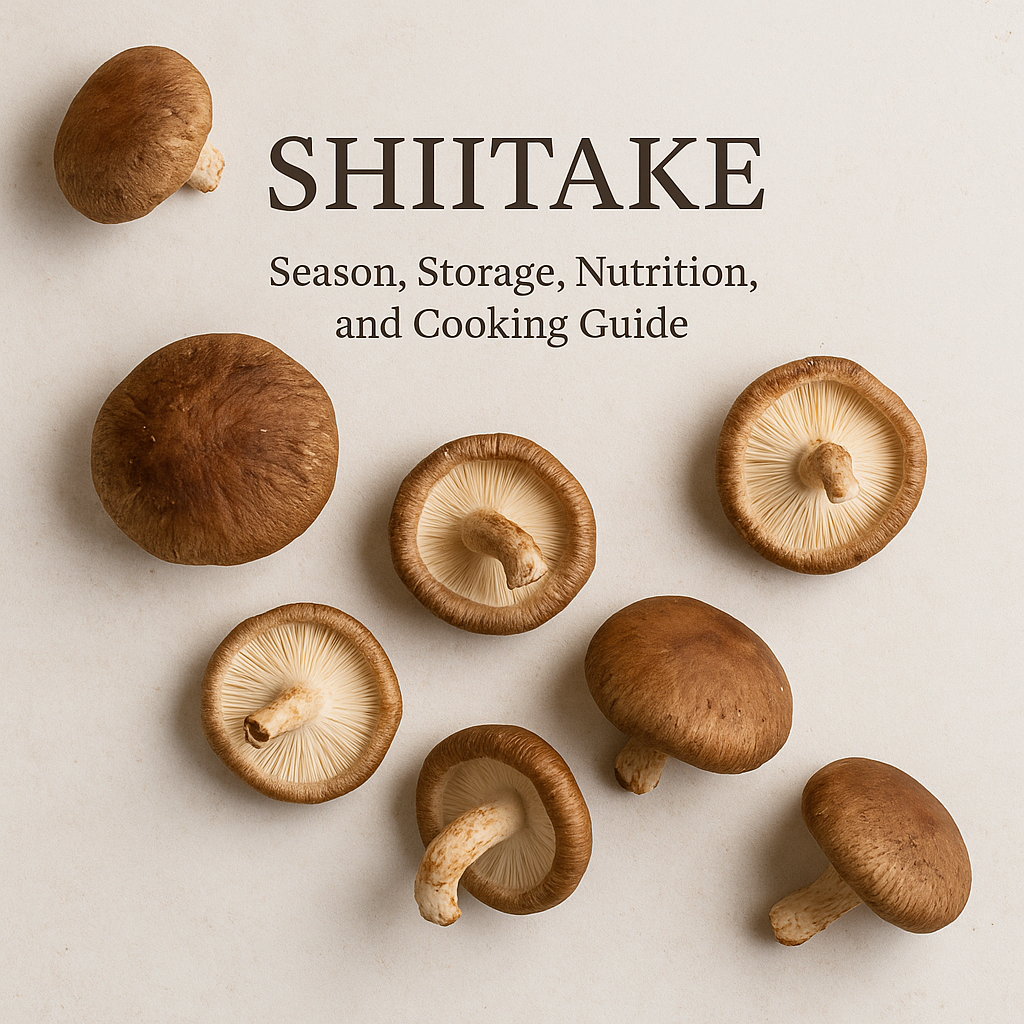
Shiitake mushrooms are distinct for their large, umbrella-like brown caps and sturdy stems. They have a savory, woodsy flavor that enhances a variety of dishes, making them a favorite in both everyday cooking and gourmet recipes. Shiitakes are cultivated on logs or nutrient-rich substrates, thriving in environments that mimic their natural forest habitat.
💪 Benefits
Shiitake mushrooms are celebrated not only for their unique taste but also for their nutritional profile. They are low in calories but packed with essential nutrients. Here are some of the key benefits:
- Rich in B Vitamins: These mushrooms are an excellent source of several B vitamins, including B2, B3, and B5, which are crucial for energy production and cognitive function.
- Contains Essential Minerals: Shiitakes provide minerals such as selenium, copper, and zinc, important for immune support and maintaining healthy skin and bones.
- Dietary Fiber: High in dietary fiber, shiitakes aid in digestion and promote gut health.
- Protein Source: They contribute a modest amount of plant-based protein, valuable in vegetarian and vegan diets.
🌍 Origin
The shiitake mushroom, scientifically known as Lentinula edodes, hails from East Asia, where it has been cultivated for over a thousand years. Japan and China are significant producers, but its popularity has spread globally, now being grown in various regions around the world, including North America and Europe. Traditionally, shiitakes grown on natural hardwood logs are highly prized for their superior flavor.
📅 Harvest Season
Shiitake mushrooms are typically harvested in the spring and fall when conditions are optimal for growth. However, with advances in cultivation techniques, they are now available year-round, thanks to controlled indoor growing environments that replicate seasonal changes.
🧺 Varieties
There are several varieties of shiitake mushrooms, distinguished primarily by their cultivation techniques and appearance. The most common types include:
- Donko: Known for their meaty texture and deep-flavored caps, Donko shiitakes are usually harvested in the colder months, leading to a denser texture.
- Hana: A rare variety characterized by intricate flower-like patterns on the cap, valued for both culinary use and ornamental purposes.
- Shiitake-sporophores: These are harvested at the early stages of development, offering a more delicate flavor ideal for soups and broths.
🛒 How to Choose (Checklist)
When selecting shiitake mushrooms at the market, consider the following checklist to ensure you purchase the best quality:
- Look for mushrooms with firm caps and no visible bruising or wet spots.
- Select shiitakes with smooth, unblemished surfaces and a deep brown color.
- Avoid mushrooms that smell sour or overly pungent, indicating they are past their prime.
- Check the stems as they should be plump and not too dried out or hard.
🍽 Cooking & Eating Methods
Shiitake mushrooms are versatile and can be prepared in numerous ways, adding depth to dishes across different cuisines. Here are some popular methods:
- Sautéing: A common method that enhances their rich, umami flavor. Saute them in olive oil or butter with garlic and herbs.
- Grilling: Brush with oil and season before grilling to bring out a smoky taste that complements meats and vegetables.
- Adding to Soups: Shiitakes are a popular addition to broths and soups, infusing them with a hearty, earthy essence.
- Stir-Frying: Combine with other vegetables and proteins for a quick, nutritious meal with an Asian flair.
❄ Storage Tips
Proper storage is key to maintaining the freshness and extending the shelf life of shiitake mushrooms:
- Store fresh shiitakes in a paper bag or a loosely closed container in the refrigerator for up to 1 week.
- For longer storage, consider drying the mushrooms. Dried shiitakes can last for up to a year when stored in an airtight container in a cool, dark place.
- If you've cooked shiitakes, store leftovers in a sealed container in the refrigerator for up to 3 days.
❓ FAQ
Q: Can I eat shiitake mushroom stems?
A: While shiitake stems are edible, they can be tough and fibrous. It is best to use them in stocks or broths to extract flavor before discarding.
Q: Are shiitake mushrooms gluten-free?
A: Yes, shiitake mushrooms are naturally gluten-free and can be safely incorporated into a gluten-free diet.
Q: Can shiitake mushrooms be eaten raw?
A: While technically they can be eaten raw, shiitakes are best cooked to enhance their flavor and ensure they are easily digestible.