🍓 Romanesco: Season, Storage, Nutrition, and Cooking Guide
Romanesco, a mysterious and fractal vegetable, is intriguing both in appearance and flavor. It is often described as a cross between broccoli and cauliflower with a unique, pyramid-like structure. This article explores the characteristics, benefits, origins, harvest seasons, varieties, and useful tips on choosing, cooking, and storing Romanesco, providing an in-depth guide to this fascinating vegetable.
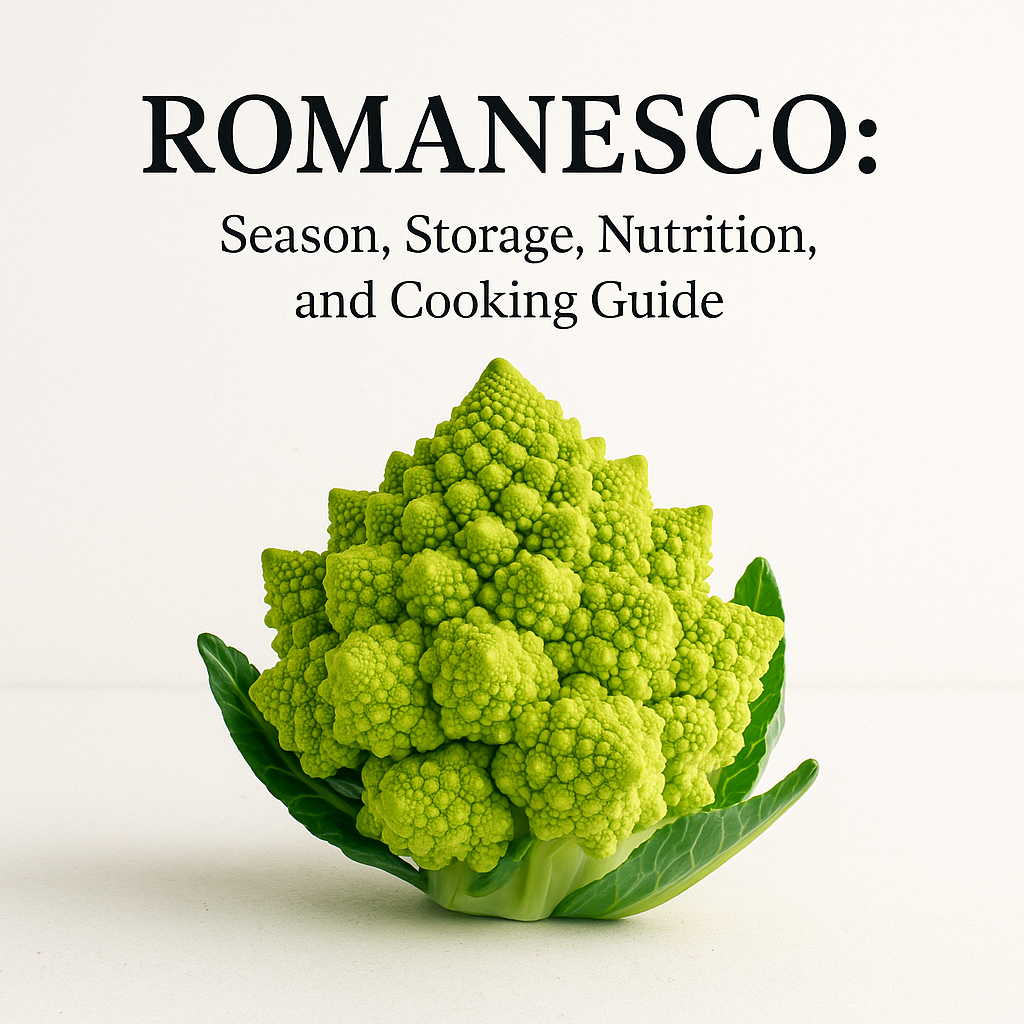
✨ Characteristics
Romanesco, also known as Romanesco broccoli or Roman cauliflower, is a beautiful vegetable from the Brassica family. It stands out due to its mesmerizing spiral pattern that follows the Fibonacci sequence, which gives it a striking and almost otherworldly appearance. The vegetable is typically a vibrant lime green, although it can sometimes appear in shades of yellow or more muted greens. Its texture is slightly crunchy when raw but tender when cooked, and it provides a mild, nutty flavor that is slightly earthy yet subtly sweet.
💪 Benefits
Romanesco is not only a visual delight but also packed with nutrients that contribute to a balanced diet. It is a rich source of vitamins C and K, offering antioxidant properties and supporting bone health. Additionally, Romanesco contains dietary fiber, which aids in digestive health. Its nutrient profile is similar to that of other cruciferous vegetables, providing folic acid, potassium, and carotenoids, all of which contribute to overall health and wellness. Consuming Romanesco as part of a varied diet can assist in maintaining good health without making any specific medical claims.
🌍 Origin
Romanesco has its roots deeply planted in Italy, where it was first cultivated in the Lazio region, particularly around the city of Rome, hence its name. The vegetable has been part of Italian cuisine since the 16th century. Over time, its cultivation spread to other parts of Europe and eventually made its way to global markets, where it has garnered attention not just for its appearance, but for its versatility and health benefits that align with many modern diets.
📅 Harvest Season
Romanesco is typically a cold-season vegetable, thriving best in temperatures between 60-70°F (15-21°C). Its peak season is during the late summer through late fall, although it can sometimes extend into the early winter months depending on the climate. Gardeners often sow Romanesco in the spring for a fall harvest, ensuring it can be enjoyed fresh as the weather cools. This seasonality means it may be slightly harder to find in stores during the off-season, making it more of a seasonal delicacy in certain regions.
🧺 Varieties
While Romanesco often follows a specific visual pattern and color, there are subtle variations in the varieties available. The most common type remains the bright green variant, but some growers cultivate Romanesco in hues that range from soft whitish-green to more intense lime. Differences may also be found in size, with miniature versions appearing as delightful clusters suitable for single servings or decorative garnishes. These varieties ensure that Romanesco can suit different culinary needs while always providing the same core attributes in flavor and nutrition.
🛒 How to Choose (Checklist)
- Check for a vibrant color, whether it's that classic bright green or a subtle variation, indicating freshness.
- Inspect the head for firmness. A firm Romanesco will have a solid feel and resist pressure without bruising.
- Look for tightly packed florets, as gaps can suggest over-maturity.
- Avoid any visible dark spots, decay, or mushy areas, signs that the vegetable is past its prime.
- Smell the Romanesco; it should have a fresh, vegetal scent with no unpleasant odors.
🍽 Cooking & Eating Methods
Romanesco's unique flavor and texture make it an adaptable ingredient in the kitchen. Here are several ways to prepare and enjoy it:
- Steaming: This method helps retain most of its nutrients while enhancing its tender texture. Simply steam for 7-10 minutes and season with olive oil and lemon.
- Roasting: Toss Romanesco florets with olive oil, salt, and pepper, and roast them in the oven at 425°F (220°C) until golden, around 20 minutes. This amplifies its nutty flavor.
- Raw: Slice Romanesco thinly for salads or crudité platters, providing a crunchy texture with dips or dressings.
- Sautéing: A quick sauté with garlic and herbs offers a delightful accompaniment to main courses, ready in less than 10 minutes.
- Casseroles or Curries: Romanesco can serve as a grand substitute for broccoli or cauliflower in hearty casseroles or spiced curries, absorbing flavors while maintaining its structure.
❄ Storage Tips
Proper storage of Romanesco can enhance its shelf life and reduce waste. Here are a few tips to keep your Romanesco fresh:
- Refrigeration: Store Romanesco whole in a perforated plastic bag in the crisper drawer of your fridge. This will retain moisture while allowing airflow.
- Freshness Check: Consume within a week of purchase for optimal freshness. Check regularly for any signs of spoilage such as browning or soft spots.
- Freezing: Blanch Romanesco florets in boiling water for 3 minutes, then transfer them into ice water. After drying thoroughly, freeze the florets in an airtight container for up to 6 months.
❓ FAQ
- What is Romanesco known for?
Romanesco is known for its visually stunning, fractal-like appearance and its mild, nutty flavor. - Can Romanesco be used interchangeably with broccoli?
Yes, Romanesco can often replace broccoli or cauliflower in recipes for a unique flavor and visual appeal. - Is Romanesco genetically modified?
No, Romanesco is a naturally occurring cultivar that has been selectively bred, not genetically modified.