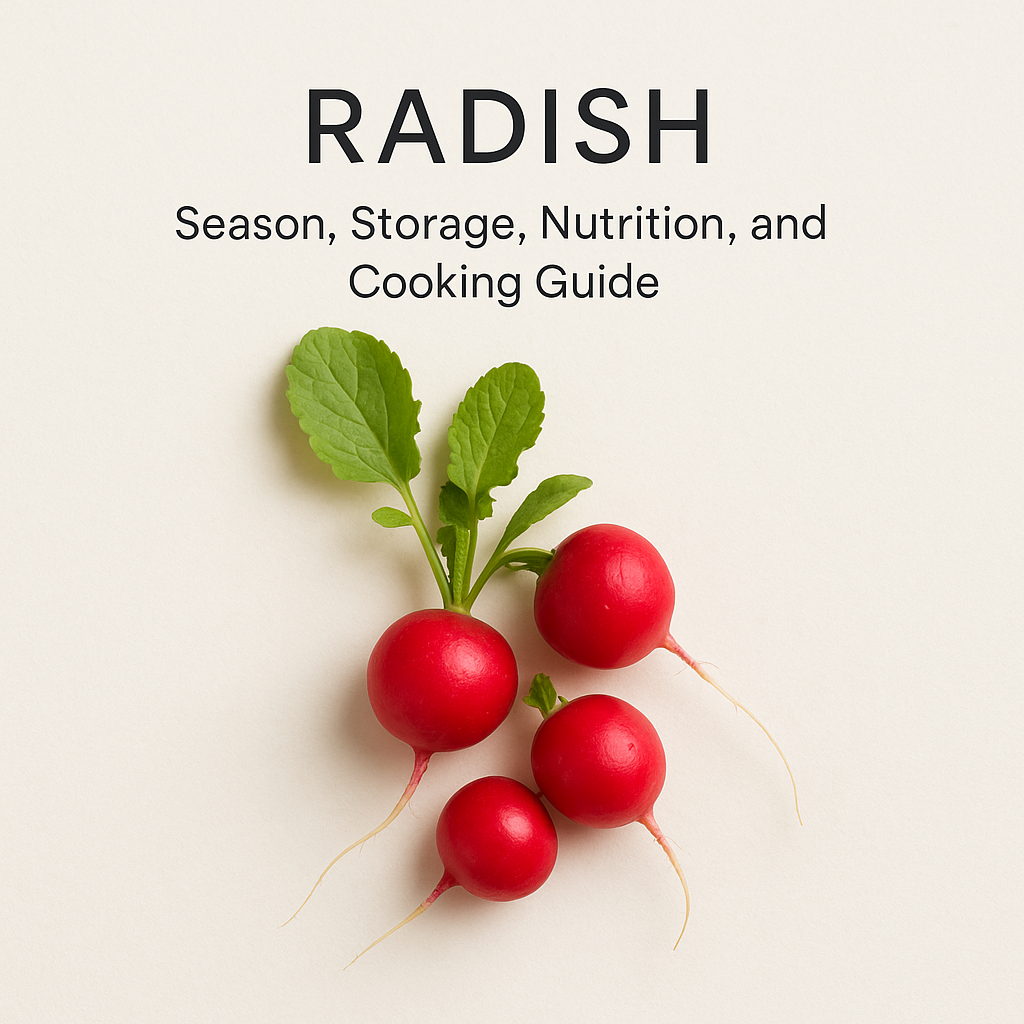
🍓 Radish: Season, Storage, Nutrition, and Cooking Guide
Radishes are often overlooked in the vegetable world, yet they offer a crisp, peppery bite that brightens any dish they're added to. With numerous varieties to choose from, each with its unique flavor profile, radishes not only enhance the aesthetic appeal of culinary creations but also their nutritional content. Whether you're a fan of their vibrant crunch or curious to incorporate them into your diet, this guide will walk you through radishes' characteristics, nutritional benefits, and more.
✨ Characteristics
Radishes belong to the Brassicaceae family, which also includes cruciferous vegetables like broccoli and cabbage. They are known for their crispy texture and pungent flavor, which is largely due to the compounds glucosinolates and an enzyme called myrosinase. When combined, these compounds produce the familiar spicy edge that many have come to love. Despite being relatively small, radishes pack a visual punch; they range in color from vibrant red and purple to muted whites and blacks, with sizes varying from small globes to elongated forms.
💪 Benefits
Radishes are a nutritional powerhouse packed with essential vitamins and minerals that contribute to a healthy diet. They are low in calories yet high in fiber, making them excellent for digestive health. Rich in vitamin C, radishes help support the immune system and promote skin health. Moreover, they contain antioxidants known to combat free radicals in the body, potentially reducing the risk of chronic diseases. Additionally, radishes provide potassium, calcium, and folate, all of which contribute to maintaining overall health.
🌍 Origin
Radishes are believed to have been domesticated in Southeast Asia or the Mediterranean region, where they have been cultivated for thousands of years. Evidence suggests that the ancient Egyptians and Greeks grew radishes for both culinary and medicinal purposes. From Europe, radishes eventually spread to other parts of the world, including Asia and the Americas, where they adapted well to various climatic conditions. Today, radishes are a global staple, celebrated for their adaptability and varied uses in different cuisines.
📅 Harvest Season
Radishes are typically fast-growing root vegetables, making them a popular choice for gardeners seeking quick harvests. In temperate climates, radishes can be planted as early as spring and continue to be sowed successively throughout the summer and fall. However, they are commonly associated with spring and fall, as extreme summer heat can cause them to turn bitter or bolt. In regions with milder climates, radishes can be grown year-round, ensuring a constant supply for culinary use.
🧺 Varieties
The radish family is diverse, offering numerous varieties that differ in color, size, shape, and flavor. Some of the most popular types include:
- Cherry Belle: Characterized by its small, round shape and bright red skin, this variety is crisp with a mild heat—a classic for salads.
- Daikon: Also known as white radish, this elongated variety hails from Asia and is often used in Asian cuisines for its mild flavor.
- Watermelon Radish: Known for its stunning pink interior and green exterior, it offers a slightly sweet, mild peppery taste.
- French Breakfast: This small, cylindrical radish has a rosy pink hue with a white tip, favored for its tender, subtly spicy flavor.
🛒 How to Choose (Checklist)
When selecting radishes at the market or grocery store, look for the following qualities to ensure optimal freshness and flavor:
- The radishes should be firm to the touch with no noticeable softness.
- Check for vibrant leaf tops, which indicate freshness.
- Avoid radishes with cracks or blemishes on their skin.
- Choose radishes that feel heavy for their size, as this usually signifies juiciness.
🍽 Cooking & Eating Methods
Radishes offer versatility in culinary uses, bringing crunch and flavor to an array of dishes. They can be enjoyed raw, sliced thinly, and added to salads, providing a peppery kick. For a more mellow flavor, consider roasting radishes, which brings out their natural sweetness and softens their heat. Pickling is another popular method that enhances their crisp texture and vibrant flavor, making them an excellent condiment for various meals. Additionally, radish greens are edible and can be used in salads, soups, or sautéed as a side dish.
❄ Storage Tips
Proper storage of radishes ensures they remain fresh and crisp for as long as possible. Here are some storage recommendations:
- Remove the leafy tops before storing to prevent nutrients from being drawn out of the root.
- Store radishes in a plastic bag in the crisper drawer of the refrigerator to maintain moisture.
- If the radishes begin to soften, submerge them in cold water to help restore some crispness.
❓ FAQ
1. How long do radishes last after harvesting?
Freshly harvested radishes can last up to two weeks if stored properly in the refrigerator. Be sure to remove their greens and keep them in a sealed plastic bag to preserve their moisture and crispness.
2. Can I eat radish greens?
Yes, radish greens are edible and rich in nutrients. They have a slightly peppery flavor and can be used in salads, blended into smoothies, or cooked similarly to other leafy greens such as spinach.
3. Why are my radishes bitter?
Radishes can become bitter due to growing conditions, such as hot weather or insufficient watering, which cause them to bolt and the roots to become tough. Consistent watering and providing some shade can help prevent bitterness.