🍓 Pumpkin: Season, Storage, Nutrition, and Cooking Guide
Pumpkins are more than just a popular fall decoration; they are a versatile and nutritious fruit that finds its way into a myriad of dishes across the globe. From autumn's iconic pumpkin spice lattes to hearty soups and delectable pies, pumpkins are celebrated for their distinct flavor and health benefits. In this guide, we will explore pumpkins' characteristics, benefits, varieties, harvest season, and useful storage and cooking tips.
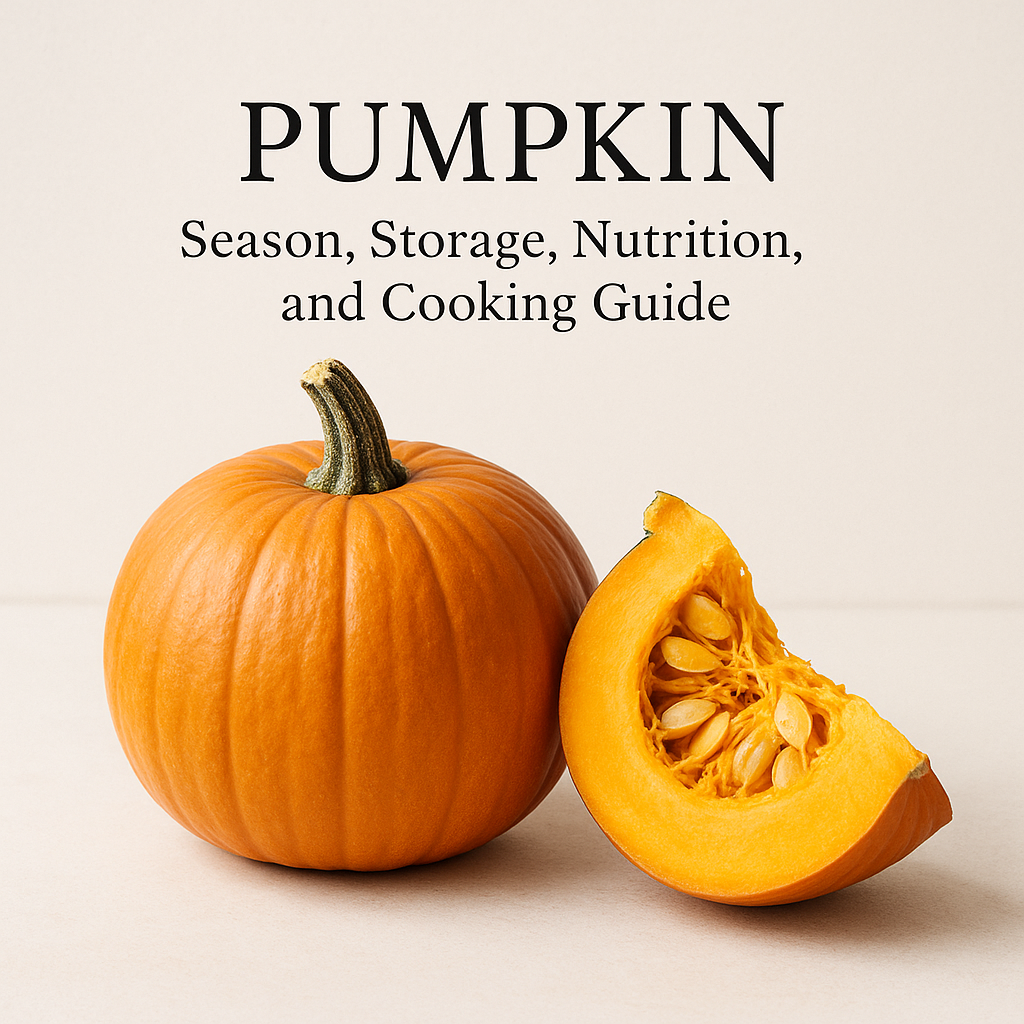
✨ Characteristics
Scientifically known as Cucurbita pepo, pumpkins are a member of the squash family, Cucurbitaceae. Typically round with smooth, slightly ribbed skin, their vibrant orange color distinguishes them. While pumpkins come in various shapes and sizes, they generally include a fibrous, edible interior filled with seeds commonly known as pepitas. These seeds, high in nutritional value, can be enjoyed cooked or raw.
💪 Benefits
Pumpkins are rich in nutrients that contribute to overall health. They are particularly known for being high in beta-carotene, a powerful antioxidant that the body converts into vitamin A, essential for vision, immune function, and skin health. Additionally, they are low in calories, rich in dietary fiber, and packed with vitamin C, potassium, and an array of beneficial polyphenols. Incorporating pumpkin into your diet can promote heart health, aid weight management, and support healthy skin.
🌍 Origin
Pumpkins are believed to have originated in North America, with seeds found in Mexico dating back to around 7000 to 5500 BC. Native Americans were the first to utilize pumpkins as a staple in their diets, consuming them in various forms, ranging from roasted to woven mats. European settlers adopted this crop upon arrival, leading to the introduction of pumpkin pie and its prominence as a key ingredient in Thanksgiving celebrations.
📅 Harvest Season
Pumpkins are typically harvested in early to mid-fall. The precise timing can depend on the specific variety and geographic location, but generally, pumpkins reach maturity about 70 to 120 days after planting. For home gardeners, signs of a ripe pumpkin include a hard skin that resists being punctured and a uniform color. It’s important to harvest before the first frost to prevent damage to the fruit.
🧺 Varieties
There are dozens of pumpkin varieties cultivated for different uses ranging from decorative to culinary:
- Jack-o'-Lantern: The most famous for carving, though not ideal for eating.
- Sugar Pumpkin: Smaller, sweeter, and perfect for pies and desserts.
- White Pumpkin: Adds elegance to décor and can be used in cooking as well.
- Miniature Varieties: Like 'Baby Boo' and 'Jack Be Little', great for decoration.
- Cinderella Pumpkins: Known for their bright orange color and sweet flesh.
🛒 How to Choose (Checklist)
When selecting a pumpkin, keep the following checklist in mind to ensure quality and freshness:
- Look for pumpkins with a firm, solid structure without cuts or blemishes.
- Select pumpkins that feel heavy for their size, indicating thick flesh.
- Tapping on the pumpkin should produce a hollow sound.
- Ensure the stem is firm and attached, as a missing or soft stem indicates decay.
- A uniformly colored pumpkin is a good sign of ripeness and quality.
🍽 Cooking & Eating Methods
Pumpkins can be prepared in numerous delectable ways:
- Roasting: Cut into wedges, drizzle with olive oil and seasonings, and bake until tender.
- Soup: Puree roasted pumpkin with broth and spices for a comforting dish.
- Pie: Blend pumpkin puree with spices and bake in a buttery crust for a classic dessert.
- Stews: Add pumpkin cubes to stews for extra nutrition and flavor.
- Seeds: Cleaned, seasoned, and roasted for a crunchy snack.
❄ Storage Tips
Proper storage ensures your pumpkins retain their freshness:
- Store whole pumpkins in a cool, dry place away from sunlight to prevent spoiling.
- Once cut, wrap pieces in plastic wrap and refrigerate, using them within a week.
- For long-term storage, pumpkin can be pureed and frozen in airtight containers for up to a year.
- Keep seeds dry and stored in an airtight container to maintain freshness.
❓ FAQ
Q: Can pumpkin be eaten raw?
A: Yes, pumpkin can be eaten raw, although it is often more palatable when cooked. If consuming
raw, blend into smoothies or salads for a crisp texture.
Q: What is the difference between a carving and a cooking pumpkin?
A: Carving pumpkins are usually larger, with thinner walls and less flavorful flesh. Cooking
pumpkins, often smaller and denser, have sweeter and thicker flesh, ideal for culinary uses.
Q: How can I tell if a pumpkin has gone bad?
A: Signs of spoilage include soft spots, mold, and an unpleasant smell. A pumpkin with a soft
or dark stem may also indicate it is past its prime.