🍓 Potato: Season, Storage, Nutrition, and Cooking Guide
The humble potato is a versatile and nutritious staple that plays a significant role in diets across the globe. Whether mashed, baked, or fried, potatoes are cherished for their comforting taste and culinary flexibility. In this guide, we explore the characteristics, benefits, origin, harvest season, varieties, selection criteria, cooking methods, storage tips, and commonly asked questions about potatoes.
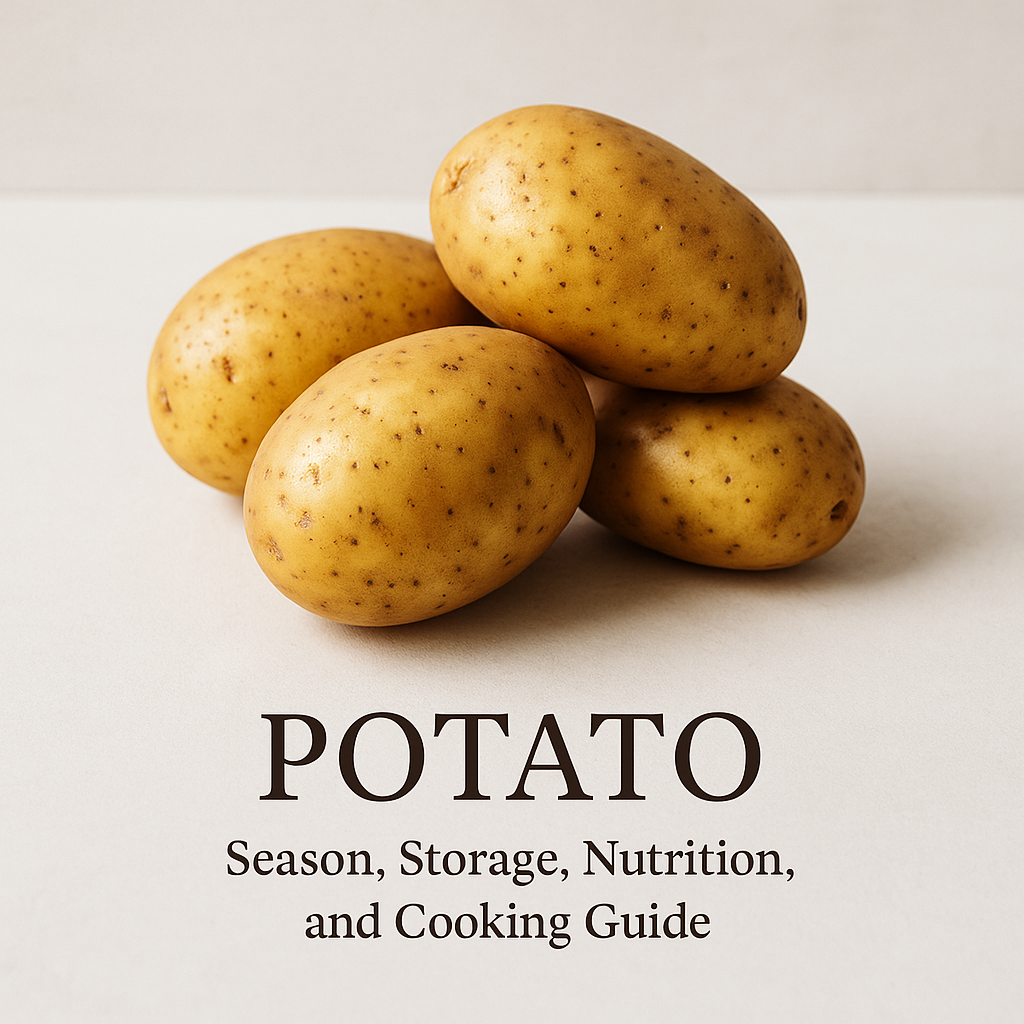
✨ Characteristics
Potatoes are tuberous crops belonging to the nightshade family, Solanaceae. In its raw form, a potato is generally round or oval with a rough, brown skin and creamy white flesh. Depending on the variety, the skin can also range from yellow to red or purple, and the flesh can be yellow to a deep purple as well. Potatoes are adored for their ability to absorb flavors and create fluffy, smooth textures in various dishes.
💪 Benefits
Potatoes are a powerhouse of nutrition, providing essential vitamins and minerals. They are rich in vitamin C, potassium, vitamin B6, and fiber. As a low-calorie, high-carbohydrate food, potatoes provide energy and help maintain gut health. The fiber content aids digestion and promotes feelings of fullness, making it a useful element in weight management diets. Potatoes also contain antioxidants, which may help to combat free radicals, although they don't replace the need for fruits and vegetables in one's diet.
🌍 Origin
The potato (Solanum tuberosum) originated in the Andean region of South America more than 7,000 years ago. Indigenous peoples cultivated it in the high-altitude regions of what is now southern Peru and northwestern Bolivia. Spanish explorers introduced the potato to Europe in the late 16th century, where it eventually became a vital crop. Today, potatoes are cultivated worldwide, making them one of the most important food crops due to their growth in diverse climates and conditions.
📅 Harvest Season
Potato harvesting varies significantly based on location and climate. In North America, the optimal harvest period typically ranges from late summer to early fall, although early varieties can be harvested in late spring. In mild climates, potatoes can be harvested in early spring for those planted in late autumn. When potatoes are ready for harvest, the plant foliage will usually die back. It's crucial to avoid leaving potatoes in the ground too long after maturity as they can become prone to pests and diseases.
🧺 Varieties
There are over 4,000 varieties of potatoes from a diverse range of colors and sizes. The most common varieties include:
- Russet Potatoes: Recognized for their large size, rough brown skin, and white flesh. They are ideal for baking, mashing, and frying due to their fluffy texture.
- Red Potatoes: Small, round, and with a smooth red skin. They are perfect for salads, roasting, and boiling owing to their firm structure.
- Yellow Potatoes: Known for their golden skin and buttery flavor, they work well in virtually every cooking method but are especially good for roasting and mashing.
- Fingerling Potatoes: Finger-shaped with thin skin and distinctive flavors. They can be roasted or used in salads.
- Purple Potatoes: With vibrant purple skin and flesh, these potatoes are rich in antioxidants and make a colorful addition to meals.
🛒 How to Choose (Checklist)
When selecting potatoes, consider the following checklist to ensure optimal quality:
- Look for potatoes that are firm and free from sprouts or green spots.
- Avoid potatoes with cuts, bruises, or blemishes.
- Choose potatoes that are uniform in size to ensure even cooking.
- Check for a fresh smell; any off-odor suggests spoilage.
- Select potatoes with smooth skin, as they tend to have a longer shelf life.
🍽 Cooking & Eating Methods
Potatoes can be prepared and enjoyed in various mouthwatering ways, including:
- Boiling: A simple method that maintains the potato’s nutritional content and is a great base for potato salads.
- Baking: Whole baked potatoes offer a fluffy interior and crispy exterior, perfect as a standalone dish or served with toppings.
- Mashing: An approach that transforms potatoes into a creamy, smooth side dish that pairs well with meat dishes.
- Frying: Whether in the form of French fries or hash browns, frying brings a crispy texture and rich flavor.
- Roasting: Enhances the natural sweetness of potatoes and creates a tender, caramelized dish.
- Grilling: Ideal for summer barbecues, grilling imparts a smoky flavor.
❄ Storage Tips
Proper storage is key to prolonging the shelf life of potatoes. Consider these tips:
- Store potatoes in a cool, dark, and well-ventilated place such as a pantry. The ideal storage temperature is between 45-50°F (7-10°C).
- Avoid refrigerating potatoes, as cold temperatures can convert their starches into sugar, altering their flavor and texture.
- Keep potatoes in a breathable bag or container to prevent moisture buildup, which can lead to rotting.
- Regularly check stored potatoes for soft spots or sprouting and remove any affected potatoes immediately.
❓ FAQ
Here are some commonly asked questions about potatoes:
- Q: How can I prevent my potatoes from sprouting?
A: To minimize sprouting, store potatoes in a cool, dark place and separate them from onions, as these can accelerate sprouting. - Q: Can I eat green potatoes?
A: Green potatoes contain solanine, a toxic compound. It is best to avoid eating them or thoroughly peel the green parts before cooking. - Q: What's the best way to tell if a potato has gone bad?
A: Discard potatoes that are mushy, moldy, or have an off-putting smell. A green tint may indicate the presence of solanine, which is toxic.