🍓 Poblano: Season, Storage, Nutrition, and Cooking Guide
Poblano peppers are a versatile ingredient revered for their mild heat and rich flavor. Used in various culinary styles, these peppers are a staple in many kitchens around the globe. This comprehensive guide will walk you through what makes the poblano pepper unique, its benefits, origin, and much more.
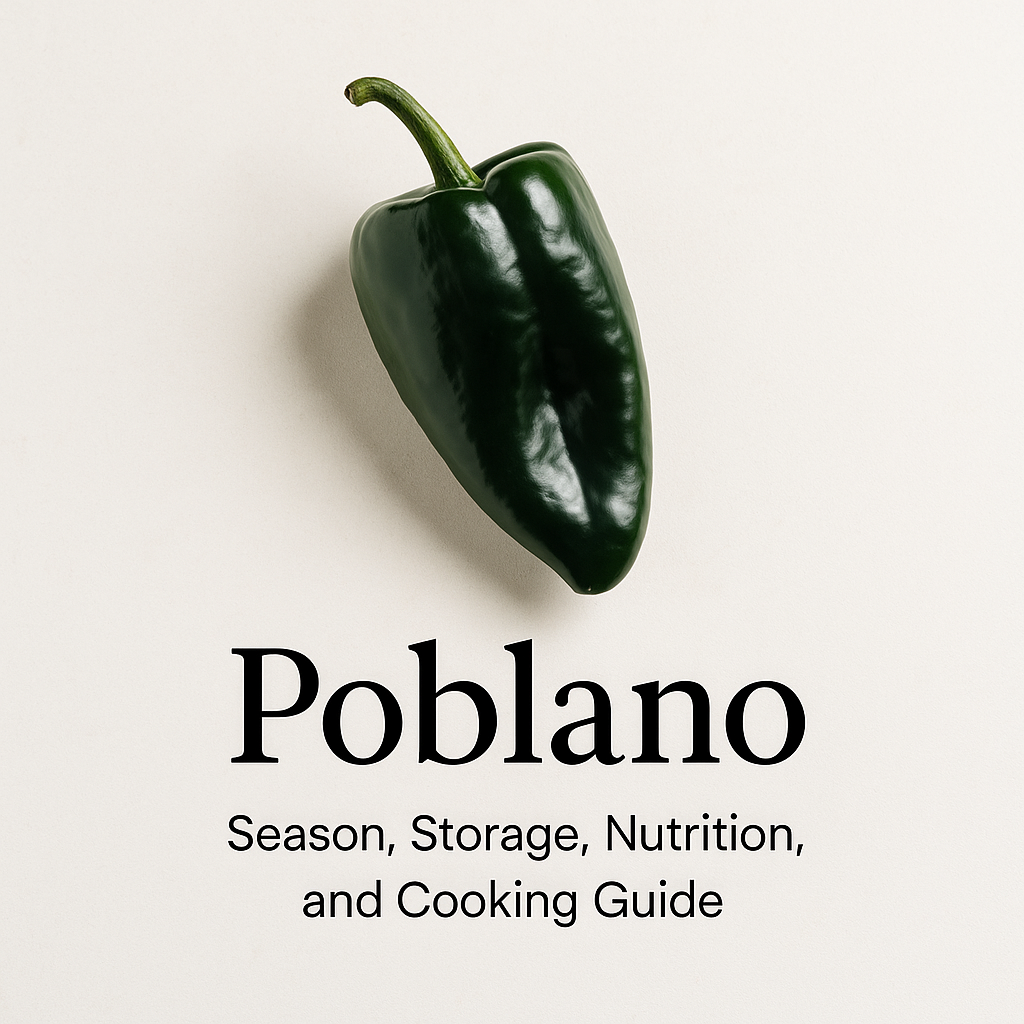
✨ Characteristics
The poblano pepper, originating from the Mexican state of Puebla, is recognized for its dark green, heart-shaped appearance. These peppers are larger and milder than jalapeños, typically measuring 3 to 6 inches in length. When dried, they are known as ancho chilies, taking on a reddish-brown color and a sweeter taste.
💪 Benefits
Poblano peppers are not just flavorful but also offer several nutritional benefits. They are low in calories and rich in vitamins and minerals, including vitamins A, B6, C, and K. They also contain potassium and fiber, which contribute to maintaining a balanced diet. Regular consumption of poblanos can support immune function, skin health, and vision due to their high vitamin A and C content.
🌍 Origin
The poblano pepper has its roots in Mexico, specifically in the state of Puebla, where it is a mainstream cooking ingredient. These peppers are integral to traditional Mexican dishes and have played a significant role in the nation’s culinary history. Their migration to other parts of the world has been facilitated by the global acceptance of Mexican cuisine, making them a beloved pepper in various countries.
📅 Harvest Season
Poblano peppers are typically harvested in the late summer and early fall, with the peak harvest season occurring between August and October. However, in regions with a warmer climate, they can be cultivated year-round under controlled agricultural practices.
🧺 Varieties
While the poblano pepper itself is a distinct variety, it is worth noting its stages. The fresh, green poblano is the most common form, while the dried version is referred to as an ancho chili. Each form is used differently in cooking; fresh poblanos are ideal for roasting and stuffing, while anchos are preferred for sauces and spice mixes.
🛒 How to Choose (Checklist)
- Look for firm and glossy skin without any blemishes or soft spots.
- Select peppers that feel heavy for their size, as they are likely to be fresher.
- Choose poblano peppers that have a deep green color, indicating ripeness.
- Avoid peppers with any wrinkles or signs of shriveling.
- Check for uniformity in shape if stuffing; a consistent size will aid in even cooking.
🍽 Cooking & Eating Methods
Poblano peppers are exceptionally versatile and can be incorporated into a plethora of dishes. Here are some popular methods of preparation and cooking:
- Roasting: This is a common way to bring out the natural sweetness and enhance the flavor of poblano peppers. Roast them until the skin blisters, bake them, or char them on an open flame.
- Stuffing: Their large size makes them perfect for stuffing. Fill them with cheese, meat, or vegetable mixtures and bake until tender.
- Soups and Stews: Add them to soups and stews to enhance the flavor profile with their mild heat.
- Sauces: Blended into sauces, they can add depth and richness, giving dishes a smoky, sweet flavor.
- Grilled: Sliced and grilled, poblano peppers make an excellent accompaniment to meats or as a part of grilled vegetable platters.
❄ Storage Tips
Proper storage of pobalno peppers can extend their shelf life and conserve their flavors:
- Refrigeration: Fresh poblano peppers should be stored in the crisper drawer of the refrigerator and used within one week.
- Freezing: For long-term storage, poblanos can be frozen. First, roast and peel them, then store in airtight bags. They should keep for up to 6 months.
- Drying: Drying poblanos will transform them into anchos. Once dried, store them in a cool, dry place in airtight containers. They can last for months when stored this way.
❓ FAQ (3 questions)
- Are poblano peppers very spicy? Poblano peppers are considered mild on the chili pepper spectrum. They rank low on the Scoville scale, making them a comfortable choice for those sensitive to heat. In comparison, they are milder than jalapeños.
- What dishes are best made with poblano peppers? Poblano peppers are versatile and can be used in various dishes such as chiles rellenos, tacos, salsas, and smoky sauces. They complement both vegetarian and meat-based recipes well.
- How do I peel poblano peppers? To peel poblano peppers, roast them until the skin blisters and chars all over. Once cooled, the charred skin can be easily removed by rubbing it with your fingers or a paper towel.