🍓 Parsnip: Season, Storage, Nutrition, and Cooking Guide
Parsnips, often overshadowed by their carrot cousins, bring a unique blend of sweetness and earthiness to the table. Their versatility in various dishes, combined with impressive nutritional benefits, makes them a worthy addition to any kitchen. This guide will take you through everything you need to know about parsnips, from their characteristics to storage tips, helping you make the most of this delicious root vegetable.
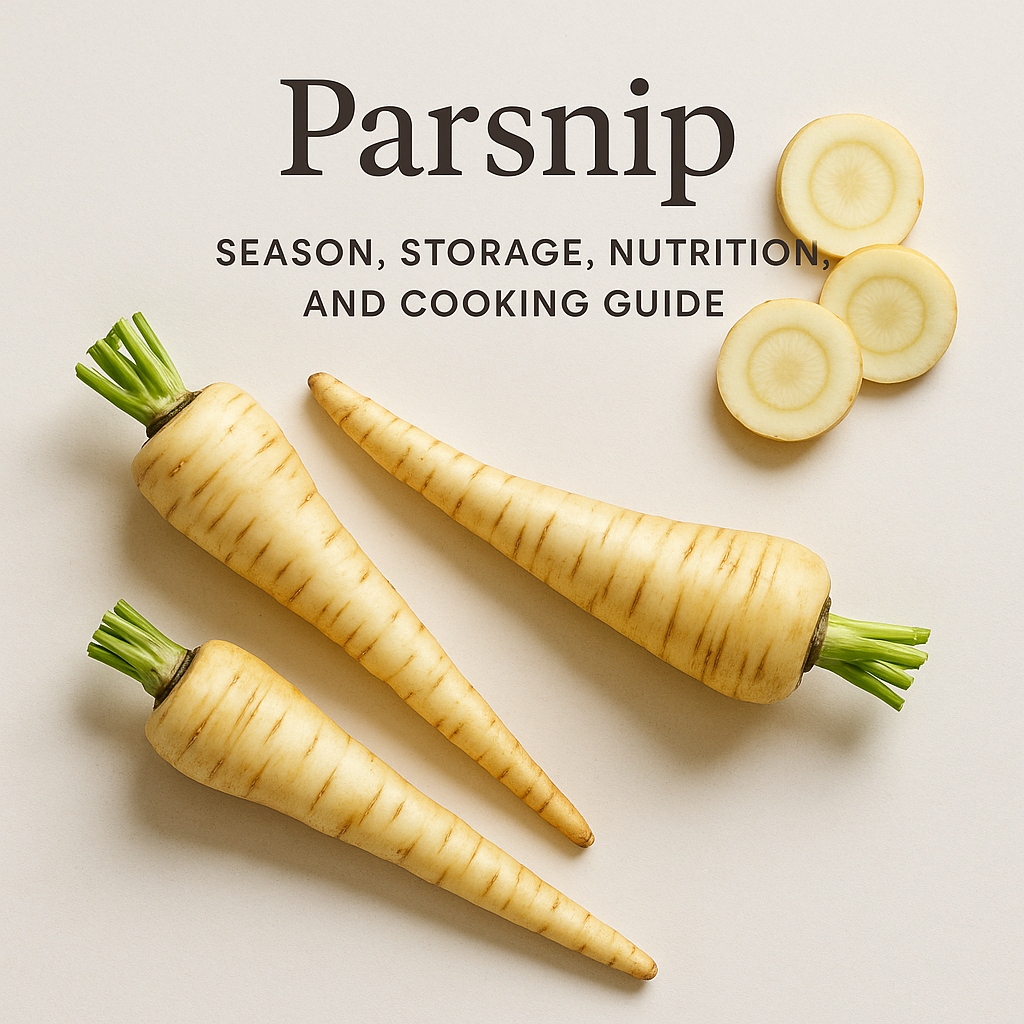
✨ Characteristics
Parsnips are root vegetables closely related to carrots and parsley. They boast a creamy, off-white skin and a sweet, nutty flavor that becomes even more pronounced with cooking. Surprisingly, parsnips were once used as a sweetener before the advent of cane sugar, showcasing their natural sweetness. Their texture is similar to carrots but typically softer when cooked, making them an excellent choice for mashing, roasting, and more.
💪 Benefits
Parsnips are not just about flavor; they are rich in various nutrients. They are an excellent source of vitamin C, which supports the immune system, and dietary fiber, which aids in digestion and promotes heart health. Additionally, parsnips provide essential minerals such as potassium, necessary for blood pressure regulation, and manganese, which plays a critical role in bone formation. Regular consumption of parsnips can contribute to a balanced diet, offering both taste and health benefits in one package.
🌍 Origin
The parsnip has a history that traces back to ancient times, with origins rooted in Eurasia. Initially cultivated as a staple food source, its usage has evolved throughout the ages. Historically, they played a vital role in European diets, especially during the Roman Empire. Today, parsnips are grown in various parts of the world, enjoying an enduring popularity in Europe and North America for their unique taste and versatility.
📅 Harvest Season
Parsnips are typically sown in the spring and harvested in late fall through winter. The colder months are ideal for parsnips as the frost improves their flavor, making them sweeter and more palatable. Depending on your location, the peak season for fresh parsnips usually extends from October to March. They store exceptionally well when kept under the right conditions, allowing them to be enjoyed throughout the winter months.
🧺 Varieties
There are several varieties of parsnips, each with unique characteristics while maintaining the signature sweetness and creaminess associated with the vegetable. Popular varieties include:
- Hollow Crown: Known for its long, slender root, this variety is often seen in gardens and farmers' markets.
- Gladiator: A robust, uniform parsnip that is favored by commercial growers for its excellent disease resistance.
- Albion: A relatively new variety noted for its sugar-sweet taste and extended harvest period.
🛒 How to Choose (Checklist)
When selecting parsnips at the market, use the following checklist to ensure you pick the best:
- Look for firm, solid roots without soft spots or blemishes.
- The parsnip should feel heavy for its size, indicating freshness.
- Avoid parsnips with a rubbery texture as they are likely declining in quality.
- Smaller parsnips are often sweeter and less fibrous than larger ones.
🍽 Cooking & Eating Methods
Parsnips are versatile and can be prepared in numerous ways that showcase their sweet, nutty flavor. Here are some popular cooking methods:
- Roasting: Cut parsnips into wedges, toss with olive oil, salt, and pepper; roast until golden and tender.
- Mashing: Boil parsnips until soft, then mash with butter and cream for a rich side dish.
- Soup: Puree cooked parsnips with stock and spices for a comforting soup.
- Grating: Use grated parsnip in salads or baked goods for an extra touch of sweetness.
❄ Storage Tips
Proper storage is key to maintaining the freshness and flavor of your parsnips. Here are some tips:
- Store parsnips in a cool, dark place such as in a cellar or the refrigerator's vegetable drawer.
- Wrap them in a paper towel to absorb moisture and prevent rot, then place them in a perforated plastic bag.
- Kept this way, parsnips can last two to three weeks.
- Avoid washing them before storage to prolong their shelf life.
❓ FAQ
Q1: Can you eat parsnips raw?
A: Yes, parsnips can be eaten raw, though cooking enhances their sweetness and flavor.
Q2: Are parsnips and carrots the same?
A: While both are root vegetables, they differ in taste, color, and sweetness. Parsnips are creamier and sweeter when cooked.
Q3: How do parsnips compare nutritionally to potatoes?
A: Parsnips are lower in calories and richer in dietary fiber and vitamin C compared to potatoes.