🍓 Onion: Season, Storage, Nutrition, and Cooking Guide
Onions are a staple ingredient in kitchens worldwide, offering versatility, flavor, and numerous culinary applications. Beyond their pungent taste and aroma, onions are also rich in nutrients and boast a variety of health benefits. This guide explores the various aspects of onions, including their characteristics, benefits, origins, harvest seasons, and more.
✨ Characteristics
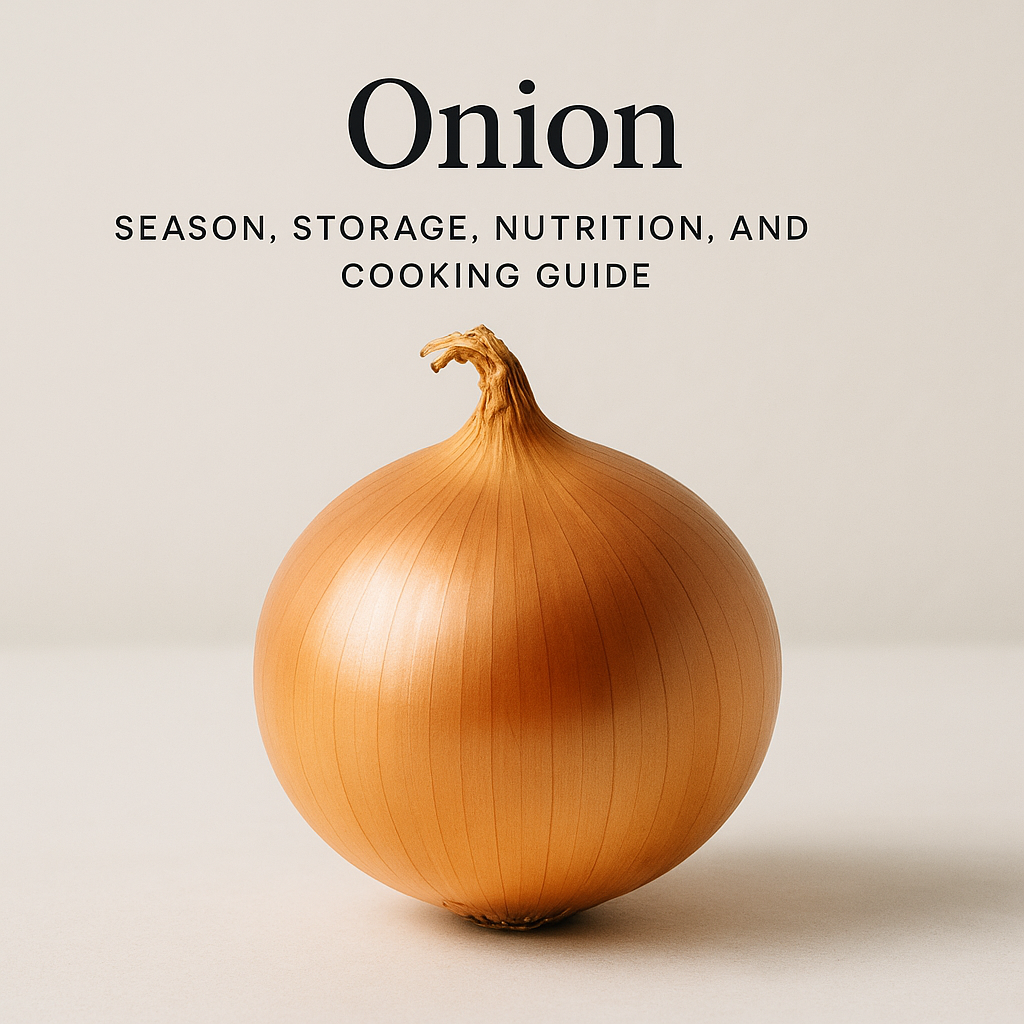
Onions belong to the Allium family, which also includes garlic, leeks, and chives. They are known for their layered structure, pungent smell, and ability to bring depth to dishes. Onions can vary in color – from white to red and yellow – and in flavor – from sweet to sharp, depending on the type and preparation method.
💪 Benefits
Onions are a powerhouse of beneficial compounds. They are a significant source of vitamins C and B6, folate, potassium, and antioxidants, like quercetin. Consuming onions can contribute to heart health, support bone density, and improve the immune system. While no medical claims are made, regularly including onions in a balanced diet can be part of a healthy lifestyle.
🌍 Origin
The origins of onions can be traced back thousands of years to Asia and the Middle East. They are one of the oldest cultivated crops known to humanity, having been used across ancient civilizations for both culinary and medicinal purposes. Today, onions are cultivated globally, with major production in countries like China, India, and the United States.
📅 Harvest Season
In general, onions are harvested from late spring to fall, depending on the variety and location. Vidalia onions, for instance, are harvested in the spring in the United States, while storage onions are typically harvested in the late summer and early fall. The availability of onions year-round is due to strategic storage and importation policies that ensure market supply.
🧺 Varieties
There are several popular varieties of onions:
- Yellow onions: The most common type, known for their strong flavor, excellent for sautéing.
- Red onions: Milder and sweeter, often used in salads and garnishes.
- White onions: With a sharp, crisp flavor, they are ideal for Mexican cuisine.
- Sweet onions: Varieties like Vidalia are ideal for roasting and grilling.
🛒 How to Choose (Checklist)
Selecting the best onions from the market involves a keen eye for detail. Here's a checklist to help you choose:
- Firmness: Onions should feel firm and heavy for their size.
- Skin: Look for dry, papery skin without blemishes or signs of moisture.
- Avoid sprouting: Steer clear of onions with green shoots, as they may be past their prime.
- Size: Choose medium-sized onions for cooking versatility.
🍽 Cooking & Eating Methods
Onions can be prepared in numerous ways, each unlocking different facets of their flavor profiles:
- Raw: Often added to salads and sandwiches for a crisp, pungent bite.
- Sautéed: A classic base for soups, stews, and casseroles.
- Caramelized: Slow-cooked onions develop a sweet, rich flavor, perfect for toppings.
- Grilled: Ideal for adding smoky flavor to burgers and skewers.
- Pickled: Provides a tangy crunch, great for tacos and barbecue dishes.
❄ Storage Tips
Proper storage extends the shelf life of onions and preserves their quality:
- Whole onions: Store in a cool, dark place, away from potatoes, which release moisture and gases that may cause spoilage.
- Cut onions: Wrap securely in plastic or store in airtight containers in the refrigerator to prevent odor spreading and spoilage.
- Freezing: Chopped onions can be frozen in sealed bags for up to six months, although they are best used in cooked dishes post-freezing.
❓ FAQ (3 questions)
Q1: Can onions be part of a healthy diet?
A1: Yes, onions are low in calories but rich in nutrients, making them a beneficial addition to a variety of diets.
Q2: What causes tears when cutting onions?
A2: Cutting onions releases a gas called syn-Propanethial-S-oxide, which irritates the eyes and results in tears. To reduce tearing, chill the onion before cutting or use a sharp knife.
Q3: How can I reduce the strong smell of onions in my kitchen?
A3: To minimize onion odor, ensure good ventilation while cooking and clean cutting surfaces and utensils immediately after use. A bowl of vinegar or baking soda in the room can also help absorb lingering smells.