🍓 Okra: Season, Storage, Nutrition, and Cooking Guide
Okra, also known as the lady's finger, is a flowering plant valued for its edible green seed pods. This article delves into the characteristics, benefits, and origin of okra, along with information on how to select, store, and prepare this versatile vegetable. Whether you're an okra aficionado or a culinary explorer, this guide provides everything you need to enjoy okra at its best.
✨ Characteristics
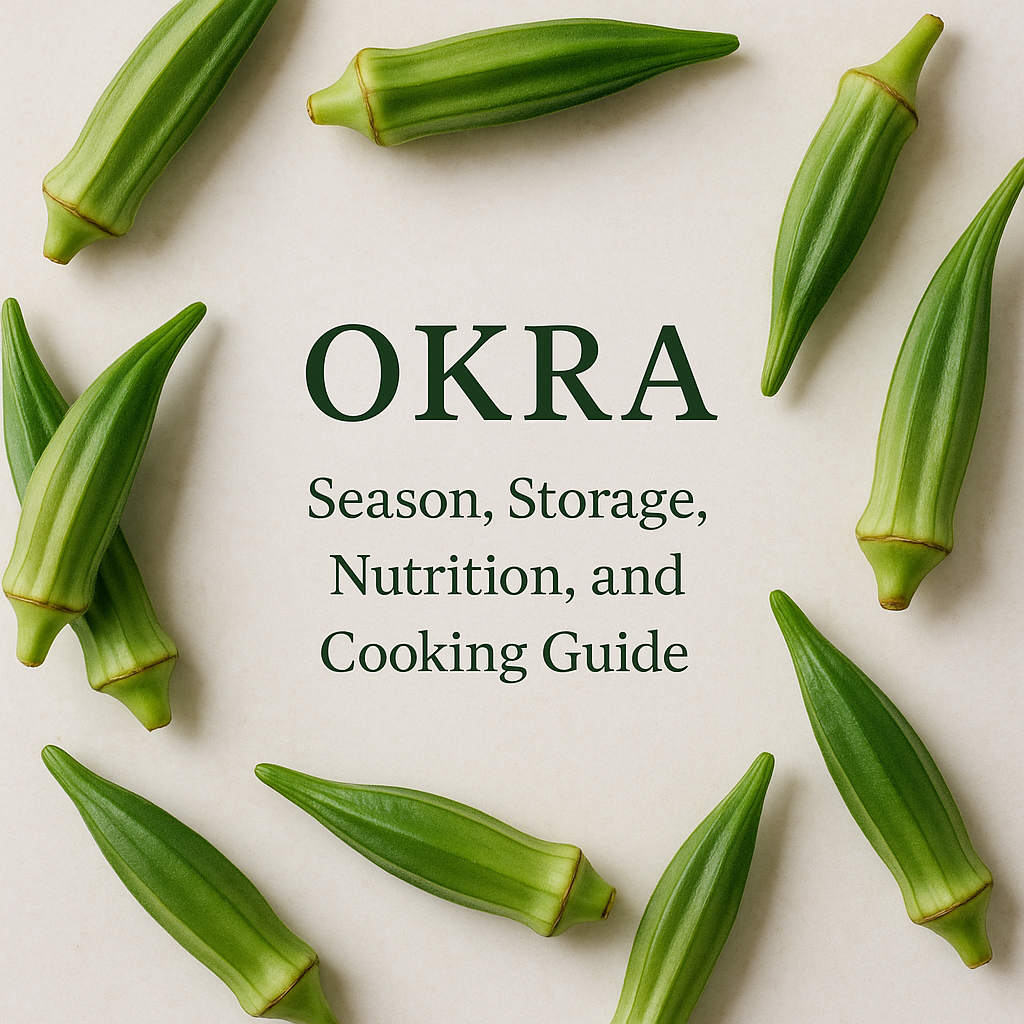
Okra belongs to the mallow family and is prized for its green pods, which are typically slender, elongated, and tapering, resembling a lady's finger—hence the nickname. These pods are rich in a unique mucilaginous property that thickens soups and stews when cooked. Okra plants thrive in warm climates, and their distinctive flowers and ridged pods make them easily recognizable in a garden.
💪 Benefits
Including okra in your diet can be beneficial due to its nutritional profile. While low in calories, it is rich in dietary fiber, which aids in digestion and promotes a feeling of fullness. Okra also contains essential vitamins such as Vitamin C, which contributes to immune function, and Vitamin K, known for its role in bone health. Additionally, the pods contain valuable antioxidants that help combat oxidative stress.
🌍 Origin
Okra is believed to have originated in the region of Ethiopia. It was later spread through the Middle East and into Northern Africa and India over centuries, facilitated largely by trade routes. Nowadays, okra is cultivated globally, but it remains particularly popular in cuisines within the Southern United States, India, Brazil, and parts of Africa.
📅 Harvest Season
The optimal season for harvesting okra is during the warm months. In areas with temperate climates, okra's growing season begins in late spring and continues through summer. In tropical climates, it may be harvested nearly year-round. Ensuring okra is picked while the pods are tender is crucial to avoid fibrous textures.
🧺 Varieties
Numerous varieties of okra exist, each presenting unique flavors and textures. Some popular varieties include:
- Clemson Spineless: A common variety known for its ease of harvesting due to a lack of spines.
- Jambalaya: Notable for its high yield and small, tender pods.
- Burgundy: Distinguished by its deep red pods, which turn green when cooked.
🛒 How to Choose (Checklist)
- Look for small to medium-sized pods, which are typically more tender and flavorful.
- Select okra that is vibrant in color, whether green or red, and free from blemishes.
- Ensure the pods are firm to the touch but not hard.
- Avoid pods that appear dry or dull, indicating they are past their prime.
🍽 Cooking & Eating Methods
Okra is a versatile vegetable that can be prepared in numerous ways. Its unique characteristics lend themselves well to various cooking methods:
- Frying: A popular method, particularly in the Southern United States, is frying okra in cornmeal batter.
- Boiling: Okra can be boiled and added to gumbo or stews, contributing its thickening properties.
- Grilling: For a smoky flavor, okra pods may be grilled whole on skewers.
- Pickling: Pickled okra is a tangy treat that complements various dishes.
❄ Storage Tips
Proper storage of okra ensures it retains its freshness for longer:
- Store unwashed okra in a paper bag or wrapped in a paper towel inside a breathable container in the refrigerator.
- Use fresh okra within 2-3 days to prevent the pods from becoming tough.
- For long-term storage, okra can be blanched and then frozen, though this may affect texture upon thawing.
❓ FAQ
1. How do I reduce okra's sliminess?
Cutting okra into larger pieces, cooking it quickly over high heat, or using acidic ingredients like lemon juice can help reduce its mucilaginous texture.
2. Can okra be eaten raw?
Yes, okra can be eaten raw, especially when young and tender, though it's often preferred cooked due to its unique texture.
3. Is okra related to any other familiar plants?
Okra belongs to the same family as hibiscus and cotton, sharing their characteristic flower structure.