🍓 Mustard Greens: Season, Storage, Nutrition, and Cooking Guide
Welcome to your comprehensive guide on mustard greens. In this article, we will explore the characteristics, benefits, and origins of this nutritious leafy green. You'll also discover how to select the best mustard greens, the varieties available, and tips on preparing and storing them for maximum freshness and taste.
✨ Characteristics
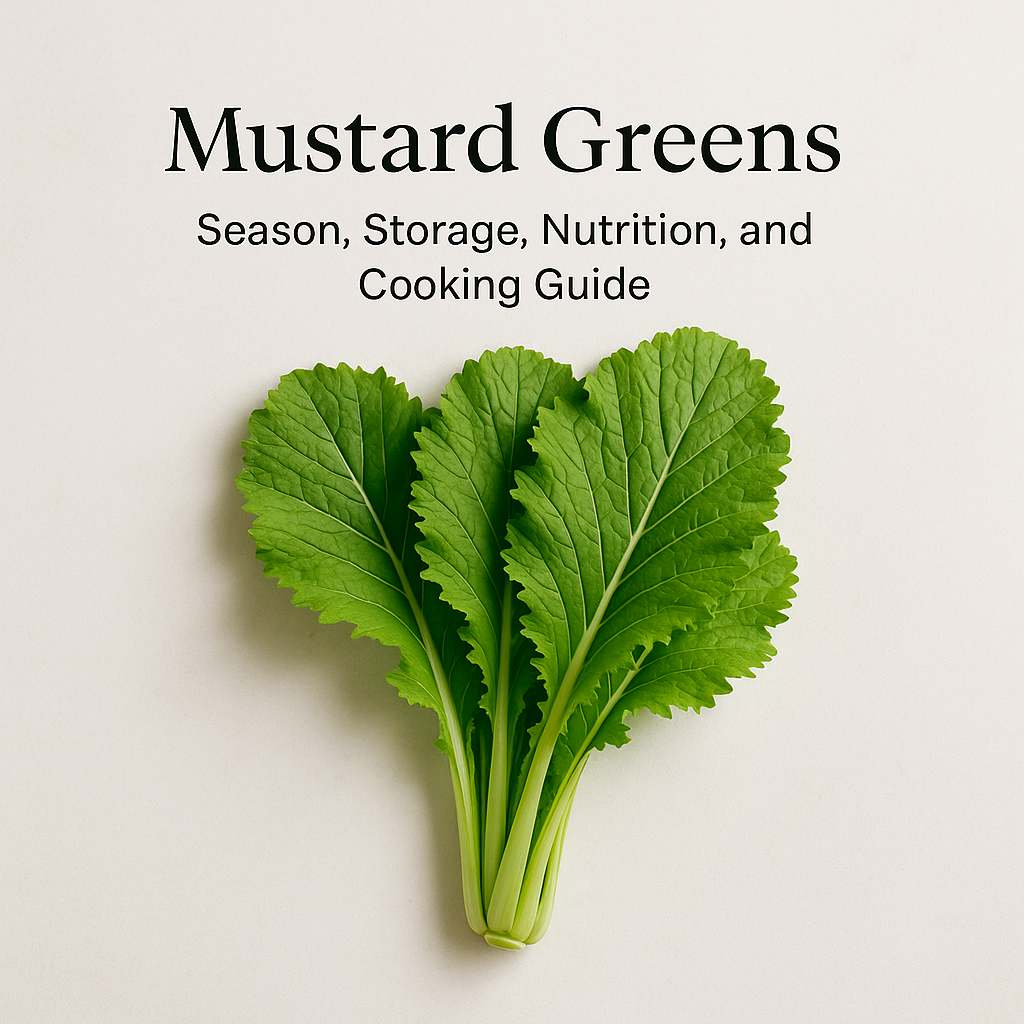
Mustard greens are vibrant, leafy vegetables known for their peppery and pungent flavor, which can add a spicy kick to your meals. These greens have broad, ruffled leaves and thick stems, making them a substantial addition to a variety of dishes. Mustard greens are part of the Brassica family, which includes kale, broccoli, and cabbage, bringing similar health-boosting properties to your diet.
💪 Benefits
Mustard greens are a powerhouse of nutrition, loaded with essential vitamins and minerals. They are particularly rich in vitamins K, A, and C, all of which contribute to maintaining healthy vision, immune function, and clotting mechanisms in the body. These greens are also packed with antioxidants that can help combat oxidative stress, reduce inflammation, and support overall cellular health.
Fiber is another critical component found in mustard greens, which aids in digestion and may contribute to a feeling of fullness, assisting in weight management. Their low-calorie content makes them an excellent food choice for those looking to maintain a healthy weight while ensuring adequate nutrient intake.
🌍 Origin
Mustard greens trace their roots back to the Himalayan region of India, where they have been cultivated for centuries. Over time, their cultivation spread to other parts of Asia and eventually made its way to Europe and the Americas. Historically, mustard greens have been a staple in many traditional cuisines, ranging from Indian and Chinese to Southern American dishes.
📅 Harvest Season
The prime season for mustard greens typically spans from late autumn to early spring, depending on the climate. These greens thrive in cooler temperatures and may bolt in the heat, so they are often grown in temperate regions where they can flourish in the chill of winter. Harvesting them during their peak season ensures the best flavor and nutritional content.
🧺 Varieties
There are several varieties of mustard greens, each offering unique flavors and textures:
- Green Wave: Characterized by deeply lobed, curly leaves and a slightly milder taste.
- Red Giant: Boasts large, red-tinged leaves with a robust, spicy flavor.
- Savannah: Known for its tender, ruffled leaves that offer a sweet and mild taste as compared to common mustard greens.
- Giant Southern Curled: Features dark green, curly leaves and is widely used in Southern cuisines.
🛒 How to Choose (Checklist)
Selecting the best mustard greens can enhance both the taste and nutritional value of your meals. Use this checklist when shopping:
- Look for leaves that are crisp, fresh, and vibrant green without any yellowing.
- Avoid any greens that appear wilted, slimy, or have black spots.
- Check for strong, firm stems, which indicate freshness.
- Select smaller leaves if you prefer a milder flavor profile.
🍽 Cooking & Eating Methods
Cooking mustard greens can unlock their unique flavors while making them more palatable and easier to digest. Here are some popular methods of preparation:
- Steaming: Steaming helps to preserve the maximum amount of nutrients while tenderizing the leaves.
- Sautéing: Sauté mustard greens with garlic, olive oil, and a squeeze of lemon juice for a quick and flavorful side dish.
- Soups and Stews: Incorporate mustard greens into soups and stews to add depth of flavor and nutritional content.
- Stir-frying: Toss them in a hot pan with a splash of soy sauce and sesame oil to complement Asian-inspired dishes.
❄ Storage Tips
Proper storage of mustard greens can significantly extend their shelf life and freshness. Consider these tips for optimal preservation:
- Before storing, do not wash them as moisture can lead to spoilage.
- Wrap the greens in a paper towel to absorb any excess moisture and place them in a plastic bag or airtight container.
- Store them in the crisper drawer of your refrigerator where the temperature and humidity levels are best suited for leafy greens.
- Consume within a week for the best quality.
❓ FAQ
Q: Can mustard greens be eaten raw?
A: Yes, mustard greens can be eaten raw, often added to salads for a peppery kick. However, some find the raw taste too strong, so blending them with milder greens is recommended.
Q: Are mustard greens related to mustard seeds?
A: Yes, both come from the same plant family, Brassica. While the leaves are consumed as greens, the seeds are often used to produce mustard condiments.
Q: Do mustard greens have any potential allergens?
A: While mustard greens generally do not cause allergic reactions, individuals with mustard seed allergies should exercise caution. Always consult with a healthcare provider if you have concerns about food allergies.