🍓 Mung Bean: Season, Storage, Nutrition, and Cooking Guide
Mung beans, small and vibrant green, are tiny legumes packed with nutritional power, commonly enjoyed worldwide. This guide covers their key characteristics, harvest seasons, varieties, nutritional benefits, and how best to cook and store them. Whether you're a culinary novice or an experienced chef, understanding mung beans will enhance your culinary repertoire.
✨ Characteristics
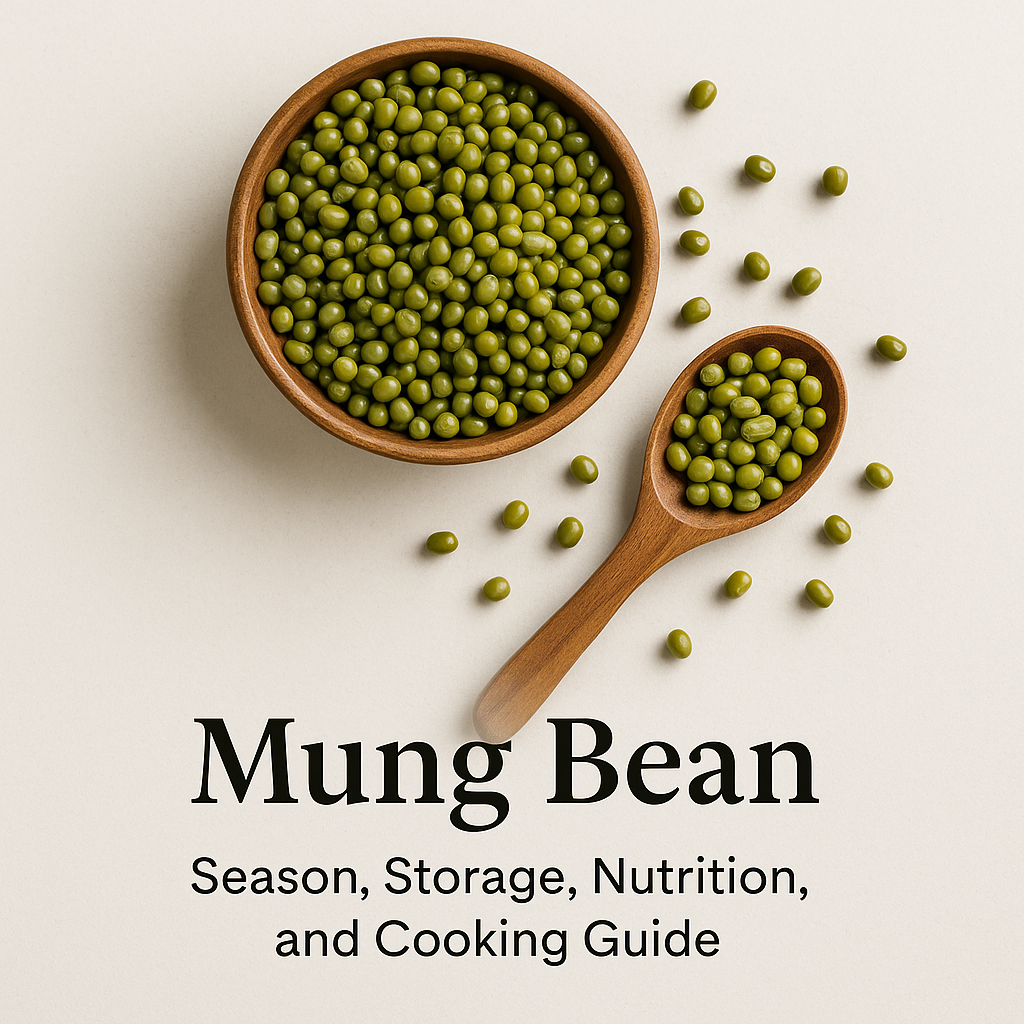
Mung beans are small, round, and predominantly green, belonging to the legume family; they are related to lentils and peas. Subtle in taste but rich in texture, mung beans have been a staple in Asian cuisine for centuries. These beans can be consumed in their whole form, split, or as sprouts, offering diverse culinary applications from soups to desserts.
💪 Benefits
Incorporating mung beans into your diet can offer numerous nutritional benefits. They are an excellent source of plant-based protein, making them ideal for vegetarians and vegans. Additionally, mung beans are rich in vitamins such as folate, magnesium, and vitamin B6. Their dietary fiber content aids digestion and can help promote a feeling of fullness, which might assist with weight management. Moreover, they are low in calories and contain antioxidants that are essential for overall well-being.
🌍 Origin
The mung bean is believed to have originated in India before spreading to Asia and various tropical regions. Today, they are cultivated extensively in India, China, and Southeast Asia, with global availability increasing due to their rising popularity. Historically, mung beans have been part of traditional dishes, and their cultivation dates back over 4,000 years, emphasizing their significance in farming and cuisine.
📅 Harvest Season
Mung beans are typically harvested twice a year. Their primary harvest occurs during late spring and early summer, from May to July, followed by a secondary harvest during autumn, between October and November. Growing conditions vary slightly depending on the climate, but they generally thrive in warm, temperate regions with adequate sunlight and well-drained soils. Due to these dual harvests, mung beans are relatively accessible year-round in many markets.
🧺 Varieties
Several varieties of mung beans are cultivated worldwide, differing in color, size, and growth characteristics:
- Green Mung Beans: The most common variety, used in soups, curries, and desserts.
- Black Mung Beans: Also known as black gram, these are popular in Indian cuisine.
- Split Mung Beans: Dehulled and split, they are quick to cook and ideal for dals.
- Mung Bean Sprouts: Sprouted mung beans are highly nutritious and added to salads and stir-fries.
🛒 How to Choose (Checklist)
When selecting mung beans, consider the following checklist to ensure you pick the best quality:
- Look for bright green, uniform color without blemishes.
- Choose beans that are dry and free from moisture.
- Ensure there is no evidence of insect damage or mold.
- If buying in bulk, ensure bins are covered and the store maintains regular turnover.
🍽 Cooking & Eating Methods
Mung beans are incredibly versatile and can be prepared in various ways:
- Boiling: Whole mung beans can be boiled and used in soups, stews, or simply seasoned as a side dish.
- Sprouting: Soak mung beans in water overnight, then keep them in a damp cloth to sprout. Sprouts add crunch and nutrition to salads.
- Grinding: Ground mung beans form a base for traditional pancake batters in many Southeast Asian cuisines.
- Stir-frying: Add sprouted or boiled mung beans as a complement to stir-fry vegetables or protein dishes.
❄ Storage Tips
To preserve their freshness and nutritional value, store mung beans properly:
- Keep dried mung beans in an airtight container in a cool, dry place; they should last up to a year.
- Refrigerate mung bean sprouts and consume them within a week to prevent spoilage.
- Cooked mung beans can be refrigerated and should be consumed within three days.
❓ FAQ
Q1: Can I eat mung beans raw?
A1: While raw mung beans can be sprouted to enhance digestibility, it is not advisable to consume them in their dry, raw form due to potential digestion discomfort. Sprouting mung beans before consumption is a popular method of preparation.
Q2: How do I prevent mung beans from becoming mushy when cooking?
A2: To retain their texture, avoid overcooking mung beans. Rinse and soak them for a few hours before cooking, then simmer gently. Check their consistency frequently and remove them from heat once they reach your preferred texture.
Q3: Are mung beans gluten-free?
A3: Yes, mung beans are naturally gluten-free. They are an excellent ingredient for those with gluten sensitivities or celiac disease, providing a great alternative to wheat-based foods.