🍓 Lotus Root: Season, Storage, Nutrition, and Cooking Guide
Lotus root, a staple in Asian cuisine, is not only visually stunning with its characteristic holes but also packed with nutrients. This article explores its characteristics, benefits, origin, and provides a comprehensive guide on how to choose, store, and prepare this unique vegetable.
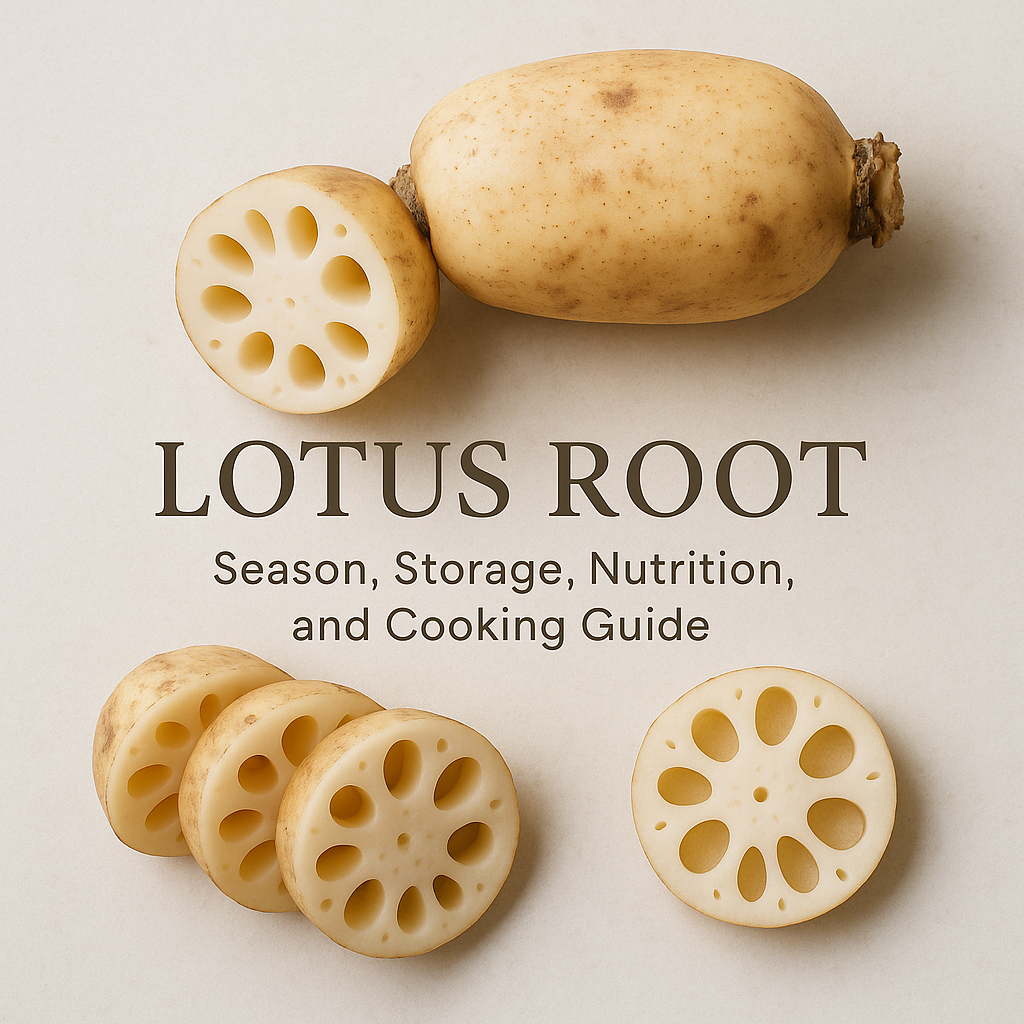
✨ Characteristics
The lotus root is the submerged rhizome of the lotus plant, which grows in freshwater. It is cylindrical with a beige outer skin and a creamy white inside that showcases a distinctive pattern of holes running through its length. When sliced, these holes form a lace-like pattern. The texture of lotus root is crisp, similar to water chestnuts, and it has a mild, slightly sweet flavor.
💪 Benefits
Lotus root is known for its excellent nutritional profile, being a rich source of dietary fiber, vitamins, and minerals:
- Fiber: Helps in maintaining digestive health and aids in sustaining energy levels.
- Vitamin C: Supports immune function and skin health.
- Potassium: Important for heart health and maintaining optimal blood pressure.
- Vitamin B6: Aids in brain health and supports the nervous system.
It also contains moderate amounts of protein and has low fat content, making it an attractive choice for those seeking to maintain or reduce their weight.
🌍 Origin
Lotus root has been cultivated for thousands of years in Asia, particularly in China, India, and Japan, where it is an integral part of the diet. The plant thrives in tropical and subtropical climates, often found in ponds and lakes. Beyond its culinary uses, the lotus has cultural and symbolic significance in many Asian traditions, representing purity and beauty emerging from murky waters.
📅 Harvest Season
Lotus root is typically harvested during the cooler months, from September through February. During this time, the quality and flavor are at their peak, and markets are stocked with fresh produce. However, depending on the region and climate, they may still be available year-round.
🧺 Varieties
There are several varieties of lotus root, differentiated mainly by their growing region and sometimes by color and size:
- Chinese Lotus Root: Generally larger, with a more pronounced sweet taste and crisp texture.
- Japanese Lotus Root (Renkon): Typically more delicate, with a slightly nutty flavor and firmer texture.
- Indian Lotus Root: Often smaller and used primarily in curries and soups, contributing a starchy texture similar to potatoes.
🛒 How to Choose (Checklist)
- Select lotus roots that are firm and free from soft spots or blemishes.
- Look for a fresh, light beige color on the skin. Excessive browning or discoloration suggests aging or mishandling.
- Choose roots that feel heavy for their size, indicating they are well hydrated and fresh.
- If possible, buy uncut roots to ensure maximum freshness and a longer shelf life.
🍽 Cooking & Eating Methods
Lotus root is extremely versatile and can be eaten raw, boiled, steamed, stir-fried, or even pickled. Here are some popular methods:
- Raw: Thinly sliced lotus root can be added to salads for a fresh, crisp texture.
- Boiled: Simmer slices in soups and stews where it absorbs flavors of the broth.
- Stir-Fried: Quickly frying slices with a mix of vegetables and sauces enhances its sweetness.
- Pickling: Soak in vinegar or spices for a tangy addition to dishes. This method preserves them for longer periods as well.
- Tempura: Dip slices in batter and deep-fry for a crunchy snack.
❄ Storage Tips
Proper storage is essential to preserve the freshness and quality of lotus root:
- Store whole, unpeeled lotus roots in a cool, dark place, similar to potatoes. They can last for several weeks this way.
- If cut, place the slices in a bowl of water with a little vinegar to prevent discoloration and store them in the refrigerator. Consume within a week.
- For extended storage, consider blanching slices and then freezing them. While this may slightly change the texture, it is effective for preserving them longer.
❓ FAQ
Q1: Can I eat lotus root raw?
A: Yes, lotus root can be eaten raw. It should be thoroughly washed and peeled before slicing it thinly to add to salads and other dishes.
Q2: How do I know if my lotus root has gone bad?
A: A lotus root that has gone bad will start to develop soft spots, an off smell, and may become discolored. If any of these signs are evident, it’s best not to consume it.
Q3: What dishes can I make with lotus root?
A: Lotus root is versatile and can be added to soups, stir-fries, salads, or served as a snack. It’s a staple in many Asian dishes, such as lotus root soup or braised lotus root with soy sauce.