🍓 Leek: Season, Storage, Nutrition, and Cooking Guide
Leeks, a proud member of the allium family alongside onions and garlic, are often appreciated for their subtle, onion-like flavor. Whether you're a home cook or an aspiring chef, exploring the world of leeks can enhance your culinary repertoire while adding essential nutrients to your diet. This comprehensive guide will equip you with everything you need to know about leeks, including their characteristics, benefits, origins, and best practices for cooking and storage.
✨ Characteristics
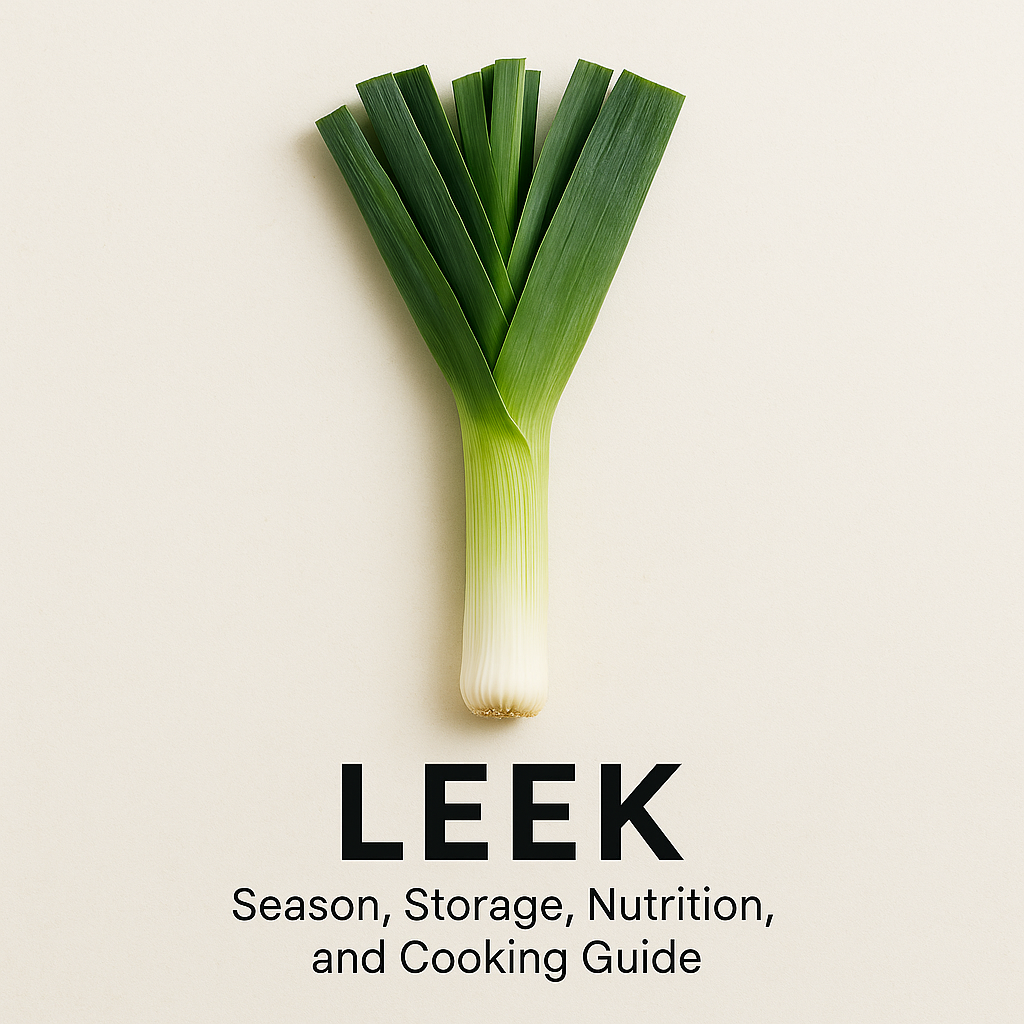
Leeks are distinguished by their long, slender stalks composed of tightly bundled leaves. Their color gradient shifts from the rich green of the upper leaves to the pale white of the edible base. Unlike their pungent relatives in the allium family, leeks offer a more subtle aroma and flavor, which can be described as both sweet and earthy when cooked. With a firm, crunchy texture, they can be enjoyed both raw and cooked.
💪 Benefits
Leeks are packed with essential nutrients that make them a beneficial addition to a balanced diet. They are low in calories yet rich in vitamins and minerals, including vitamin K, vitamin C, vitamin A, and manganese. Leeks also contain a variety of antioxidants, which help to protect cells from damage caused by free radicals. Their fiber content supports digestive health, while the presence of allium compounds may offer other health-supportive properties.
🌍 Origin
The origin of leeks traces back to the Central Asian region, where they have been cultivated for thousands of years. References to the leek appear in ancient texts from Egypt and Mesopotamia, illustrating their long-standing presence in human diets. Today, leeks are primarily grown in temperate climates and are a staple in European gastronomy, particularly in French and Welsh cuisine.
📅 Harvest Season
The peak season for harvesting leeks typically ranges from fall to early spring, depending on the climate and region. They thrive in cooler temperatures, making them an ideal vegetable for autumn harvest. In many regions, leeks are planted in the spring and harvested throughout the fall. Though they are available year-round in most markets, choosing locally sourced leeks during their natural harvest season ensures the freshest flavor and optimal nutrition.
🧺 Varieties
While there are numerous varieties of leeks, they can generally be categorized into early-season, mid-season, and late-season varieties. Early-season leeks, such as the 'King Richard,' are more tender and have a milder flavor, while late-season varieties like 'Musselburgh' or 'American Flag' are hardier and offer a stronger taste. Other notable varieties include 'Bandit,' which is known for its rich, bluish-green leaves and increased resistance to cold weather.
🛒 How to Choose (Checklist)
- Look for leeks with bright green tops and white, firm stalks.
- Avoid any leeks with yellowing leaves or visible decay.
- Check for consistency in stalk size to ensure even cooking.
- Opt for leeks with tightly bound shanks, free from blemishes.
- In markets, smell the leeks to ensure they have a fresh fragrance.
🍽 Cooking & Eating Methods
Leeks are incredibly versatile and can be incorporated into a myriad of dishes. Common methods for cooking leeks include sautéing, steaming, roasting, and braising. When preparing leeks, it's important to clean them thoroughly, as soil and grit often become trapped between the layers. Once cleaned, they can be sliced thinly for salads, added to soups for a depth of flavor, or cooked with other vegetables as a delightful side dish. Leeks can also be used to enhance potato dishes, risottos, and tarts.
❄ Storage Tips
Proper storage ensures that leeks maintain their freshness and flavor for as long as possible. Once purchased, leeks can be stored in the refrigerator's crisper drawer for up to two weeks. Simply wrap them in a damp paper towel and place them in a perforated plastic bag to keep them fresh. For longer storage, leeks can be blanched and frozen, although this may slightly alter their texture. Whether storing in the fridge or freezer, avoid cutting the leeks until you are ready to use them to prevent oxidation and moisture loss.
❓ FAQ
1. Can I eat the green parts of a leek?
Yes, the green parts of a leek are edible and can be quite flavorful. While they are tougher than the white parts, they can be used to flavor soups and stocks. Alternatively, you can sauté or use them in casseroles with longer cooking times, which help to tenderize the leaves.
2. How do I clean leeks properly?
To clean leeks efficiently, start by cutting off the root end and the dark green tops. Slice the leek in half lengthwise and rinse each layer thoroughly under cold water. This helps remove any dirt or sand trapped inside. For added convenience, soak the slices in a bowl of cold water, swirling them around to displace any remaining particles before using them in your recipe.
3. Can leeks be eaten raw?
Yes, leeks can be eaten raw, although their flavor is much milder and sweeter than when cooked. Thinly sliced raw leeks can be added to salads or used as a garnish. The crisp texture and mild taste make them an excellent addition to a platter of raw vegetables, alongside dips and spreads.