🍓 Kohlrabi: Season, Storage, Nutrition, and Cooking Guide
Kohlrabi, a biennial vegetable, takes its nutritional prowess and unique appearance as a testament to its growing popularity among health enthusiasts and culinary explorers. Often likened to a fusion of cabbage and turnip, kohlrabi is not just versatile but also nutrient-rich. Whether you’ve picked up this intriguing vegetable at a local farmers market or stumbled upon it in a supermarket aisle, understanding its characteristics, origins, and uses can greatly enhance your cooking repertoire.
✨ Characteristics
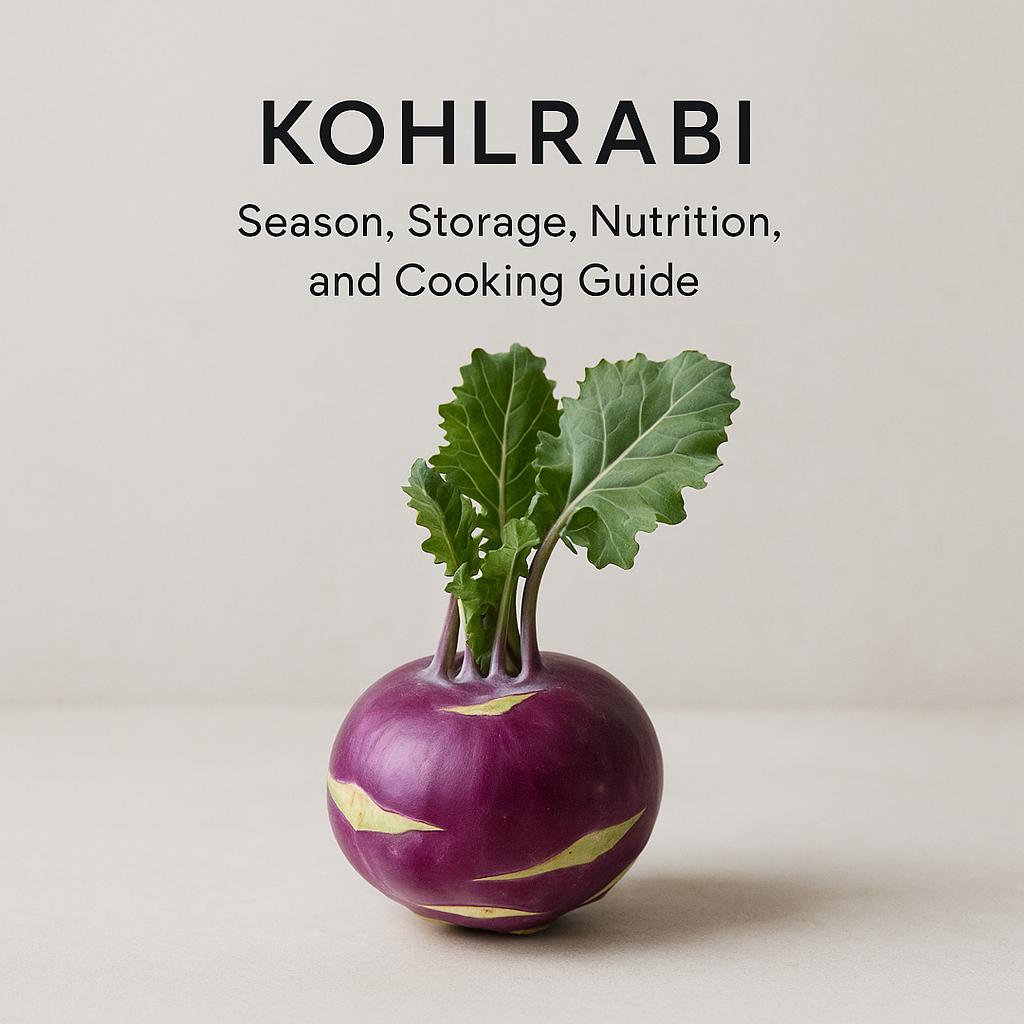
Kohlrabi, scientifically known as Brassica oleracea Gongylodes Group, belongs to the same species as cabbage, broccoli, and cauliflower. It is easily recognizable by its bulbous stem topped with leafy greens. The bulb itself can range in color from pale green to vibrant purple, but regardless of the hue, the interior remains consistently crisp and white.
The taste of kohlrabi is often described as a milder, sweeter version of broccoli stems, with a texture that remains juicy and crunchy even after cooking. The leaves can be used similarly to spinach or kale, adding more versatility to this already multifunctional vegetable.
💪 Benefits
Incorporating kohlrabi into your diet offers numerous potential health benefits:
- Rich in Nutrients: Kohlrabi is packed with essential nutrients such as vitamin C, potassium, and fiber, contributing to a balanced diet.
- Low in Calories: This vegetable is low in calories, making it an excellent choice for those aiming to maintain or lose weight.
- Digestive Health: The fiber content supports digestive health by promoting regular bowel movements and a healthy gut.
- Antioxidant Properties: Kohlrabi contains antioxidants that help protect cells from oxidative damage.
🌍 Origin
Kohlrabi’s roots trace back to Europe, where it emerged as a cultivated version of wild cabbage. With its name derived from German words "kohl" meaning cabbage and "rabi" meaning turnip, its historical cultivation can be pinpointed to Germany and the Mediterranean region during the late Middle Ages. Today, kohlrabi has surpassed its European boundaries, finding its way into Asian cuisines and global markets, thereby enhancing its visibility and culinary utilization worldwide.
📅 Harvest Season
Typically a cool-season crop, kohlrabi flourishes in the mild temperatures of spring and autumn. In climates with colder winters, it can also be grown effectively in late summer, ready for a fall harvest. Availability may vary depending on local growing conditions, but generally, you can spot fresh kohlrabi almost year-round in grocery stores due to its robust storage properties.
🧺 Varieties
Several varieties of kohlrabi are cultivated to meet different culinary needs and preferences:
- White Vienna: Known for its pale green skin and sweet flavor, this is one of the most popular varieties globally.
- Purple Vienna: Distinguished by its striking purple hue, it offers similar taste and texture to the White Vienna.
- Gigante: As the name suggests, this variety produces larger bulbs and is favored for its extended storage capabilities.
- Grand Duke: Characterized by its rapid growth cycle, making it a favorite among farmers with shorter growing seasons.
🛒 How to Choose (Checklist)
- Look for bulbs that feel firm and heavy for their size, without any soft spots.
- A void kohlrabi with cracks or shriveled skin, indicating age or dehydration.
- Ensure that the leaves, if attached, appear fresh and vibrant, not wilted or yellowing.
- Smaller kohlrabi bulbs tend to be more tender and flavorful, ideal for raw consumption.
🍽 Cooking & Eating Methods
The versatility of kohlrabi is part of what makes it such an appealing vegetable for both everyday meals and gourmet dishes.
Raw: A simple way to enjoy kohlrabi is raw, chopped into salads or sliced thinly for slaws. Reducing the natural bite with a slight vinaigrette enhances its flavor profile.
Roasted: When roasted, kohlrabi develops a sweet, caramelized flavor. Toss with olive oil, salt, and pepper, and bake until golden brown.
Steamed: Steaming kohlrabi preserves its nutrients and enhances its softness. Serve as a side dish with a touch of butter or lemon juice.
Sautéed: Sautéing with garlic and onions brings out its natural sweetness. It makes a delicious addition to stir-fries or pasta dishes.
Mashed: For a unique twist on mashed potatoes, blend cooked kohlrabi with potatoes for a lighter, fragrant dish.
Smoothies: Blending kohlrabi into smoothies can add a crisp texture and a nourishing boost, especially when combined with fruits like apples and pears.
❄ Storage Tips
Proper storage ensures that kohlrabi retains its crisp texture and nutritional value:
- Remove the leaves from the bulb if storing for more than a few days, as they can draw moisture from the bulb.
- Store kohlrabi bulbs in a perforated plastic bag in the refrigerator crisper drawer, where they can last up to several weeks.
- If space permits, leaving a short stem can help preserve freshness.
- Kohlrabi is excellent for long-term storage as it maintains quality in cold, humid conditions typical of root cellars.
❓ FAQ (3 questions)
Q: How can I eat kohlrabi if I don’t like the bulb’s taste?
A: If the bulb’s taste is not to your preference, consider using the leaves in recipes similar to kale or spinach. They can be sautéed, added to soups, or blended in smoothies to leverage their nutritional benefits without the bulb’s prominent flavor.
Q: Can I substitute kohlrabi in recipes calling for other vegetables?
A: Absolutely! Kohlrabi can be a great substitute for turnips or broccoli stems in most recipes. Its versatility makes it suitable for everything from slaws to soups, offering a mild, sweet flavor similar to its cruciferous relatives while adding a unique twist.
Q: Is it necessary to peel kohlrabi before eating?
A: Peeling kohlrabi depends on size and personal preference. Smaller, younger kohlrabi can be consumed with the skin on, providing additional fiber. However, for larger, more mature bulbs, peeling is recommended as the outer layer can be tough and fibrous.