🍓 Kale: Season, Storage, Nutrition, and Cooking Guide
Kale, one of the most nutritious powerhouse of greens, has taken the culinary world by storm. This leafy vegetable has won the hearts of health enthusiasts and chefs alike due to its versatility and health benefits. This comprehensive guide dives into kale’s characteristics, benefits, origin, varieties, selection tips, cooking methods, and storage solutions.
✨ Characteristics
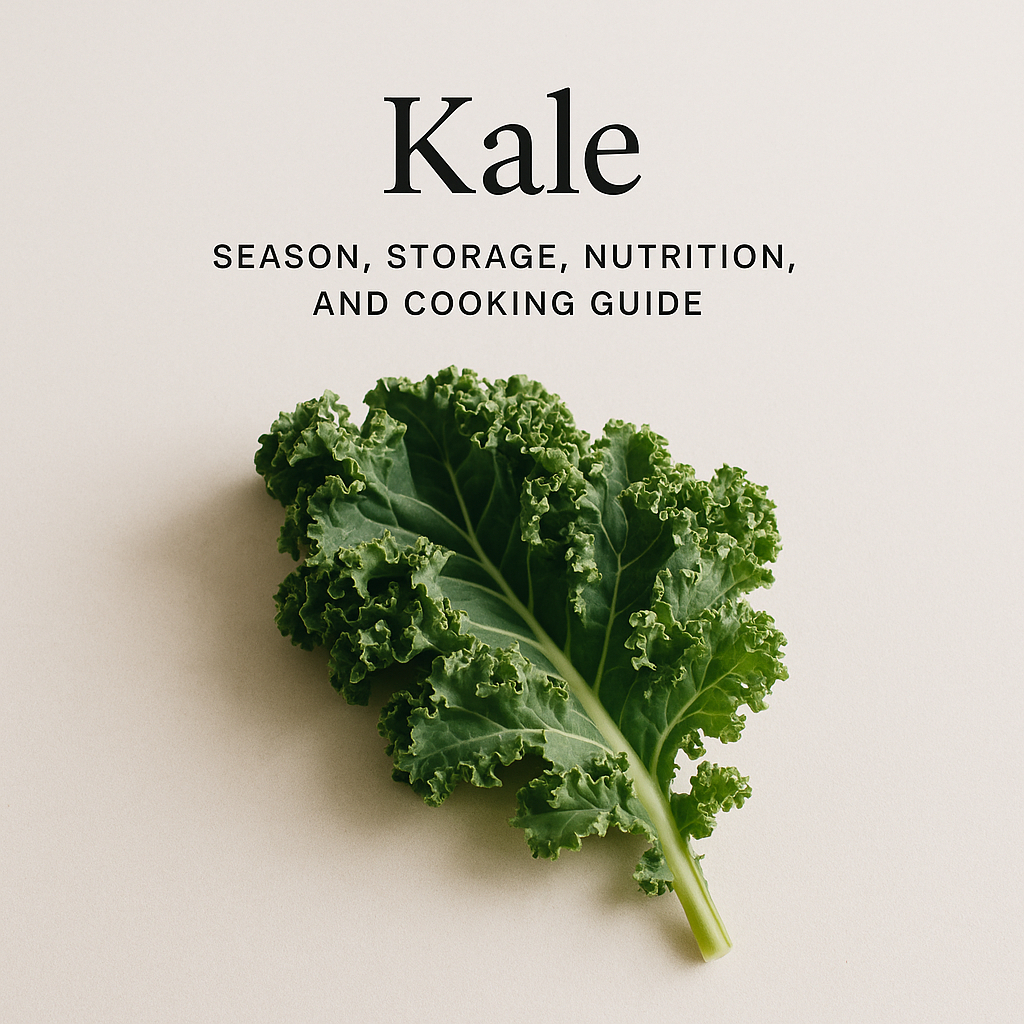
Kale, belonging to the Brassica oleracea species, is a leafy green that displays a characteristic curly appearance, although flat-leaved varieties also exist. Known for its robust flavor, kale can range from being bitter to slightly sweet, especially after frost. Its leaves are typically deep green, but can also appear in shades of purple or red. Sturdy stems and a crinkled texture define its unique identity, allowing it to hold up well in cooking processes.
💪 Benefits
Kale is often celebrated for its nutritional profile. It is packed with essential vitamins such as A, C, and K, and is also an excellent source of minerals like calcium, magnesium, and iron. Moreover, its dense nutrient content includes beneficial antioxidants like lutein and zeaxanthin, contributing to eye health. Kale is low in calories and high in fiber, making it an ideal component of weight management and digestive health plans. Including kale in your diet can offer an array of benefits, from supporting bone health to promoting a healthy immune system.
🌍 Origin
Kale's history can be traced back to over 2,000 years ago, where it was cultivated as an important food source during the Roman times. Originally hailing from the eastern Mediterranean and Asia Minor, it spread throughout Europe in the Middle Ages. Throughout history, kale has been a staple food, valued for its resilience to harsh growing conditions. Today, it is globally acclaimed, with significant production occurring in the United States, Canada, and Europe.
📅 Harvest Season
Kale is a cold-hardy vegetable that thrives in cooler temperatures. It is predominantly a fall and winter crop, as frost can enhance its sweetness. In temperate regions, kale can be planted and harvested almost year-round due to its resilience. However, it truly shines from fall through winter when the other greens are scarce, making it a staple in cold-weather diets.
🧺 Varieties
Kale comes in several varieties, each offering unique flavors and textures. The most common types include:
- Curly Kale: Known for its frilly leaves and pronounced flavor.
- Tuscan Kale: Also known as Lacinato or dinosaur kale, it has darker, streak-free leaves and a slightly sweeter taste.
- Red Russian Kale: Features purple-red veins and a subtle earthy flavor, often used for garnishing and cooking.
- Siberian Kale: Extremely cold-tolerant with green leaves, best used in cooking.
🛒 How to Choose (Checklist)
Selecting the best quality kale is crucial for maximized freshness and flavor. Follow this checklist when buying kale:
- Look for vibrant, deeply colored leaves with firm stems.
- Avoid wilted, yellowed, or slimy leaves.
- Check for small holes that might indicate insect presence, although minor perforations do not affect quality.
- Seek organic kale to reduce pesticide exposure, if possible.
- Opt for young, smaller leaves if looking for a less bitter taste.
🍽 Cooking & Eating Methods
Kale's versatility shines in numerous recipes, fit for various cooking methods:
- Raw: Kale can be enjoyed raw in salads, where it pairs well with lemon dressing to balance its earthiness.
- Sautéed: A quick sauté with olive oil and garlic can transform kale into a tender, delicious side dish.
- Baked: Kale chips are a popular, crunchy snack alternative to unhealthy chips, simply obtained by baking kale leaves.
- Blended: Throw it into smoothies or juices for a nutritious, fiber-rich boost.
- Steamed/Boiled: Steaming or boiling helps to soften its fibrous texture, making it suitable for stews and soups.
❄ Storage Tips
Proper storage of kale ensures it stays fresh and flavorful for as long as possible:
- Store kale in the refrigerator's crisper drawer to keep it fresh.
- Place unwashed kale in a perforated plastic bag to maintain moisture without trapping too much humidity.
- Kale can last for up to a week in the fridge; however, it is best consumed within a few days of purchase.
- If you need to store kale for an extended period, consider freezing it after blanching to preserve its nutrients and texture.
❓ FAQ
- Can I eat kale raw?
Yes, kale can be consumed raw, especially in salads. Massaging the leaves or using an acidic dressing can help break down its toughness and enhance flavor. - What is the best way to clean kale?
To clean kale, remove the leaves from the thick stems, rinse thoroughly under cold running water to remove any grit or dirt, and dry with a salad spinner or paper towels. - Does cooking kale reduce its nutritional value?
While cooking can reduce certain nutrients, such as vitamin C, it also makes others, like beta-carotene, more available. Light steaming or sautéing offers a good nutritional balance.