🍓 Jicama: Season, Storage, Nutrition, and Cooking Guide
Jicama, also known as the Mexican yam bean or Mexican turnip, is a versatile and nutritious root vegetable that has found its place in various culinary traditions around the world. With its crisp texture and slightly sweet flavor, it offers a delightful addition to salads, stir-fries, and more. In this guide, we delve into the characteristics, benefits, origin, and other essential aspects of jicama to help you make the most of this unique tuber.
✨ Characteristics
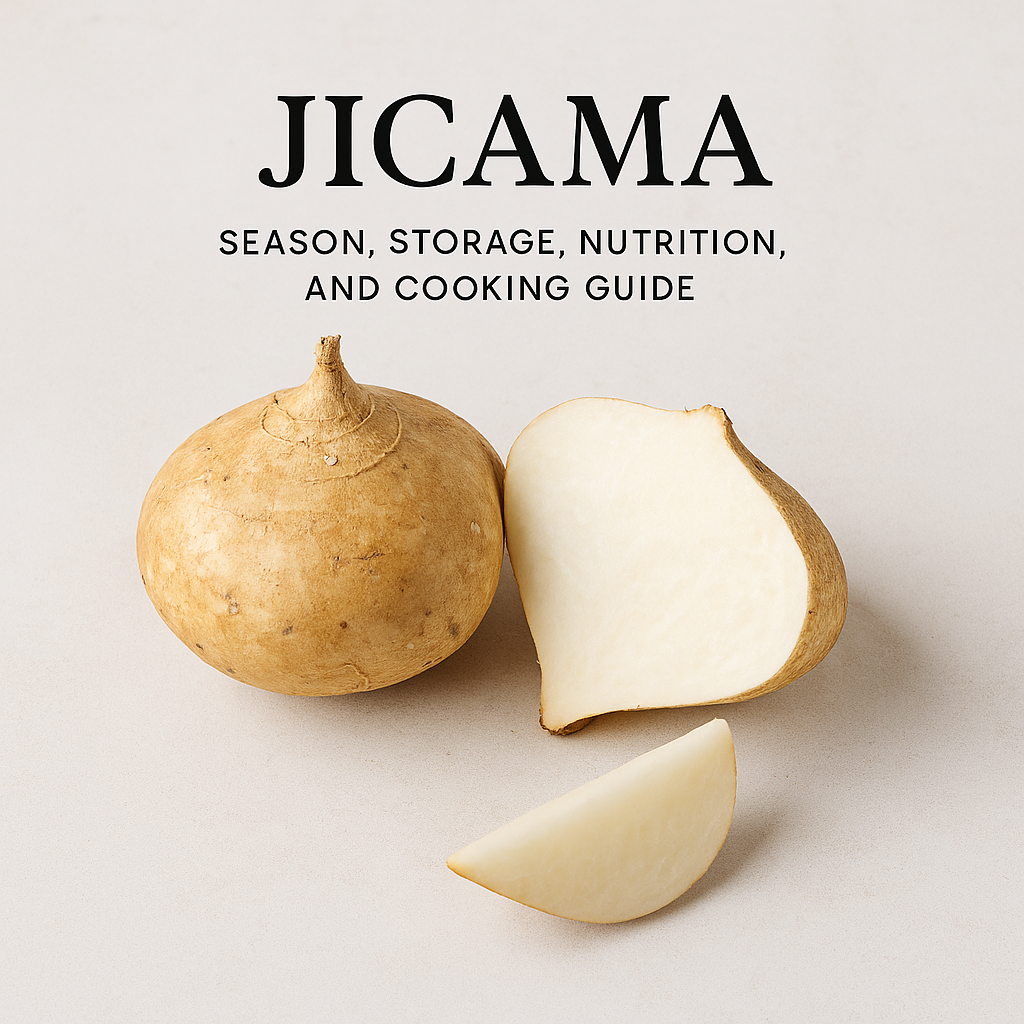
Jicama (pronounced HEE-kah-ma) is a round, bulbous root vegetable, part of the legume family. Its skin is brown and papery, while the flesh inside is white, juicy, and crunchy. The texture is reminiscent of a crisp apple or raw potato, making it a popular choice for both raw and cooked dishes. The taste is mildly sweet and nutty, with a hint of starchy earthiness.
💪 Benefits
Incorporating jicama into your diet can provide several benefits. It is low in calories yet high in essential nutrients, including fiber, vitamin C, and potassium. The high fiber content aids in digestion and promotes a feeling of fullness, which can be helpful for weight management. Vitamin C is known for its role in immune function and skin health, while potassium supports heart health and muscle function.
🌍 Origin
Jicama is native to Mexico and Central America. It has been a staple in Mexican cuisine for centuries, often enjoyed raw with a sprinkle of lime juice and chili powder. From its native regions, jicama has spread to Asia and various parts of the United States, where it is now grown commercially.
📅 Harvest Season
Jicama is typically available year-round, but its prime harvest season is during the cooler months, from October to May. This timing ensures that you get the freshest and most flavorful jicama, as root vegetables generally thrive in the cooler growing season.
🧺 Varieties
While there is essentially one main type of jicama available in the market, variations can occur based on where it is grown. Mexican jicama is the most common, known for its crisp and juicy texture. However, in some regions, you may encounter smaller varieties. Regardless of the variety, the overall characteristics remain the same.
🛒 How to Choose (Checklist)
When selecting jicama at the store, follow this simple checklist to ensure you pick the best quality:
- Firmness: Choose jicama that feels firm and heavy for its size. Avoid any with soft spots or shriveled skin.
- Skin Appearance: The skin should be smooth and unblemished. Minor scuffs are acceptable but avoid any with deep cuts or cracks.
- Size: Smaller jicamas are often sweeter and more tender, while larger ones tend to be starchier. Choose based on your preference.
- Weight: A heavier jicama indicates a higher moisture content, resulting in better texture and flavor.
🍽 Cooking & Eating Methods
Jicama is incredibly versatile and can be prepared in a variety of ways. Here are some popular methods to enjoy jicama:
- Raw: Peel and slice jicama into sticks for a crunchy snack or salad topping. It pairs well with a sprinkle of lime juice and chili powder.
- Stir-fry: Add slices of jicama to your stir-fry for an extra crunch. It holds up well to heat without losing its texture.
- Sauté: Sauté jicama in olive oil with garlic and onions for a simple and delicious side dish.
- Juice: Blend jicama into juice or smoothies for added hydration and a sweet flavor boost.
❄ Storage Tips
To maintain the freshness of jicama, proper storage is key. Here are some tips to help you store jicama effectively:
- Uncut Jicama: Keep it in a cool, dry place, like your pantry, for up to two weeks. It's important to keep it away from moisture to prevent molding.
- Cut Jicama: Once cut, wrap it tightly in plastic wrap or store in an airtight container in the refrigerator. It should be consumed within a week.
- Avoid Freezing: Jicama does not freeze well, as it can become mushy upon thawing.
❓ FAQ
1. Can you eat jicama skin?
No, the skin of jicama is tough and fibrous and should always be removed before eating. Use a vegetable peeler or knife to peel it away, revealing the crisp white interior.
2. Does jicama taste like potato?
While jicama and potatoes are both root vegetables, their flavors are quite different. Jicama is mildly sweet and juicy, whereas potatoes are starchy and savory.
3. Is jicama suitable for a low-carb diet?
Yes, jicama is a great choice for low-carb diets due to its low calorie and carbohydrate content. Its high fiber content also makes it a satisfying alternative to higher-carb snacks.