🍓 Garlic: Season, Storage, Nutrition, and Cooking Guide
Garlic, famed for its pungent aroma and bold flavor, has been a cornerstone in culinary traditions worldwide. Beyond its kitchen utility, garlic holds a storied past with rich cultural significance and a revered spot in gardens and farms. This guide explores the intricacies of garlic—its seasons, storage methods, nutritional benefits, and how best to cook and savor this timeless bulb.
✨ Characteristics
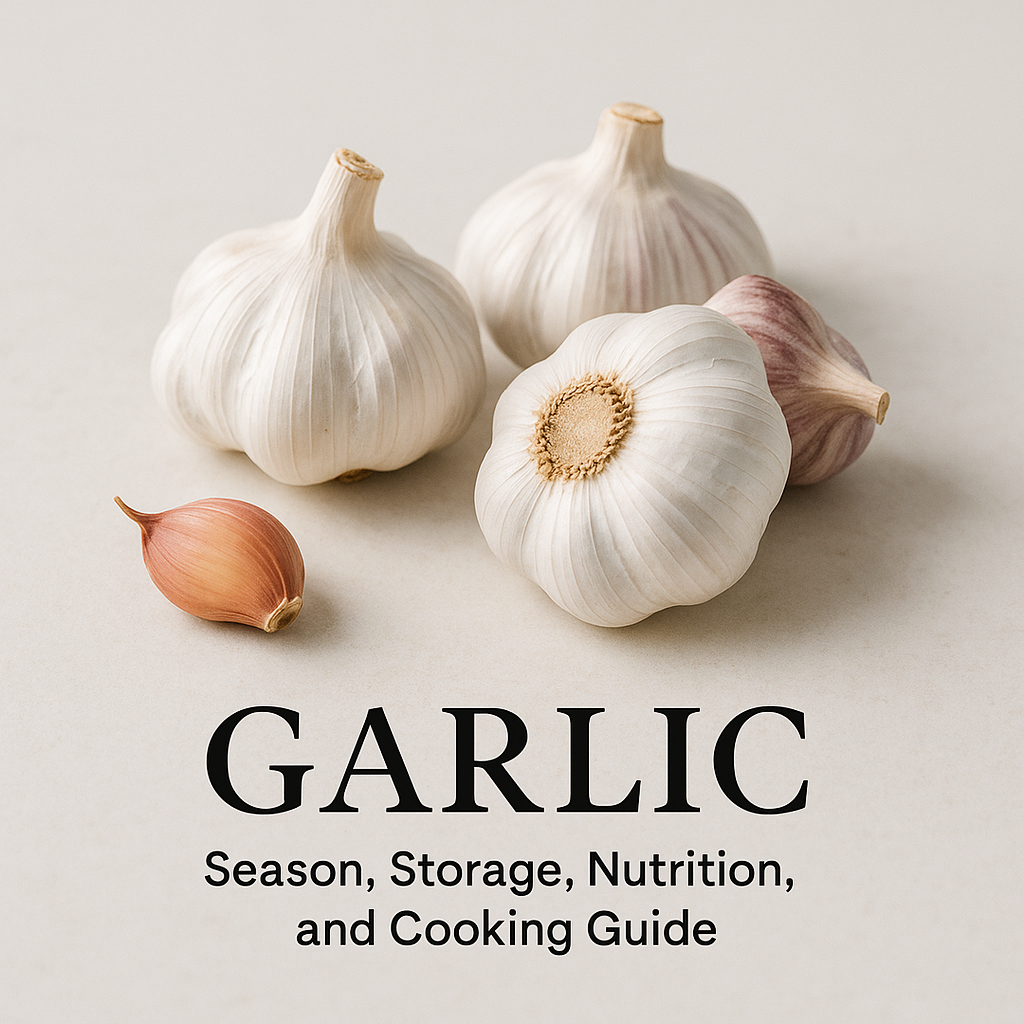
Garlic (Allium sativum) is a perennial plant that is closely related to onions, shallots, leeks, and chives. It grows from a bulb, which is referred to typically as the garlic head. This bulb is made up of several sections known as cloves. An unbroken bulb of garlic is durable and protective, while the cloves inside are segmented, easy to peel, and ready to use for a variety of culinary applications.
Garlic has a robust, spicy flavor when raw, but when cooked, it becomes sweet, nutty, and subtle. It is largely used as a seasoning or condiment, but due to its strong taste, it also stands alone in dishes like garlic soup or garlic bread. The plant is known for its characteristic strong, sulfurous aroma which is in part due to the compound allicin, released when garlic is chopped or crushed.
💪 Benefits
Aside from its flavor profile, garlic has long been appreciated for its potential health benefits. It contains essential nutrients such as vitamins C and B6, manganese, and selenium. The sulfur compounds formed when garlic is chopped or crushed, including allicin, are thought to contribute to its biological properties.
- A rich source of antioxidants: Garlic is loaded with antioxidants that help a healthy immune response.
- Boosts flavor without added calories: A clove of garlic adds depth to dishes without significant caloric contribution.
- Versatile ingredient: Its unique flavor can be adjusted through different preparation methods, such as roasting for sweetness or mincing for spiciness.
🌍 Origin
Garlic traces its origins to Central Asia, thought to be domesticated over 5,000 years ago. It spread quickly across Europe and the Mediterranean, becoming a staple in many culinary traditions. Ancient civilizations, including the Egyptians, Greeks, and Romans, all used garlic for its nutritional properties and possibly medicinal purposes—a heritage that endures today with garlic still featured prominently in various global cuisines.
📅 Harvest Season
Garlic is typically planted in the fall and harvested in the late spring or early summer. Its growth cycle depends largely on the climate, with growers in warmer regions often seeing an earlier harvest. The planting season varies; however, fall planting is favored for the development of robust bulbs due to the specific cold-weather needs of some garlic varieties.
Once ready to harvest, you'll notice the lower leaves turning yellow and beginning to dry. It is crucial to harvest garlic at the appropriate time—too early, and the cloves may be underdeveloped; too late, and the cloves may separate inside the bulb, impacting its storage capacity.
🧺 Varieties
Garlic comes in two main varieties: softneck and hardneck. Each has its distinctive features suitable for different climates and taste profiles.
- Softneck Garlic: Typically grown in milder climates, softneck garlic varieties are characterized by their flexible stalks, longer storage life, and an abundance of cloves. Common types include artichoke and silverskin garlic. Softneck is often found in grocery stores and is ideal for braiding.
- Hardneck Garlic: Known for their stiff stems and larger cloves, hardneck varieties such as rocambole, porcelain, and purple stripe tend to produce a scape or flower stem, which is also edible. They are favored in cooler climates and recognized for their intense flavor.
🛒 How to Choose (Checklist)
- Check for firm, unbroken bulbs without soft spots or blemishes.
- Avoid garlic with green sprouts, as it may indicate over-storage.
- Consider the variety based on cooking needs; hardneck for strong flavors, softneck for storage.
- Ensure the garlic has a dry, papery skin, which is a sign of freshness and quality.
🍽 Cooking & Eating Methods
Garlic is incredibly versatile in the kitchen. Here are a few common ways to incorporate garlic into your cooking:
- Raw: Finely minced raw garlic provides a sharp, acrid flavor perfect for dressings and marinades.
- Roasting: Roasting whole heads of garlic brings out a mellowed, caramelized flavor, perfect for spreading onto bread or blending into sauces.
- Sautéing: Gently sautéing minced garlic in oil releases its flavor without burning, serving as an aromatic base for many dishes.
- Pickling: Garlic cloves can be pickled and used as a tasty accompaniment to meats, cheeses, and antipasti platters.
❄ Storage Tips
Proper storage of garlic ensures you retain its flavor and accessibility:
- Store garlic bulbs in a cool, dry place to maximize shelf life, avoiding the refrigerator to prevent mildew.
- Keep garlic in a well-ventilated container to maintain freshness for several months.
- Once broken, individual cloves should be used within 10 days for best results.
- To freeze garlic, peel and chop it before sealing in an airtight container, or roast whole bulbs and freeze them for a sweeter, milder flavor.
❓ FAQ
What is the shelf life of garlic?
Whole bulbs of garlic can last up to six months when stored properly in a cool, dry, and well-ventilated area. Individual cloves will typically last up to 10 days once removed from the bulb.
How do you remove garlic smell from your hands?
One effective method to eliminate the garlic odor from hands is to rub them with stainless steel under cold, running water. Alternatively, a mixture of salt and lemon juice scrubbed on the hands can also aid in removing the scent.
Can I grow garlic at home?
Yes, garlic is relatively easy to grow at home. Plant individual cloves in the fall, a few inches deep, and a few inches apart. Ensure they receive ample sunlight and adequate watering. Garlic will be ready to harvest the following summer when the lower leaves turn yellow.