🍓 Enoki: Season, Storage, Nutrition, and Cooking Guide
Enoki mushrooms, known for their delicate texture and unique appearance, have captured the culinary world's attention. Whether incorporated into a hot pot or finely chopped in a salad, these mushrooms lend a distinctive flavor to a variety of dishes. In this comprehensive guide, we will explore the characteristics, benefits, origin, seasonal availability, varieties, selection tips, cooking methods, storage advice, and answer some frequently asked questions about Enoki mushrooms.
✨ Characteristics
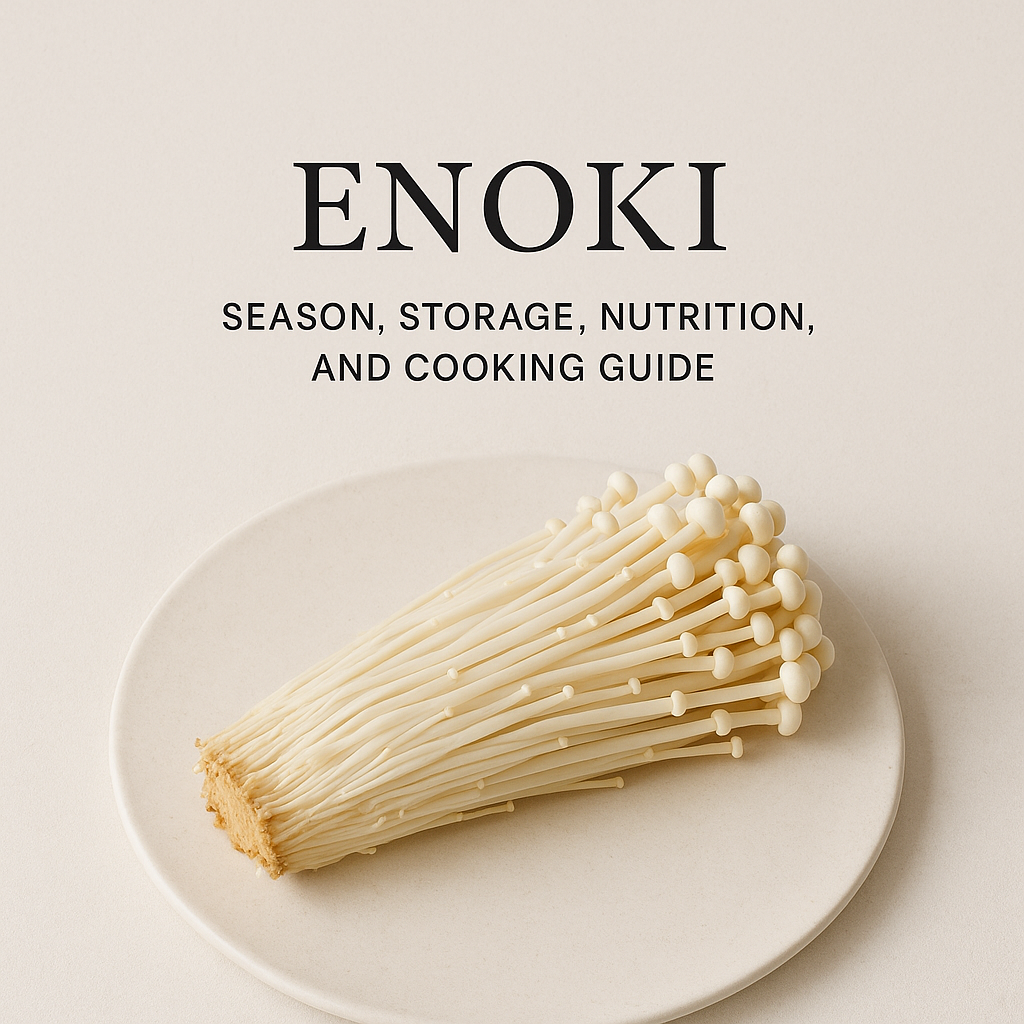
Enoki mushrooms (Flammulina velutipes) are recognized by their long, thin stems and small, white caps. Their appearance is more akin to noodles than traditional mushrooms, making them a striking addition to culinary creations. Enoki mushrooms are crisp when raw and develop a slightly chewy texture when cooked. They have a mild, fruity, and slightly earthy flavor, which makes them versatile for a range of dishes.
💪 Benefits
Enoki mushrooms are low in calories and a rich source of essential nutrients, offering several health benefits. They are packed with dietary fibers, which can aid in digestive health and help maintain a healthy weight. Furthermore, Enoki mushrooms provide a good amount of antioxidants, which are known for protecting the body from free radicals. These mushrooms also contain vitamins like B vitamins, which are essential for energy production and brain health, and minerals such as potassium, which supports heart health.
🌍 Origin
Enoki mushrooms have a longstanding history in East Asian cuisine, particularly in Chinese, Japanese, and Korean culinary traditions. Historically foraged in the wild, today they are often cultivated in commercial settings to meet demand. Japan is one of the largest producers and consumers of Enoki mushrooms, where they are commonly found peppered throughout traditional dishes.
📅 Harvest Season
Enoki mushrooms are generally available year-round due to modern cultivation practices. However, they were traditionally harvested in the wild during the late autumn and winter months, especially in regions of Asia. The ability to cultivate them under controlled conditions has made them more accessible and consistent in terms of quality and availability.
🧺 Varieties
While the most commonly known variety is the white Enoki mushroom, there are other less common varieties such as brown Enoki or wild Enoki mushrooms, which have a similar taste but a slightly different appearance. These variants may display different levels of flavor intensity and texture.
🛒 How to Choose (Checklist)
When selecting Enoki mushrooms, follow this checklist to ensure you choose the freshest and best quality product:
- Color: Look for bright white stems with firm caps. Avoid any mushrooms that appear brown or slimy.
- Texture: The mushroom stems should feel firm and crisp. Limpy or wilted Enoki mushrooms are likely past their peak.
- Aroma: Fresh Enoki should have a mild smell, free from any foul odors.
🍽 Cooking & Eating Methods
Enoki mushrooms can be prepared and enjoyed in numerous ways. Here are some popular methods:
- Raw: Enoki can be eaten raw in salads, providing a crunchy texture. They pair well with a vinaigrette dressing.
- Stir-fry: These mushrooms cook quickly, making them perfect for stir-frying. Combine with vegetables and a source of protein for a complete dish.
- Soups and Hot Pots: Enoki mushrooms absorb flavors well and make an excellent addition to soups and hot pots, adding both texture and umami.
- Sauteed: Lightly sauté in butter or sesame oil with garlic to bring out their subtle flavors. Perfect as a side dish.
❄ Storage Tips
Proper storage is essential to maintain the crispness and flavor of Enoki mushrooms:
- Refrigerate: Keep them in the refrigerator. Place them in their original packaging, or in a paper bag, to retain moisture.
- Avoid Excess Moisture: Mushrooms should be dry to the touch. Use a dry paper towel to dab away any moisture before storing.
- Short-term Storage: Ideally, use Enoki mushrooms within 3 to 7 days after purchase.
❓ FAQ (3 questions)
Q1: Can Enoki mushrooms be frozen?
A: Yes, Enoki mushrooms can be frozen. However, they should be cooked before freezing to preserve their texture and flavor. Raw mushrooms tend to turn mushy when thawed.
Q2: Are Enoki mushrooms suitable for vegetarians and vegans?
A: Absolutely! Enoki mushrooms are plant-based and make an excellent ingredient for vegetarian and vegan dishes providing a unique texture that mimics meat in some preparations.
Q3: How do I clean Enoki mushrooms?
A: Rinse them lightly under cold water to remove dirt but avoid soaking them, as they can become waterlogged. Pat dry with a paper towel before use.