🍓 Endive: Season, Storage, Nutrition, and Cooking Guide
Endive, a leafy vegetable with a crisp texture and mildly bitter flavor, is often an overlooked gem in the produce aisle. Commonly used in salads and as an ingredient in gourmet dishes, endive adds both texture and flavor to meals. Understanding its season, storage methods, nutritional benefits, and culinary uses can help you make the most of this versatile vegetable.
✨ Characteristics
Endive is a member of the chicory family, scientifically known as Cichorium endivia. It features tightly packed, curly, and crisp leaves that make it a favorite for adding texture to salads. Its taste varies from slightly bitter to nutty, depending on the variety and preparation method.
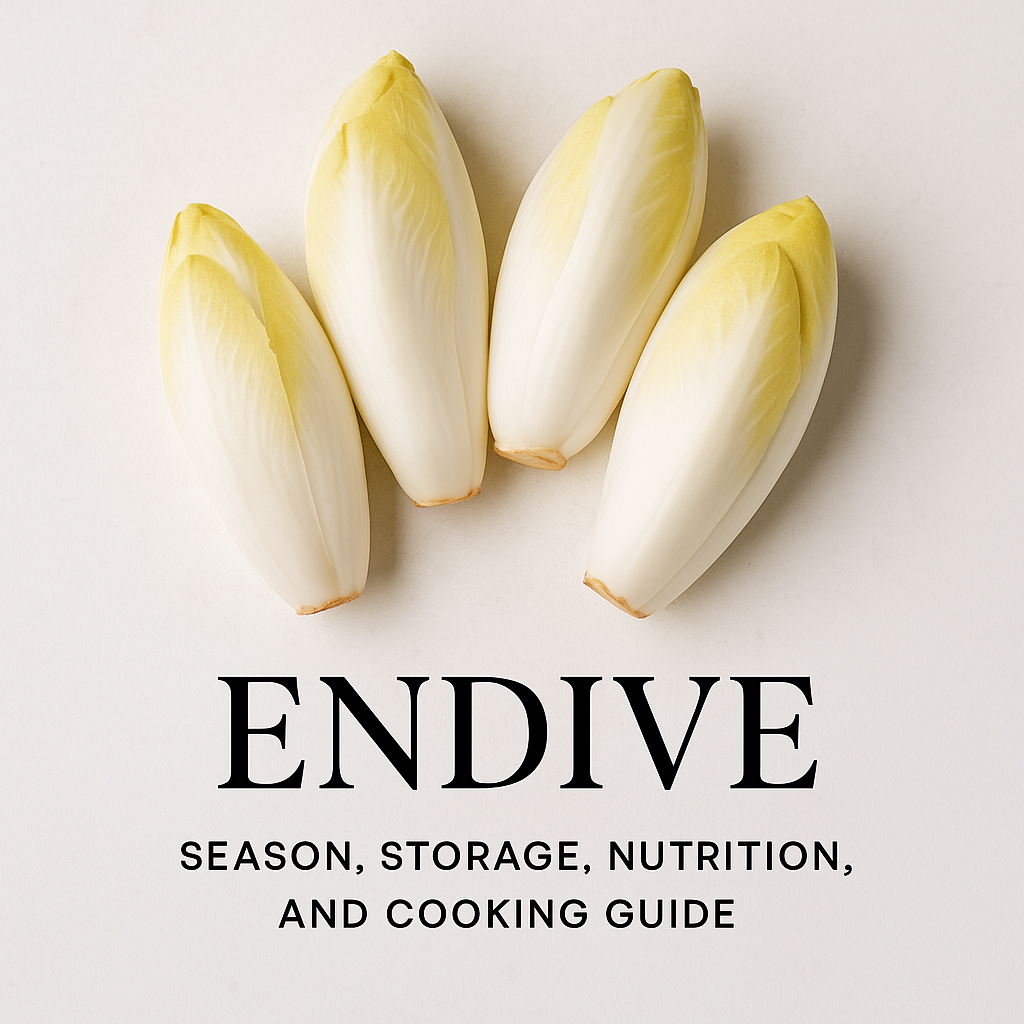
There are mainly two types of endive that are widely consumed: Curly endive (also known as frisée) has narrow, ruffled leaves and a slightly stronger flavor, while Belgian endive is smooth, pale, and more compact, often used in fine dining for its elegant appearance and subtle taste.
💪 Benefits
Endive offers numerous benefits, mainly due to its rich content of vitamins, minerals, and fiber. Here are some key highlights:
- Rich in Fiber: Endive contains dietary fiber that aids digestion and promotes gut health.
- Vitamin K Powerhouse: Essential for blood clotting and bone health, endive is loaded with vitamin K.
- Low in Calories: A perfect choice for weight management, endive is low in calories while still providing essential nutrients.
- Antioxidant Properties: Contains quercetin and kaempferol, flavonoids that help protect cells from oxidative damage.
🌍 Origin
Originally hailing from the Mediterranean region, endive has a long history of cultivation that dates back to ancient Egypt and Greece. Its popularity gradually spread across Europe, where it became a staple in French, Italian, and Belgian cuisine. Today, endive is grown globally, with significant cultivation occurring in the United States, particularly in California.
📅 Harvest Season
The harvest season for endive can vary depending on the region. Generally, endive is available year-round, with peak seasons in the spring and fall. The cooler temperatures during these seasons contribute to the formation of its characteristic crisp leaves.
In regions with mild winters, some varieties can be grown as a winter crop, while in warmer climates, farmers often opt for late summer and early autumn sowing to avoid the summer heat.
🧺 Varieties
Endive comes in several varieties, each with unique features and culinary uses:
- Curly Endive (Frisée): Distinguished by its frilly, green leaves, this variety adds a decorative touch to salads and dishes.
- Belgian Endive: Known for its sleek, white-gold appearance and slightly bitter taste, it is often grilled, baked, or used as a base for canapés.
- Escarole: Similar to curly endive but with broader leaves, escarole is less bitter and often used in soups and stews.
🛒 How to Choose (Checklist)
When selecting endive at the store, keep the following checklist in mind to ensure freshness and quality:
- Look for firm, tightly packed heads with crisp leaves.
- Avoid any discoloration or spotting on the leaves.
- The leaves should be vibrant in color—not wilted or limp.
- For Belgian endive, choose ones with bright, pale stems and watch for any signs of browning.
- Check the expiration or produce date if available.
🍽 Cooking & Eating Methods
Endive's versatility allows it to be used in various culinary applications. Here are some popular methods:
- Fresh: Add endive to salads for an extra crunch. It pairs well with citrus fruits, apples, and nuts.
- Grilled: Drizzle with olive oil and season with salt and pepper before grilling until slightly charred. Complements meats and poultry.
- Braised: Cook Belgian endive in butter or olive oil, with stock and some sugar, for a savory-sweet side dish.
- Stuffed: Fill endive leaves with cheese, nuts, and toppings for an elegant appetizer.
❄ Storage Tips
To maintain freshness and maximize shelf life, proper storage is key:
- Store endive in a perforated plastic bag in the vegetable crisper of your refrigerator.
- Keep Belgian endive away from strong light to prevent it from turning bitter.
- Consume within a week for the best flavor and texture.
- Avoid washing until ready to use, as excess moisture can promote spoilage.
❓ FAQ
1. Can endive be eaten raw?
Yes, endive can be eaten raw and is commonly used in salads. It adds a crisp texture and mildly bitter taste that complements other ingredients.
2. What’s the difference between endive and escarole?
While both belong to the chicory family, endive is more bitter and has a finer, curly leaf structure compared to the broader leaves of escarole. Escarole is often milder and used in soups.
3. How can I reduce the bitterness of endive?
The bitterness of endive can be mellowed by cooking methods such as grilling or braising. Pairing with sweet flavors like fruits or honey also balances its taste.