🍓 Eggplant: Season, Storage, Nutrition, and Cooking Guide
Eggplant, known for its vibrant purple color and unique texture, is a versatile vegetable that finds its place in cuisines worldwide. This guide explores the eggplant's characteristics, benefits, origins, and everything else you need to know for making informed culinary choices.
✨ Characteristics
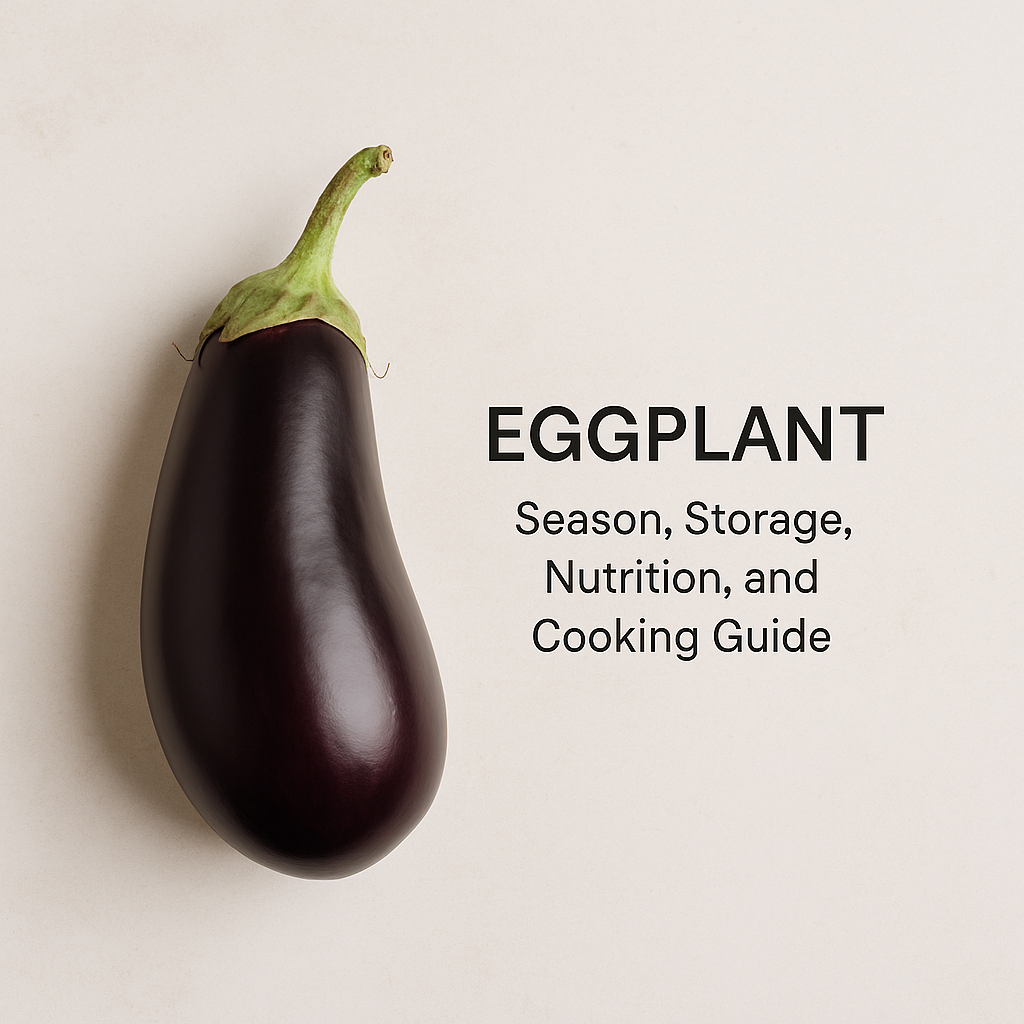
Eggplants, or aubergines, are part of the nightshade family, which also includes tomatoes, potatoes, and peppers. They have a glossy, thin skin that encases a spongy flesh dotted with numerous small seeds. Eggplants come in various shapes, sizes, and colors, including the classic deep purple, as well as white, green, and even striped varieties.
💪 Benefits
Eggplants are low in calories but rich in fiber, making them an excellent choice for a nutritious diet. They contain antioxidants such as nasunin, found in their skin, which protects body cells from damage. Eggplants are also a source of vitamins such as vitamin C, K, and some B vitamins, along with minerals like manganese and potassium. Their high water content helps in maintaining hydration and may aid in weight management. Incorporating eggplant into your meals can contribute to a well-rounded and diverse diet.
🌍 Origin
The eggplant is believed to have originated in India and has a rich history that dates back over 2,000 years. It spread to other parts of Asia and eventually to Europe and the Mediterranean, thanks to the Silk Road and other trade routes. Today, it is a staple in many cultural dishes and is cultivated worldwide, with China, India, and Egypt being the leading producers.
📅 Harvest Season
Eggplants are warm-weather crops, typically in season from late summer to early fall. Depending on the region, the peak harvest can vary, but generally, they are most abundant from August to October. During these months, eggplants are fresh, flavorful, and relatively inexpensive, making it the best time to enjoy them.
🧺 Varieties
There are several popular varieties of eggplants, each with its distinct flavor and culinary uses:
- Globe Eggplant: The most common type found in grocery stores, characterized by its large size and deep purple color.
- Japanese Eggplant: Slender and elongated with a slightly sweet taste, often used in Asian dishes.
- Italian Eggplant: Smaller and more rounded, perfect for dishes like eggplant parmesan.
- White Eggplant: Smooth and creamy in color, with a mild taste suitable for roasting or frying.
- Indian Eggplant: Small and spherical, often used in curries and stews for its tender flesh.
🛒 How to Choose (Checklist)
Selecting the right eggplant is crucial for a successful dish. Here's a handy checklist for choosing the best eggplant:
- Look for smooth, shiny skin without blemishes or wrinkles.
- Choose eggplants that feel heavy for their size, indicating a well-hydrated interior.
- Press gently on the skin; it should give slightly but bounce back, indicating ripeness.
- Avoid eggplants with brown or soft spots, which may signify over-ripeness or spoilage.
🍽 Cooking & Eating Methods
Eggplants are incredibly versatile and can be prepared in various ways:
- Grilling: Sliced eggplant can be grilled for a smoky flavor, perfect for salads or as a side dish.
- Roasting: Roasting enhances eggplant's natural sweetness, making it ideal for purees or dips like baba ganoush.
- Frying: A popular method for dishes such as eggplant parmesan. Coat slice in breadcrumbs for a crispy texture.
- Stewing: Eggplant absorbs flavors well, making it excellent for curries and stews.
- Salads: Cubed and cooked eggplant adds depth to both warm and cold salads.
❄ Storage Tips
Properly storing eggplant is key to maintaining its texture and flavor:
- Keep in a cool, dry place and avoid storing in the fridge unless sliced, as refrigeration can cause browning and spoilage.
- For cut eggplant, store in an airtight container in the refrigerator for up to two days.
- To freeze, blanch sliced eggplant briefly in boiling water, drain, and pack in airtight containers or freezer bags.
❓ FAQ
- Q: Can you eat eggplant raw?
A: While it is safe to eat raw eggplant, some varieties may have a bitter taste. Cooking enhances its flavor and texture.
- Q: How can I reduce the bitterness of eggplants?
A: Salting the eggplant slices and letting them sit for about 30 minutes before cooking can help draw out bitterness.
- Q: Is there a difference between eggplants and aubergines?
A: No, they are the same vegetable. "Aubergine" is the term used in British English, whereas "eggplant" is used in American English.