🍓 Dandelion Greens: Season, Storage, Nutrition, and Cooking Guide
Dandelion greens, often overlooked in favor of more mainstream leafy vegetables, are nutrient-rich greens that offer a myriad of culinary and nutritional benefits. This guide will delve into everything you need to know about dandelion greens, from their characteristics and benefits to how to select, store, and prepare them for your next meal.
✨ Characteristics
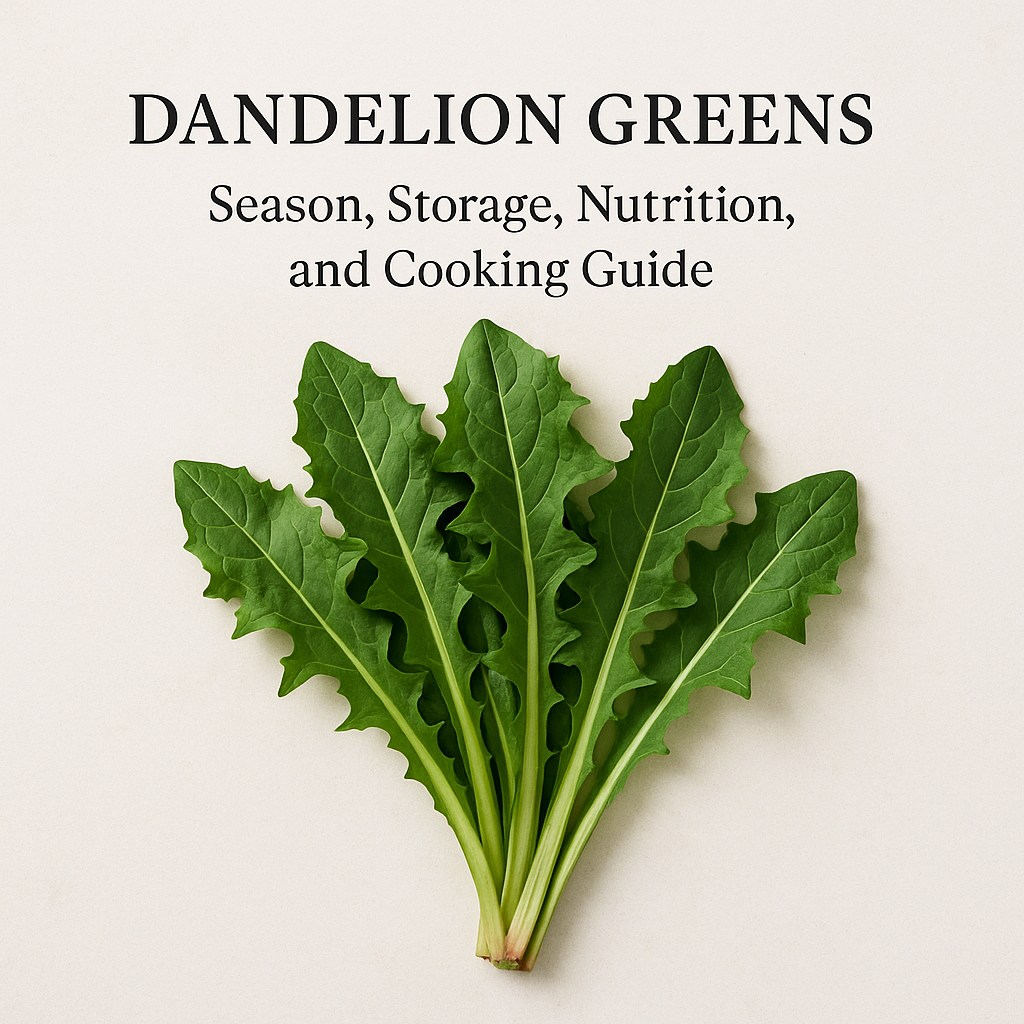
Dandelion greens, characterized by their jagged, tooth-like edges, are the leaves of the dandelion plant. Belonging to the family Asteraceae, their botanical name is Taraxacum. These greens are typically dark green and can have a slightly bitter taste, though younger leaves tend to be milder. The plant is known for its bright yellow flowers, which eventually turn into iconic puffy seed heads.
The texture of these greens is somewhat similar to arugula, with a firm structure that holds up well in salads. They can appear similar to other wild greens, embodying a rustic, earthy appearance that speaks to their natural origin.
💪 Benefits
Dandelion greens are a powerhouse of nutrients. They are rich in vitamins A, C, and K, as well as essential minerals like calcium, potassium, and iron. These nutrients contribute to overall health by supporting vision, strengthening the immune system, and promoting bone health.
In addition to their vitamin and mineral content, dandelion greens are also high in antioxidants, which help the body fight off oxidative stress and maintain cellular health. Eating dandelion greens can also add fiber to your diet, aiding digestive health.
🌍 Origin
Dandelions are native to Eurasia but have spread across the globe, thriving in temperate regions. These plants are highly adaptable, often found in gardens, meadows, and even urban sidewalks. Their historical uses date back centuries, with various cultures utilizing both the roots and leaves for culinary and practical purposes.
Historically, dandelion greens have been harvested and used in traditional dishes, particularly in European and Asian cuisines. They have been revered not only for their adaptability but also for their ease of growth and availability.
📅 Harvest Season
The ideal time to harvest dandelion greens is in the spring and fall. During these cooler seasons, the greens are tender and the flavors are less intense. As summer progresses, the leaves can become tough and more bitter due to the heat.
For foraging enthusiasts, picking dandelion greens in the spring ensures access to the youngest, sweetest leaves. However, those interested in growing their own dandelions can cultivate them year-round, as long as the climate allows for moderate temperatures.
🧺 Varieties
While all dandelion greens stem from the same basic plant, there are slight variations and subspecies with subtle differences. Some are cultivated specifically for backyard gardens, bred to have larger leaves and milder flavors. Others might be more common wild types, which are beloved by foragers.
In the culinary world, you may also come across Italian or French dandelion greens. These are varieties traditionally used in Mediterranean cuisine, known for their delicate taste and tender texture, perfect for raw eating or quick sautéing.
🛒 How to Choose (Checklist)
- Color: Choose greens that are vibrant, dark green without signs of wilting or yellowing.
- Texture: The leaves should be firm, not limp or rubbery, indicating freshness.
- Size: Smaller leaves tend to be less bitter than larger ones.
- Smell: Fresh dandelion greens will smell earthy but not overpoweringly so.
- Source: Ensure they are organic or sourced from areas free of pesticides and pollutants.
🍽 Cooking & Eating Methods
Dandelion greens are incredibly versatile and can be used in a variety of dishes. Here are some common preparation methods:
- Salads: Young dandelion greens are perfect for salads. Pair them with a sweet fruit or nut to counterbalance their bitterness.
- Sautéeing: A simple sauté with garlic and olive oil can transform these greens into a delicious side dish.
- Soups and Stews: Adding dandelion greens to soups or stews will provide a nutritious boost and a touch of earthy flavor.
- Pesto: Try making dandelion pesto by substituting them for basil, blending with olive oil, nuts, and cheese.
Due to their strong taste, combining them with other mild greens can balance the flavor when mixing them raw into salads or greens blends.
❄ Storage Tips
To keep dandelion greens fresh, it's crucial to store them properly. Here are some tips:
- Refrigeration: Wrap the greens loosely in a damp paper towel and place them in a plastic bag or an airtight container. Store them in the crisper drawer of your refrigerator to maintain humidity.
- Washing: Wash the greens only when you're ready to use them to prevent wilting. If you need to wash them beforehand, ensure they are thoroughly dried before storage.
- Freezing: For long-term storage, blanch the greens quickly in boiling water, then plunge them into ice water before freezing them. This will retain their color and nutritional value.
❓ FAQ (3 questions)
1. Are dandelion greens safe to eat?
Yes, dandelion greens are safe to eat and can be a healthy addition to your diet when sourced from a clean environment. Always ensure that they are free from pesticides and pollutants.
2. What can I do if I find dandelion greens too bitter?
If the bitterness of dandelion greens is overwhelming, consider mixing them with milder greens or cooking methods that cut the bitterness, like blanching or sautéing with garlic and other spices.
3. Can I grow dandelion greens at home?
Absolutely, dandelion greens are easy to grow at home. You can plant the seeds in a sunny part of your garden or container, allowing space for the leaves to grow. They require minimal care and can thrive in most environments.