🍓 Daikon: Season, Storage, Nutrition, and Cooking Guide
Daikon, a winter radish known for its crisp texture and mild flavor, is a staple in various culinary traditions around the world. This comprehensive guide explores the unique attributes of daikon, spanning its seasons, storage, and usage in cooking. Discover valuable insights to incorporate this versatile vegetable into your diet while ensuring optimal freshness and flavor retention.
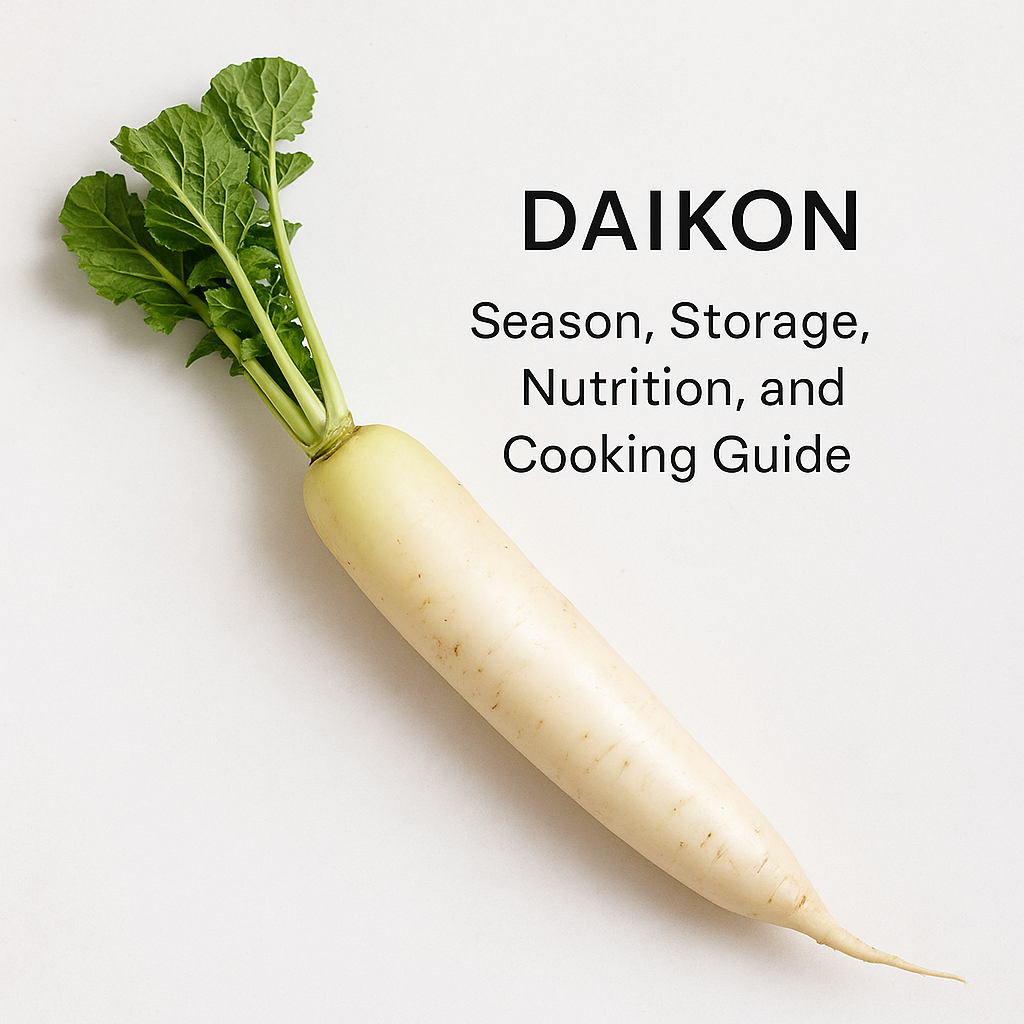
✨ Characteristics
Daikon (Raphanus sativus var. longipinnatus) is renowned for its elongated white root, a prominent feature that differentiates it from other radish varieties. Typically measuring between 8 to 14 inches in length, the skin is smooth, with a typically white or slightly green hue near the top. Its crisp and juicy flesh is appreciated for a peppery yet sweet taste, making it conducive to both raw and cooked applications.
💪 Benefits
Incorporating daikon into meals extends beyond mere taste. Its fiber-rich content aids digestion, while being low in calories makes it an apt choice for weight management. Additionally, daikon contains essential nutrients such as vitamin C, potassium, and folate, contributing to overall wellness.
🌍 Origin
Daikon originates from East Asia, specifically from regions in Japan and China, where it has been cultivated for centuries. Its cultivation has extended to various parts of the world, including the United States and Europe, ensuring its availability to a broader audience. Historically, daikon has played a pivotal role in Asian cuisine, often used in pickling, soups, and as a crunchy salad ingredient.
📅 Harvest Season
Daikon is primarily a cool-season crop. Harvesting typically occurs in late fall and winter, from November through February. In cooler climates, it can be available year-round due to modern agricultural techniques. Optimal harvesting periods ensure the freshest produce with the best flavor profile and nutritional content.
🧺 Varieties
Several varieties of daikon exist, each offering unique flavors and textures suitable for different culinary uses. These include:
- Aokubi Daikon: The most common variety, known for its firm flesh and sweeter taste.
- Minowase: Larger and slightly spicier, often used in pickling.
- Sakurajima: A rare variety, notable for its enormous size and sweeter, milder taste, perfect for roasting.
- Shinrimei: Characterized by its pink interior, adding visual appeal and a mild flavor to dishes.
🛒 How to Choose (Checklist)
When selecting daikon, consider the following checklist to ensure optimal quality:
- Look for firm and smooth skin free of blemishes or soft spots.
- Select daikon with a bright white color, which indicates freshness.
- Avoid daikon with excessively green tops, as it might have a bitter taste.
- Check the end of the root for dryness or signs of spoilage.
🍽 Cooking & Eating Methods
Daikon's versatile nature allows it to be prepared in various ways. Raw daikon provides a crisp texture ideal for salads and garnishing, often thinly sliced or julienned. In cooked applications, daikon can be roasted, braised, or added to soups and stews where it absorbs flavors and retains a tender consistency. Pickled daikon, known as "takuan" in Japan, is a traditional method of preserving the radish, providing a tangy accompaniment to meals.
❄ Storage Tips
Proper storage extends the shelf life of daikon and retains its nutritional value. Store unwashed daikon in the refrigerator, ideally wrapped in a paper towel to absorb excess moisture, and placed in a plastic bag. This method can prolong freshness for up to two weeks. Alternatively, cut daikon should be kept in airtight containers and consumed within a few days.
❓ FAQ
Q1: Can you eat daikon greens?
A1: Yes, daikon greens are edible and nutritious. They can be used in salads or sautéed as a side dish.
Q2: How does daikon differ from regular radishes?
A2: Daikon is larger, milder, and typically less spicy than traditional radishes, making it versatile for different culinary uses.
Q3: Is daikon suitable for pickling?
A3: Absolutely! Daikon is excellent for pickling, often used in traditional dishes across Asian cuisines.