🍓 Cucumber: Season, Storage, Nutrition, and Cooking Guide
Cucumbers are more than just crunchy salad toppings; they are versatile, nutritious, and packed with potential. This guide delves into the characteristics of cucumbers, their health benefits, origin, seasonality, and tips on how to choose, store, and cook them.
✨ Characteristics
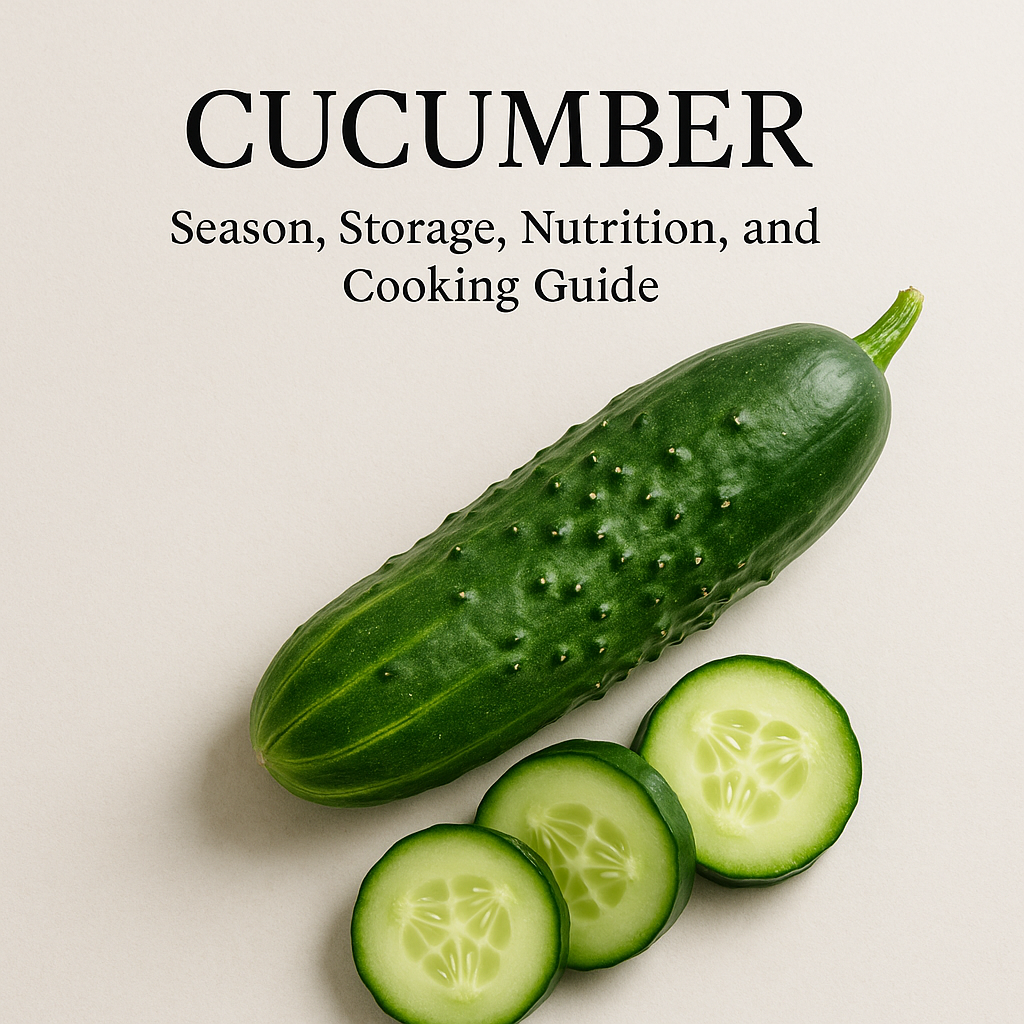
Cucumbers are members of the Cucurbitaceae family, which also includes melons, squash, and gourds. Most cucumbers are elongated, cylindrical vegetables with a dark green skin, though they can vary significantly in size, shape, and color. Their flesh is typically pale green, with a refreshing, slightly watery texture that is densely packed with seeds. Often noted for their mild and crisp qualities, cucumbers are famous for their delightful crunch.
💪 Benefits
Cucumbers provide several potential health benefits thanks to their high water content, low-calorie count, and concentration of essential vitamins and minerals. They are great for hydration, making them an ideal snack in hot weather. Cucumbers are also rich in vitamin K, which supports bone health, and contain antioxidants like beta-carotene, which help combat oxidative stress. Additionally, their low-calorie profile makes them excellent for weight management when included in a balanced diet.
🌍 Origin
The cucumber, Cucumis sativus, is believed to have originated in Southern Asia. Over centuries, it spread across Europe and the Middle East, where it gained notable prominence. Today, cucumbers are cultivated worldwide, thriving predominantly in temperate and tropical regions. They have been adapted to suit various climates, resulting in a wide array of regional varieties.
📅 Harvest Season
Cucumbers are typically in peak season from May through August, aligning with the warmer months in temperate regions. The exact timing, however, can vary depending on the local climate and specific variety being grown. Greenhouse-grown cucumbers may be available year-round, offering a constant supply despite the seasonal shifts of outdoor agriculture.
🧺 Varieties
There are several varieties of cucumbers, each with distinct characteristics and culinary uses.
- Slicing Cucumbers: These are the most common and are often used fresh in salads, sandwiches, and garnishes. They typically have a thicker skin and are larger in size.
- Pickling Cucumbers: Smaller and more uniform, these are ideal for pickling due to their thinner skins and crunchy texture. They are cultivated specifically for preservation in vinegar-based brines.
- English Cucumbers: Also known as hothouse cucumbers, these have a milder, sweeter flavor with minimal seeds and thin skin, making them suitable for raw consumption.
- Persian Cucumbers: Known for their small size and sweet flavor with no bitterness, they are excellent for snacking and including in mixed dishes.
🛒 How to Choose (Checklist)
When selecting cucumbers at the market, consider the following checklist to ensure quality produce:
- Look for cucumbers with firm, unblemished skin free from yellow spots or soft areas.
- Choose uniformly green-colored cucumbers, as pale or yellow patches may indicate overripeness or water loss.
- Size should be proportional, not too oversized, as larger cucumbers tend to have more seeds.
- Check the weight; heavier cucumbers with a consistent firmness are often juicier and fresher.
🍽 Cooking & Eating Methods
Cucumbers can be enjoyed in many versatile ways due to their refreshing taste and texture.
- Raw and Fresh: Slice or dice cucumbers for salads, salsas, or gourmet garnishes. They can also be used as a crunchy addition to sandwiches and wraps.
- Pickling: Create classic dill pickles, bread-and-butter pickles, or other flavored variations for long-term storage and enhanced taste.
- Blended: Blend cucumbers into smoothies, cold soups like gazpacho, or make a refreshing cucumber juice.
- Cooked: Although less common, cucumbers can be sautéed lightly or incorporated into stir-fried dishes for a unique texture.
❄ Storage Tips
Proper storage ensures cucumbers retain freshness and flavor for as long as possible:
- Store cucumbers in the refrigerator in the crisper drawer where humidity levels are higher.
- Avoid washing cucumbers until ready to use, as moisture can speed up spoilage.
- If cut, wrap in plastic wrap or store in sealed containers to prevent them from drying out.
- Consider pickling if you have an abundance of cucumbers to extend their shelf life.
❓ FAQ
- Are cucumbers fruits or vegetables?
Cucumbers are technically fruits because they develop from the flower of the cucumber plant and contain seeds. However, they are commonly treated as vegetables in culinary contexts.
- Can cucumbers be eaten with the peel?
Yes, cucumber skin is edible and contains additional nutrients. However, they should be thoroughly washed to remove any pesticide residues or wax coatings, particularly for non-organic cucumbers.
- What should I do if my cucumbers are bitter?
Bitter cucumbers can sometimes occur due to certain growing conditions. To reduce bitterness, remove the ends of the cucumber and peel the skin. The bitterness tends to concentrate near the ends and within the skin.