🍓 Collard Greens: Season, Storage, Nutrition, and Cooking Guide
Collard greens are a staple in Southern cuisine, renowned for their robust flavor and impressive nutritional profile. In this comprehensive guide, we will explore everything from the characteristics and benefits of collard greens to their storage, preparation, and cooking methods. Get ready to enhance your culinary repertoire with these nutrient-packed leafy greens.
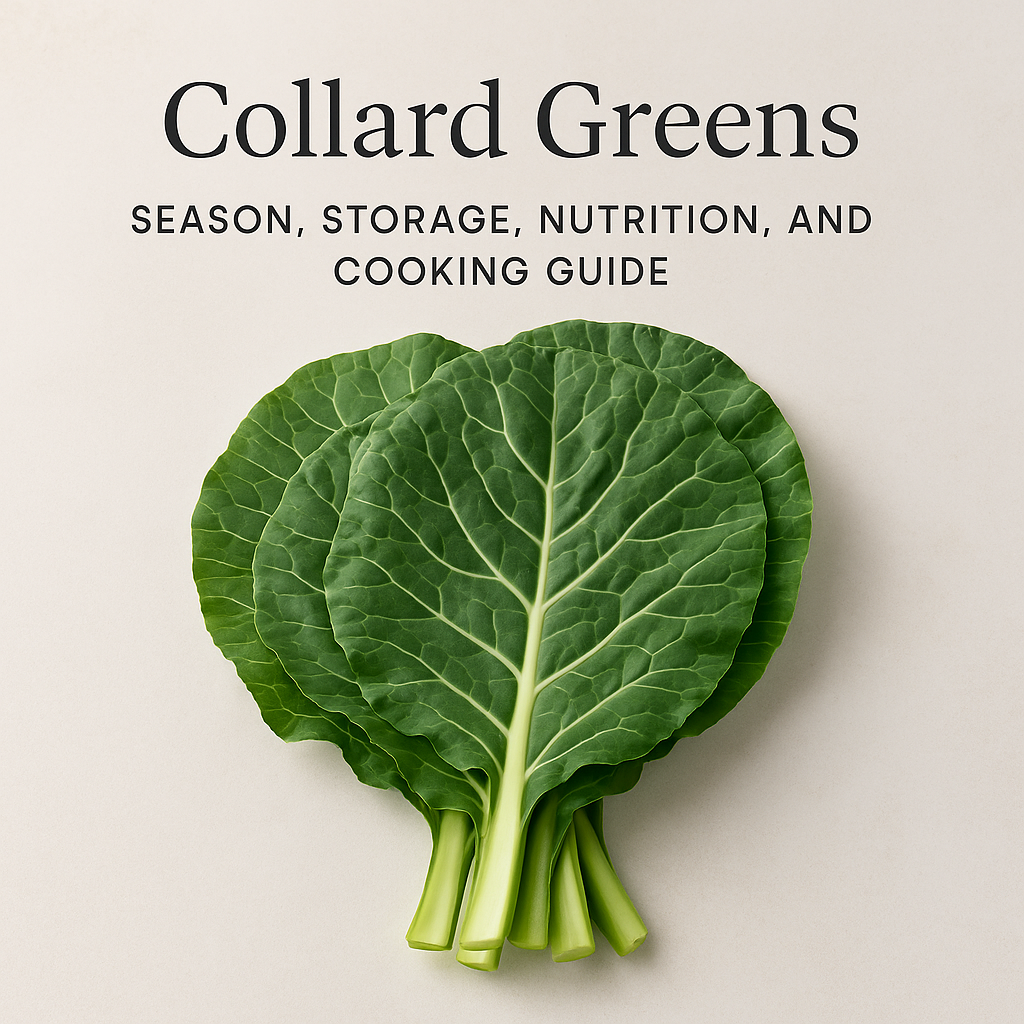
✨ Characteristics
Collard greens are a brassica vegetable closely related to kale, broccoli, and cabbage. Known for their large, dark-green, fan-like leaves, collard greens have a slightly bitter and earthy taste. The leaves are thick and require longer cooking times to achieve ideal tenderness. This vitamin-rich vegetable is not only versatile but also a powerhouse of nutrients, making it a favorite among health enthusiasts and chefs alike.
💪 Benefits
One of the most appealing aspects of collard greens is their nutritional profile. They are high in vitamins A, C, and K, as well as minerals like calcium and iron. Incorporating collard greens into your diet can support bone health, bolster the immune system, and enhance overall well-being. Also rich in antioxidants, collard greens can help combat oxidative stress and inflammation, contributing to long-term health benefits.
🌍 Origin
Collard greens have a long history that dates back to ancient times. Originally cultivated in the Eastern Mediterranean region, these greens have been a dietary staple for thousands of years. Today, collard greens are grown worldwide, with significant production in Europe, Africa, and North America. In the United States, collard greens are particularly popular in Southern cuisine and have become emblematic of soul food.
📅 Harvest Season
Collard greens are a cool-season crop that thrives in moderate climates. In most regions, they are planted in early spring or late summer and can be harvested throughout fall and winter. The leaves tend to be sweeter and more tender after a light frost, which is why many farmers and gardeners prefer to harvest them during the cooler months. This seasonal harvesting also aligns with holiday traditions, where collard greens play a central role in festive meals.
🧺 Varieties
Several varieties of collard greens exist, each with distinct features that may appeal to different culinary preferences. Some popular types include:
- Georgia Southern: A widely-grown variety characterized by its smooth, broad leaves and mild flavor.
- Morris Heading: Known for its compact head and slightly crinkled leaves, offering a tender texture when cooked.
- Vates: Distinguished by its deep green color and tolerance to cold weather, making it ideal for winter harvests.
Exploring these varieties allows you to experiment with different flavors and textures in your cooking.
🛒 How to Choose (Checklist)
When selecting collard greens, look for the following qualities to ensure freshness and taste:
- Bunches with firm, dark-green leaves
- Leaves that are free from yellowing or wilting
- Avoid large stems, as they can be tough and fibrous
- No signs of insect damage or holes
- Check for organic labels to ensure minimal pesticide use
🍽 Cooking & Eating Methods
Collard greens are incredibly versatile and can be prepared in a variety of ways. Here are some popular methods:
- Steaming: A gentle method that preserves nutrients. Simply steam until tender, around 10-15 minutes.
- Sautéing: Quickly cook in olive oil with garlic and onion for a simple side dish.
- Boiling: Boil in a seasoned broth to add flavor, then serve as a side dish.
- Raw: Use young, tender leaves in salads or as a wrap for other ingredients.
The cooking time can vary depending on leaf size and desired tenderness, so adjust accordingly to your preference.
❄ Storage Tips
Proper storage of collard greens will help maintain their freshness and nutritional quality. Here are some tips:
- Refrigerate unwashed collard greens in a plastic bag for up to a week.
- Wash just before use to prevent spoilage.
- Blanch and freeze for long-term storage – collards can last up to 12 months in the freezer.
- To blanch, submerge leaves in boiling water for two minutes, then transfer to ice water immediately.
❓ FAQ (3 questions)
- Can I eat collard greens raw?
Yes, collard greens can be eaten raw, although they may be more bitter. Using younger, tender leaves is recommended when consuming them raw in salads or dishes. - Are collard greens the same as kale?
No, collard greens and kale are related but distinct. They belong to the same Brassica family but have different leaf textures and flavors. - Why do collard greens smell when cooking?
The sulfur compounds present in collard greens can release a strong odor when cooked. This is natural and similar to other cruciferous vegetables like broccoli and cabbage. Cooking with herbs and spices can help neutralize the smell.