🍓 Chicory: Season, Storage, Nutrition, and Cooking Guide
Chicory, often underrated, is a versatile plant with a myriad of uses. Known for its health benefits and distinctive flavor, chicory has long been used both as a food source and for medicinal purposes. In this guide, we'll explore everything you need to know about chicory, from its seasonal availability and varieties to its nutritional profile and best cooking practices.
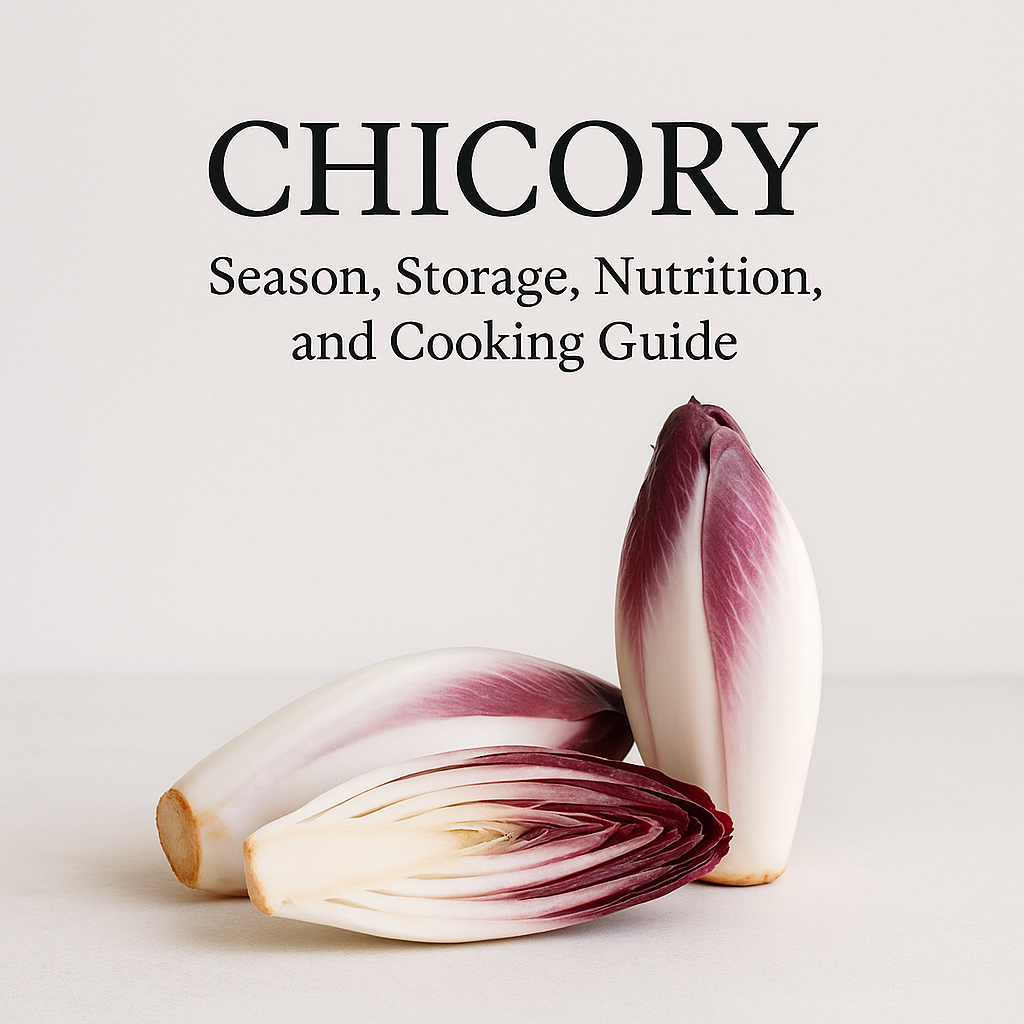
✨ Characteristics
Chicory (Cichorium intybus) belongs to the daisy family and is recognized for its rough, hairy stems and bright blue flowers. Its leaves are often mistaken for dandelion greens, while its roots have been used as a coffee substitute or enhancer. The plant's slightly bitter taste is a distinctive trait, making it a favorite for adding depth to various dishes.
💪 Benefits
Chicory is not only valued for its unique taste but also for its nutritional benefits. It is rich in inulin, a type of prebiotic fiber that promotes gut health and aids digestion. Moreover, chicory is low in calories yet high in essential nutrients such as vitamins A, C, K, and certain B vitamins, including folate. It also contains trace minerals like manganese, phosphorus, potassium, and zinc, all contributing to balanced nutrition.
🌍 Origin
Chicory has been cultivated since ancient times, with origins tracing back to the Mediterranean region. It has been used in traditional medicine for centuries, believed by many cultures to cure various ailments. Its popularity soared in Europe during the Napoleonic Wars when coffee shortages led to the chicory root being roasted and used as a coffee substitute.
📅 Harvest Season
The harvesting season for chicory usually spans from fall to early spring, although it can vary slightly depending on the variety and the specific climate of the growing region. Young leaves can be harvested early, much like lettuce, while the roots are typically dug up in the fall when they are at their most robust.
🧺 Varieties
There are several types of chicory, each with its distinct characteristics:
- Radicchio: Often used in salads, this red-leafed variety adds a burst of color and a mild bitterness.
- Belgian Endive: Known for its tightly packed leaves, it is often enjoyed raw or braised.
- Puntarelle: Popular in Italian cuisine, particularly in salads, featuring a somewhat nutty flavor.
- Red Chicory: Related to radicchio, it has a slightly peppery taste, ideal for salads.
- Catalogna: With narrower leaves, it's similar to dandelion greens and suitable for sautéed dishes.
🛒 How to Choose (Checklist)
Selecting the best chicory is crucial for maximizing its flavor and nutritional benefits. Here’s a checklist to guide you:
- Look for firm, crisp leaves devoid of discoloration or spots.
- Choose smaller, younger leaves for a milder taste.
- For roots, opt for those that are firm and feel heavy for their size.
- Fresh chicory should have a vibrant color that reflects its variety.
🍽 Cooking & Eating Methods
Chicory’s bitterness can be tamed or accentuated depending on your cooking method. Here are some popular ways to enjoy chicory:
- Salads: Use raw chicory leaves for a fresh, crunchy texture in your salads.
- Roasting: Roast chicory to caramelize its natural sugars, mellowing its bitterness.
- Grilling: Grilled chicory can serve as a great side dish, adding depth with its smoky flavor.
- Braising: Slow-cooked chicory becomes tender and flavorful, perfect for stews.
- Coffee Substitute: Roasted chicory root is a caffeine-free addition or alternative to coffee.
❄ Storage Tips
Proper storage is essential to maintain chicory's freshness and extend its shelf life:
- Wrap the leaves in a damp paper towel and place them in an airtight container in the refrigerator.
- Chicory roots should be stored in a cool, dark place, similar to root vegetables like carrots or beets.
- For longer-term storage, consider blanching and freezing the leaves, keeping their color and flavor intact.
❓ FAQ
- Is chicory suitable for raw consumption?
Yes, chicory can be eaten raw. It is popular in salads where its crunch and slight bitterness add complexity to dishes. - What pairs well with chicory?
Chicory pairs well with ingredients that balance or complement its bitterness, such as citrus fruits, nuts, creamy dressings, or cheeses. - How can I reduce chicory's bitterness?
To mellow the bitterness, chicory can be blanched or paired with sweet or fatty foods, or it can be cooked through roasting or grilling methods.