🍓 Chayote: Season, Storage, Nutrition, and Cooking Guide
Chayote, a versatile and nutritious gourd, is a culinary gem gaining popularity due to its mild flavor and numerous health benefits. This comprehensive guide explores the fascinating world of chayote, from its distinct characteristics to the best ways to cook and store it. Dive in to learn everything you need to know about this remarkable fruit.
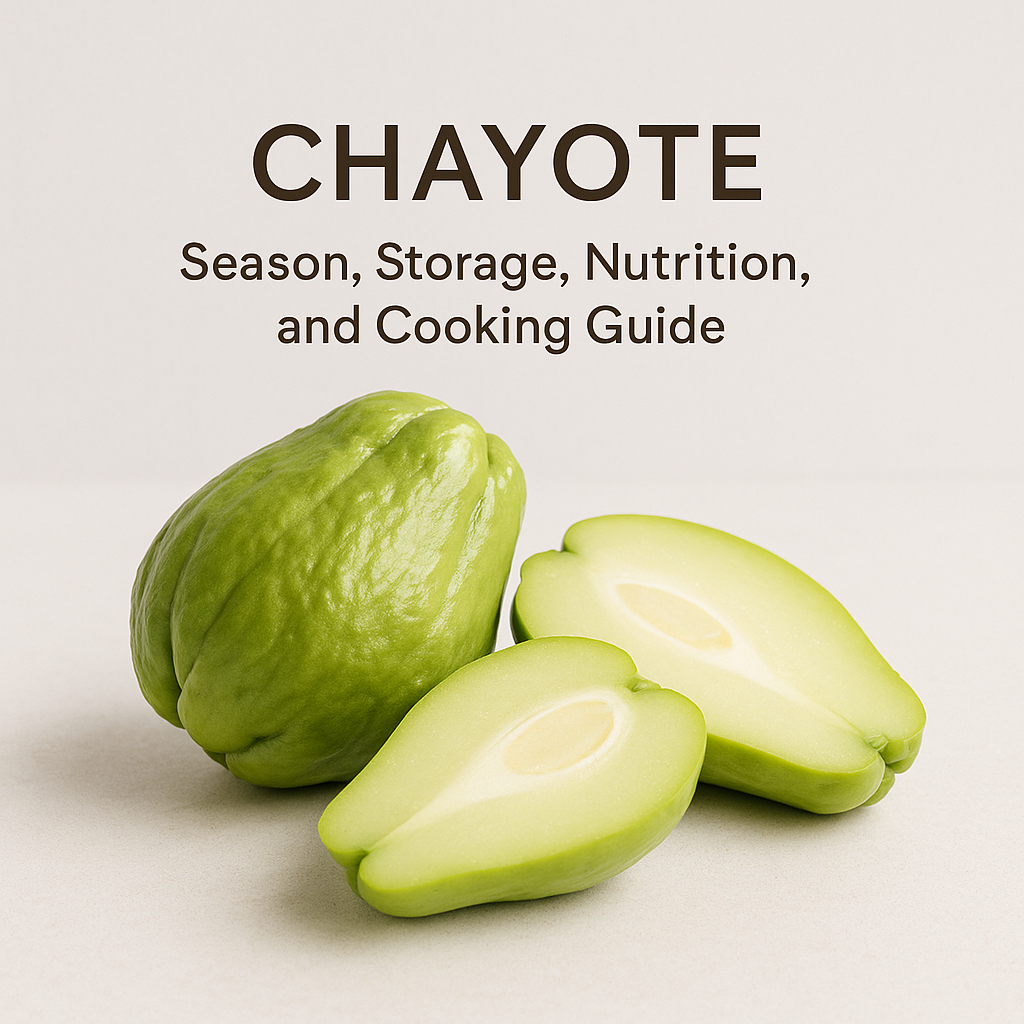
✨ Characteristics
Chayote, also known as Sechium edule, belongs to the gourd family, Cucurbitaceae. It is typically light green, pear-like in shape, and has a thin, edible skin. The flesh is crisp and white with a mild taste that absorbs flavors well, making it a versatile ingredient in various dishes. Originating from Mesoamerica, chayote is now cultivated in many regions worldwide, including parts of the United States, South America, and Asia.
💪 Benefits
Chayote is lauded for its numerous benefits, making it an excellent addition to a balanced diet. Its nutritional profile includes:
- Low-Calorie Content: With only about 16 calories per 100 grams, chayote is a great choice for those watching their calorie intake.
- Rich in Fiber: It aids digestion and promotes a feeling of fullness, which can help with weight management.
- Vitamins and Minerals: It is an excellent source of vitamin C, potassium, and antioxidants, supporting overall health and immune function.
- Hydration: With its high water content, chayote helps maintain hydration and provides a refreshing taste.
🌍 Origin
Chayote has its origins in the tropical regions of Central America, specifically in countries like Mexico and Guatemala. Indigenous peoples have cultivated this fruit for centuries. The word "chayote" itself is derived from the Nahuatl chayotli. It was introduced to Europe and other parts of the world during the Columbian Exchange and has since become a staple in Caribbean, African, and Asian cuisines.
📅 Harvest Season
Chayote is typically harvested in the fall, from September to November, but in regions with warm climates, it can be available year-round. The fruit grows on climbing vines and takes approximately 120 to 150 days to mature from planting. Farmers often harvest chayote when it reaches its full size but before it becomes too ripe for optimal flavor and texture.
🧺 Varieties
While the common green chayote is the most widely recognized, several varieties differ in appearance and taste:
- Green Chayote: Smooth or slightly wrinkled skin; mild flavor.
- White Chayote: Lighter skin; slightly sweeter taste.
- Prickly Chayote: Covered in prickles or spines; similar taste once peeled.
- Yellow Chayote: More tropical taste; found in limited regions.
🛒 How to Choose (Checklist)
When selecting chayote in the market, keep the following checklist in mind to ensure freshness:
- Firmness: Select chayote that is firm to the touch.
- Color: Look for vibrant, consistent color without blemishes.
- Size: Medium-sized chayotes are often more tender.
- Skin Texture: Avoid fruits with excessive wrinkles or soft spots.
🍽 Cooking & Eating Methods
Chayote is incredibly versatile in the kitchen. Here are various ways you can prepare and enjoy this fruit:
- Raw: Sliced thinly, it makes a crisp addition to salads or coleslaw.
- Boiled: Simmered in soups or stews, chayote absorbs surrounding flavors beautifully.
- Grilled/Roasted: Roasted with herbs and spices enhances its natural sweetness.
- Sautéed: Sauté chayote with garlic and olive oil for a simple side dish.
- Stuffed: Hollow out the fruit and fill with ingredients like cheese or meat mixtures.
❄ Storage Tips
Proper storage of chayote extends its shelf life and preserves its quality. Here are some storage tips:
- Refrigeration: Store chayote in a plastic bag in the refrigerator's crisper drawer, where it can last up to four weeks.
- Room Temperature: If you plan to use it within a few days, you can also store it at room temperature away from direct sunlight.
- Culinary Preparation: If you have leftover cooked chayote, ensure it cools to room temperature before refrigerating in an airtight container for up to three days.
❓ FAQ
- Can you eat chayote raw?
Yes, chayote can be eaten raw. It is often added to salads for a crisp texture. - Is chayote suitable for a low-carb diet?
Absolutely! Chayote is low in carbs and makes a perfect addition to a low-carb or keto diet. - How can I reduce the bitterness in chayote?
To mitigate any bitterness, you can soak chayote slices in salted water before cooking.