🍓 Celery: Season, Storage, Nutrition, and Cooking Guide
Celery, often recognized for its crunchy texture and refreshingly crisp bite, is a staple in many kitchens around the world. This versatile vegetable is admired not only for its distinctive flavor but also for its nutritional value and culinary flexibility. In this guide, we will explore the many facets of celery, including its characteristics, benefits, origin, and much more.
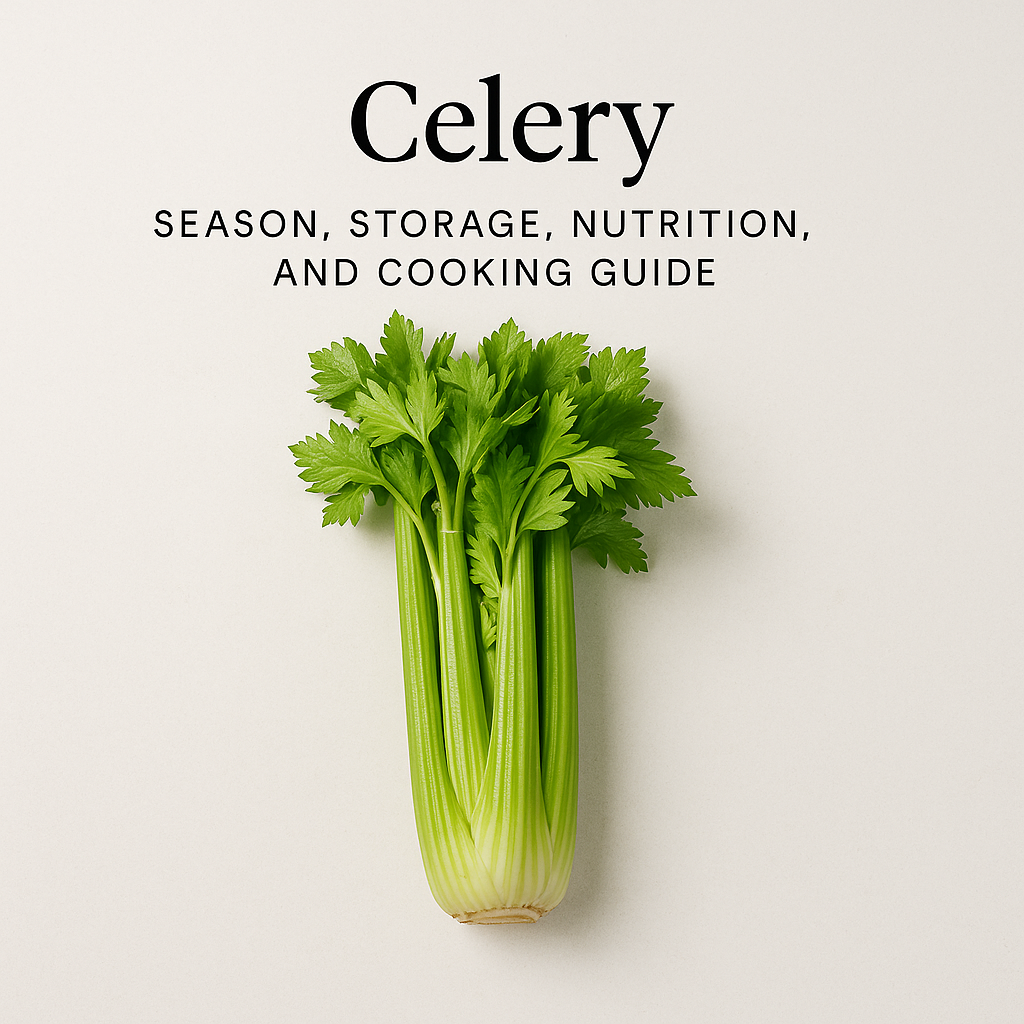
✨ Characteristics
Celery belongs to the Apiaceae family and is known for its long, fibrous stalks, which taper into leaves. The vegetable offers a mild, earthy taste with a hint of peppery bitterness. Celery's crunchy texture adds not just flavor but also an appealing sound and feel to various dishes. The vegetable is cultivated primarily for its edible stalk, but every part of it, including the leaves and seeds, is useful in cooking.
💪 Benefits
While it is often overshadowed by more colorful vegetables, celery offers numerous benefits that make it a valuable addition to a balanced diet. Firstly, it's incredibly low in calories, making it an excellent choice for weight-conscious individuals. Additionally, celery is a good source of antioxidants, which can help to protect cells from oxidative damage. It also contains fiber, which supports digestive health.
Celery is also rich in vitamins and minerals, such as vitamin K, vitamin C, potassium, and folate. These nutrients play vital roles in maintaining bone health, assisting in wound healing, balancing electrolytes, and supporting cell function and DNA synthesis, respectively.
🌍 Origin
Celery has a long and intriguing history, dating back over two thousand years. Originally cultivated in the Mediterranean and Northern African regions, celery was first used for medicinal purposes. It then spread to Europe and Asia, where it gained popularity as a flavorful ingredient in various traditional dishes. Today, celery is grown worldwide, particularly in regions with cool, temperate climates.
📅 Harvest Season
While celery is available year-round in most supermarkets, its peak season typically falls between late summer and early winter. This period is ideal for harvesting because the cool temperatures help to enhance the vegetable's sweet, crisp flavor. If you're buying from local farmers' markets, this is the best time to experience celery at its freshest.
🧺 Varieties
Celery comes in several varieties, each with unique attributes. The three main types are:
- Pascal Celery: The most common type found in grocery stores, characterized by its long, light green stalks.
- Golden Celery: Known for its blanched, yellow stems and milder flavor, this variety is often used in gourmet cooking.
- Leaf Celery: Similar to parsley with thinner stalks and a stronger, more aromatic taste, it is popular in Asian cuisine.
🛒 How to Choose (Checklist)
Selecting the best celery involves a careful examination of its physical properties. Use this checklist when shopping:
- Look for firm, crisp stalks that snap easily when bent.
- The leaves should be vibrant and fresh without any signs of wilting.
- There should be no signs of discoloration or spotting on the stems.
- Avoid celery with a tough, stringy texture or rubbery feel.
🍽 Cooking & Eating Methods
Celery's versatility allows it to be prepared and enjoyed in various ways. Here are some popular methods:
- Raw: Perfect for snacking, celery pairs well with dips like hummus or peanut butter.
- Soups and Stews: Adds depth of flavor and aroma, and can survive long cooking times without losing its texture.
- Salads: Provides crunch and freshness, complementing leafy greens and other vegetables.
- Juice: Blended with fruits or consumed alone, celery juice has gained popularity for its refreshing and hydrating qualities.
❄ Storage Tips
To maintain its freshness, it’s essential to store celery properly. Here are some tips:
- Wrap celery in aluminum foil, rather than plastic, to keep it crisp for a longer duration.
- Store in the crisper drawer of your refrigerator, as this environment is optimized for vegetable preservation.
- If pre-cut, store celery in a sealed container with a little water at the bottom to prevent dehydration.
❓ FAQ
- Q: Can I freeze celery?
A: Yes, but be aware that its texture might change upon thawing. It's best used in soups or stews after freezing. - Q: How can I reduce the stringiness of celery?
A: Before consuming, use a vegetable peeler to remove the outer, fibrous strings from the stalks. - Q: Is it possible to regrow celery from its base?
A: Yes, place the base of a bunch of celery in a shallow dish of water, and new shoots may sprout from the center.