🍓 Celeriac: Season, Storage, Nutrition, and Cooking Guide
Celeriac, often referred to as celery root, is a versatile and often underappreciated vegetable with a distinctive flavor and a range of culinary uses. This knobby root is not only rich in nutrients but also a perfect addition to various dishes. Whether you're looking to explore new vegetables or enhance your cooking repertoire, understanding celeriac’s characteristics, benefits, and methods of preparation can elevate your culinary experiences.
✨ Characteristics
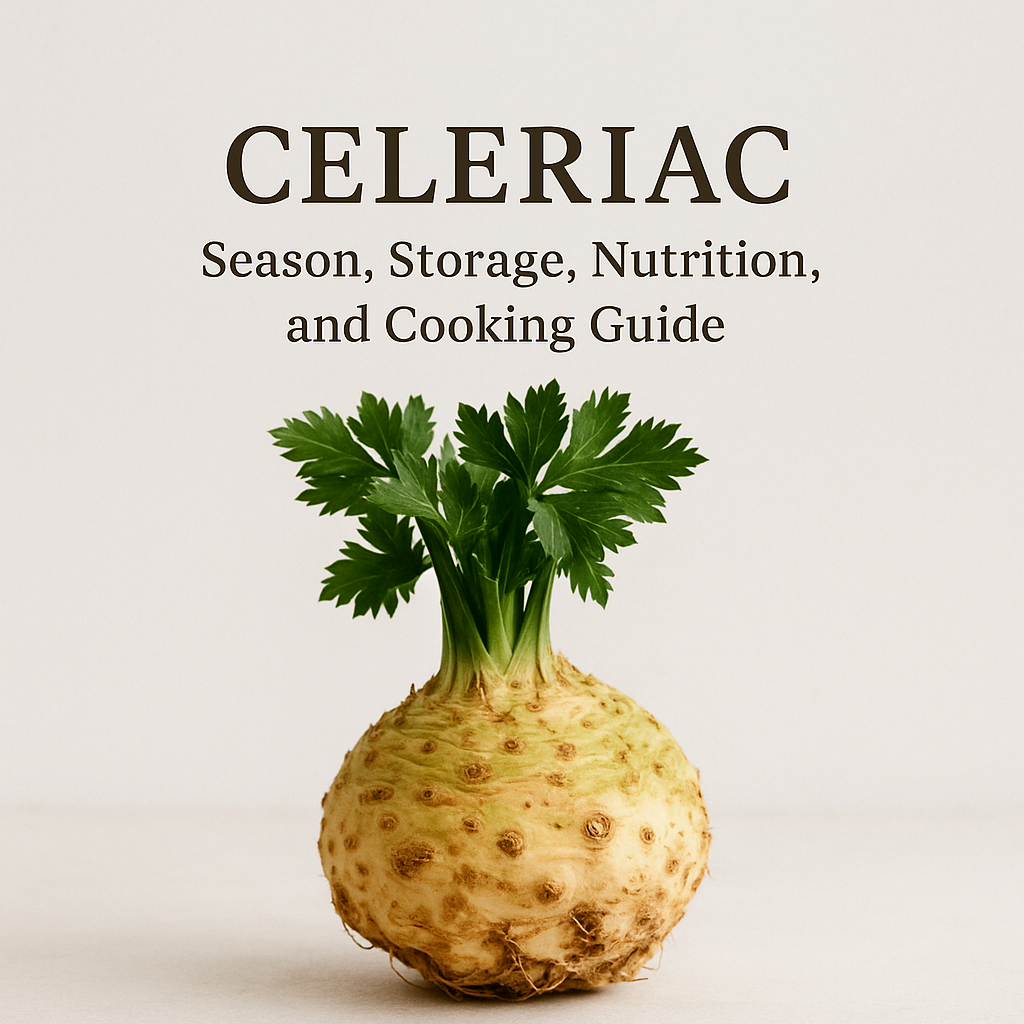
Celeriac is a root vegetable that belongs to the same family as celery, carrots, and parsley. It is recognized by its rough, brown exterior and creamy white flesh inside. The texture is somewhat firm when raw and becomes tender once cooked. Its flavor is reminiscent of a more earthy, nutty version of celery, and it offers a slight hint of parsley. Due to its unique taste and texture, celeriac serves as an excellent substitute for starchier vegetables such as potatoes.
💪 Benefits
Incorporating celeriac into your diet can offer several nutritional advantages. Celeriac is low in calories yet rich in several vital nutrients. It is an excellent source of vitamin K, which is crucial for bone health and blood clotting. Moreover, it provides a good amount of vitamin C, aiding in immune function and collagen synthesis. Its high fiber content promotes digestive health and helps maintain a feeling of fullness. Additionally, celeriac contains essential minerals such as phosphorus, potassium, and manganese, supporting various bodily functions.
🌍 Origin
Native to the Mediterranean Basin, celeriac has been cultivated for centuries. It was initially grown as a medicinal herb rather than a food staple. Over time, its gastronomic potential was realized, and it spread across Europe. Today, celeriac is predominantly grown in cooler climates and is a popular ingredient in European cuisine, particularly in countries like France, Germany, and the Netherlands. Its unique flavor and versatility have allowed it to gain popularity in many international kitchens.
📅 Harvest Season
Celeriac is typically harvested in the fall. Depending on the region, the best quality celeriac is available from late September through April, making it a staple during the cooler months when other fresh produce selections might be limited. It thrives in mild to cold climates and is often one of the last vegetables to be harvested before the frost sets in. This root vegetable can be stored for months, providing a valuable food source during winter.
🧺 Varieties
There are several varieties of celeriac that differ slightly in appearance and flavor profile. Some of the popular varieties include:
🛒 How to Choose (Checklist)
Selecting the right celeriac ensures you get the best flavor and texture for your dishes. Use this checklist to choose high-quality celeriac at the market:
- Look for firm roots with a weight that feels appropriate for their size.
- Avoid celeriac with soft spots, blemishes, or excessive rootlets, which indicate age or poor storage.
- Opt for roots that are heavy for their size, as these are likely to have more flesh and less spongy texture.
- The exterior color should be a consistent brown, with no green tinges or mold present.
- If the stems are attached, they should be crisp and vibrant, indicating freshness.
🍽 Cooking & Eating Methods
Celeriac is a versatile ingredient that can be used in numerous cooking methods:
- Raw: Grated or thinly sliced, celeriac can be added to salads for a crunchy texture.
- Boiled: Cook until tender, then mash with butter and seasonings for a creamy side dish.
- Roasted: Cut into cubes, toss with oil and spices, and roast for a caramelized, sweet flavor.
- Pureed: Combine celeriac with other root vegetables and blend for hearty soups or sauces.
- Sautéed: Slice thinly and sauté with onions and herbs for a savory side dish.
Celeriac pairs well with rich, hearty meats such as beef and lamb, but also complements lighter dishes such as fish and poultry. Its unique flavor makes it an excellent component in both traditional and modern recipes.
❄ Storage Tips
Proper storage of celeriac is essential to maintain its quality:
- Store celeriac unpeeled in a cool, dark place, like a pantry or root cellar, where it can last for up to 3 months.
- Refrigerating celeriac is also an option; wrap it in paper towels and place it in a plastic bag to maintain moisture.
- If you've cut the celeriac, it's best to wrap it tightly with plastic wrap or store in an airtight container in the refrigerator. Use it within a week to prevent spoilage.
- For long-term storage, celeriac can be blanched and frozen, though this may alter its texture once thawed.
❓ FAQ (3 Questions)
Q1: Can celeriac be eaten raw?
A1: Yes, celeriac can be eaten raw. It is often grated into salads or slaws, providing a crisp texture and distinct flavor similar to celery.
Q2: Is celeriac the same as celery root?
A2: Yes, celeriac is also known as celery root. It is the bulbous root of a special variety of celery grown specifically for its edible root.
Q3: What is a good substitute for celeriac in recipes?
A3: If you don’t have celeriac on hand, you can substitute it with turnips, parsnips, or even potatoes, though the flavor profile will differ slightly.