🍓 Cauliflower: Season, Storage, Nutrition, and Cooking Guide
Cauliflower, often considered a humble vegetable, is a powerhouse of nutrition and versatility. As a cruciferous vegetable, it offers a myriad of culinary possibilities and health benefits. This guide provides comprehensive insights into the characteristics, benefits, origin, harvest season, varieties, selection, cooking methods, and storage tips for cauliflower.
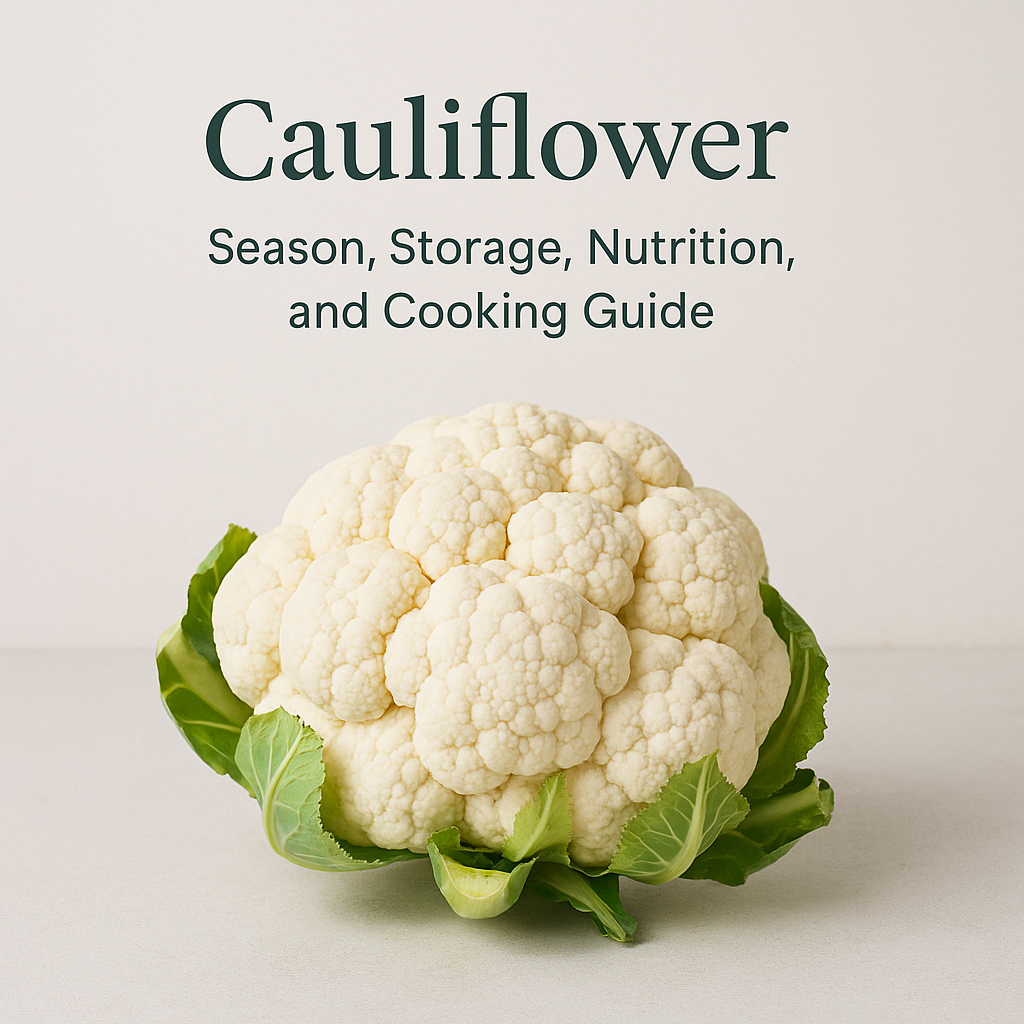
✨ Characteristics
Cauliflower is part of the Brassica family, which also includes broccoli, Brussels sprouts, and cabbage. Typically characterized by its white florets surrounded by green leaves, cauliflower boasts a slightly nutty and mild taste. It is known for its compact head and firm texture, making it suitable for various cooking methods. However, cauliflowers also come in different colors such as purple, orange, and green, which can add an aesthetic appeal to culinary creations.
💪 Benefits
Cauliflower is not just valued for its flavor and versatility; it is also a nutritional powerhouse. A single serving is low in calories yet high in essential vitamins and minerals. Key nutrients found in cauliflower include vitamin C, vitamin K, folate, pantothenic acid, and vitamin B6. Additionally, it provides a good amount of fiber, promoting digestive health and helping to maintain a healthy weight.
Furthermore, cauliflower contains antioxidants that can help reduce oxidative stress and inflammation. The presence of compounds such as glucosinolates and isothiocyanates in cauliflower has been studied for their potential role in reducing the risk of certain chronic illnesses. However, it's important to consume it as part of a balanced diet.
🌍 Origin
The origins of cauliflower can be traced back to the Northeast Mediterranean. Its cultivation began over a thousand years ago, evolving from the wild cabbage. Historically popular in Europe, it was introduced to more regions through trade. Today, it is cultivated worldwide, with major producers including China, India, and Europe.
📅 Harvest Season
Cauliflower is a cool-season crop that thrives best in moderate climates. Its growing season typically begins in spring or fall, as extremely hot temperatures can hinder its development. In temperate regions, cauliflower is generally harvested from September to December, although this can vary depending on the local climate and specific variety planted.
🧺 Varieties
Cauliflower varieties are categorized based on their color and growing season. Some common varieties include:
- White Cauliflower: The most common variety with a creamy color.
- Orange Cauliflower: Known for its vibrant hue due to high beta-carotene content.
- Purple Cauliflower: Contains anthocyanins, giving it its distinct color.
- Green Cauliflower: Includes types like Romanesco, known for its intricate fractal pattern.
🛒 How to Choose (Checklist)
When choosing cauliflower in the market, consider these factors to ensure you bring home fresh and quality produce:
- Look for compact heads: Ensure the florets are tightly bound and firm.
- Check for uniform color: Avoid cauliflowers with brown or discolored spots.
- Fresh green leaves: Healthy leaves indicate the cauliflower is fresh.
- Weight: Choose a head that feels heavy for its size, indicating density.
- Avoid unpleasant odors: Fresh cauliflower should not have a strong odor.
🍽 Cooking & Eating Methods
Cauliflower is incredibly versatile and can be cooked in numerous ways. Its texture is transformed with each method, allowing it to absorb different flavors and create varied dishes. Here are some popular ways to prepare cauliflower:
- Roasting: Intensifies the nutty flavors by caramelizing the exterior.
- Steaming: Keeps it tender and preserves most nutrients.
- Sautéing: Quick cooking that retains a slight crunch.
- Boiling: Often used for mashing as an alternative to potatoes.
- Ricing: Grated into tiny granules to mimic rice.
- Baking: Used in gratins or as crust for pizzas.
❄ Storage Tips
Proper storage is essential to maintain cauliflower’s freshness and nutritional value. Here are some tips:
- Refrigerate unwashed: Store in a perforated plastic bag in the crisper drawer.
- Use within a week: Best when consumed fresh, use within 5-7 days.
- Pre-cut storage: If prepping in advance, store florets in an airtight container for up to four days.
- Freezing: Blanch florets briefly before freezing them in airtight bags for up to a year.
❓ FAQ
- What is the nutritional value of cauliflower?
Cauliflower is rich in vitamins C and K, folate, and offers a good amount of fiber, making it a low-calorie, nutrient-dense food. - Can I eat cauliflower raw?
Yes, cauliflower can be eaten raw and makes a crunchy addition to salads or crudité platters. - Is there a best cooking method for cauliflower?
There's no definitive 'best' method. It depends on personal preference and the desired dish. Roasting enhances its flavor, while steaming preserves most nutrients.