🍓 Cassava: Season, Storage, Nutrition, and Cooking Guide
Cassava, a staple food for millions of people across the globe, is a versatile root vegetable rich in carbohydrates. Known by various names such as yuca, manioc, and mandioca, cassava is crucial to the cuisine and economies of many tropical regions. This guide will explore the characteristics, benefits, origin, harvest season, varieties, selection checklist, cooking and eating methods, storage tips, and frequently asked questions about this important crop.
✨ Characteristics
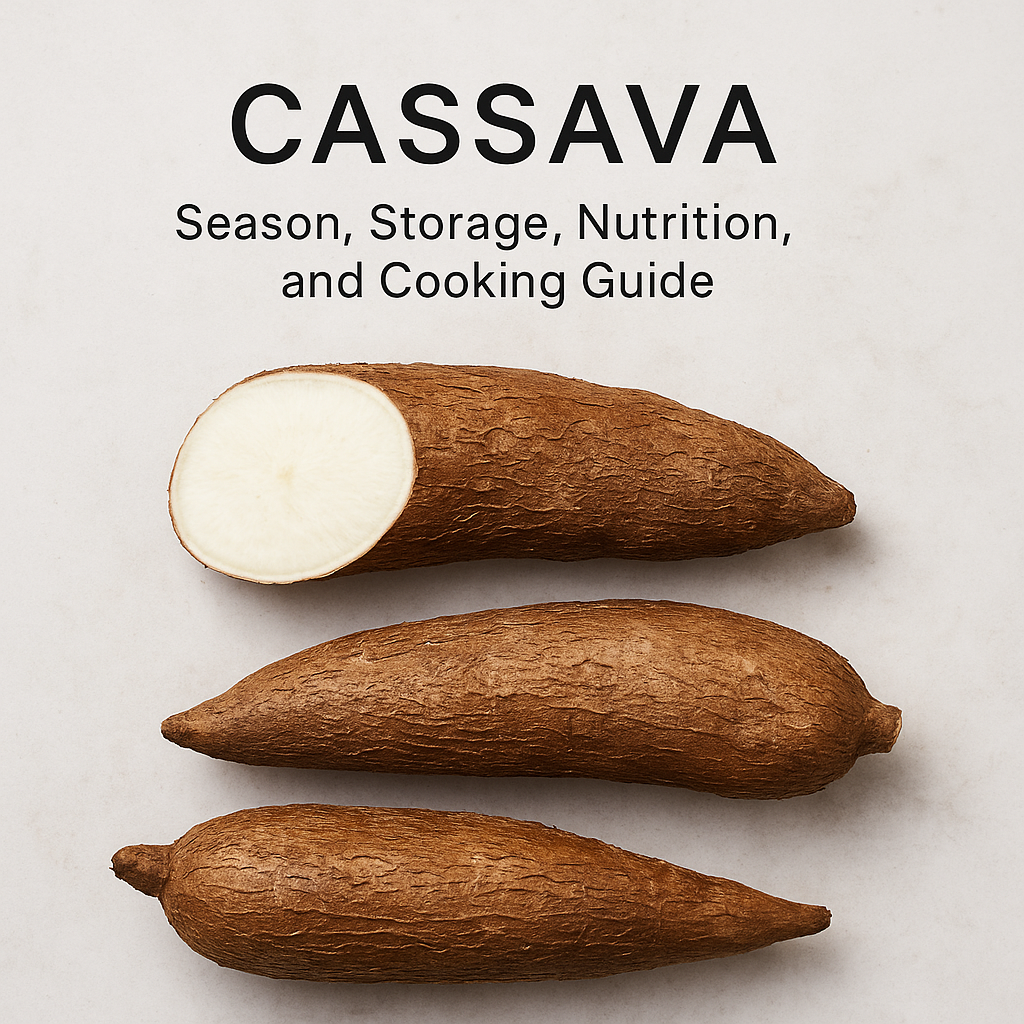
Cassava is a woody shrub of the Euphorbiaceae family and is native to South America. The part of the plant consumed is the starchy tuberous root, which can grow to be quite large. Cassava roots are brown and rough on the outside with a white or creamy flesh inside. They can range in size but typically are about 15 to 30 cm in length and 5 cm in diameter. Their flavor is mildly sweet, though they require proper preparation to ensure they are safe to eat.
💪 Benefits
While primarily known as a major source of carbohydrates, cassava offers several other nutritional benefits. It is gluten-free, making it an excellent dietary choice for people with celiac disease or those avoiding gluten. Additionally, cassava is a good source of Vitamin C, vital for boosting the immune system, and has trace amounts of other vitamins and minerals such as thiamine and niacin.
The high energy content provided by cassava is essential in many developing countries where it serves as a primary source of calories. Furthermore, cassava is notably high in dietary fiber, which helps promote digestive health.
🌍 Origin
Cassava originated in the Amazon basin in South America and has been cultivated for thousands of years. Indigenous peoples were the first to domesticate and utilize the crop, developing processing methods to remove toxins and make it edible. With European exploration and colonization, cassava was introduced to Africa and Asia, where it quickly adapted to various climatic conditions and became ingrained in these regions' agricultures and cuisines.
📅 Harvest Season
Cassava can be planted year-round in tropical climates, but its harvest season typically occurs between 8 to 18 months after planting, depending on the variety and local conditions. Farmers often harvest cassava according to local climate patterns to ensure optimal growth. In regions with distinct wet and dry seasons, cassava is usually planted at the start of the rainy season to take advantage of the moisture and is harvested in the dry season.
🧺 Varieties
There are several varieties of cassava, each with its unique characteristics, uses, and flavor profiles. Some of the most commonly recognized varieties include:
- Sweet Cassava: This variety generally has a lower cyanide content and is less bitter. It is often used for direct consumption or in fresh produce markets.
- Bitter Cassava: As the name suggests, this variety contains higher cyanide levels, requiring thorough preparation to remove harmful toxins. It is typically used in processed forms, such as flour or starch.
- Yellow Cassava: This type is bred to have higher vitamin A content and is recognized by its yellow-hued flesh. It is an excellent biofortified variety, helping reduce vitamin A deficiency in regions that rely heavily on cassava.
🛒 How to Choose (Checklist)
When selecting cassava at the market or store, here are some tips to ensure you pick the best quality:
- Look for firm and unblemished roots; avoid any with soft spots or cracks.
- The skin should be free of mold and dark patches.
- Cassava should feel heavy for its size, indicating freshness and moisture content.
- If possible, snap a small piece to check for freshness; fresh cassava will be moist inside and not stringy or dry.
🍽 Cooking & Eating Methods
Cassava must be cooked before consumption due to naturally occurring toxins. Here are several popular methods for preparing and enjoying cassava:
- Boiling: Peel, cut into chunks, and boil until tender. Serve as a side dish much like potatoes.
- Frying: Slice into thin strips and fry to make cassava chips or fries.
- Mashing: After boiling, mash cassava with spices and butter or cream for a delicious mashed dish.
- Baking: Cassava flour can be used for baking breads and pastries, providing a gluten-free alternative.
- Steaming: Steamed cassava is a common preparation, often served with sauces or dips.
❄ Storage Tips
Proper storage is key to maintaining cassava's flavor and texture. Here are some storage tips:
- Unpeeled cassava can be stored in a cool, dry place for up to a week.
- Peeled and cut cassava should be stored in water in the fridge and should be consumed within two to three days to maintain freshness.
- For longer storage, consider freezing peeled and cut cassava submerged in water. Properly stored, it can last up to three months in the freezer.
❓ FAQ
- Q: Is cassava toxic?
A: Raw cassava contains cyanogenic glycosides, which can produce cyanide. Proper preparation and cooking remove the toxins, making it safe to eat. - Q: Can cassava be eaten raw?
A: Due to its toxicity in raw form, cassava should never be consumed uncooked. - Q: Is cassava a good food for weight loss?
A: While cassava is nutritious, its high caloric density may not be ideal for weight loss diets. It is best consumed as part of a balanced diet.