🍓 Carrot: Season, Storage, Nutrition, and Cooking Guide
Carrots are a beloved root vegetable cherished for their vibrant color, delightful crunch, and versatility in numerous cuisines. Whether you're a culinary enthusiast or someone exploring healthier eating options, carrots are a staple that offer both flavor and nutrition. In this article, we delve into the myriad characteristics of carrots, their benefits, origin, different varieties, and more. Let's embark on a journey through the world of carrots, uncovering everything you need to know about this exceptional vegetable.
✨ Characteristics
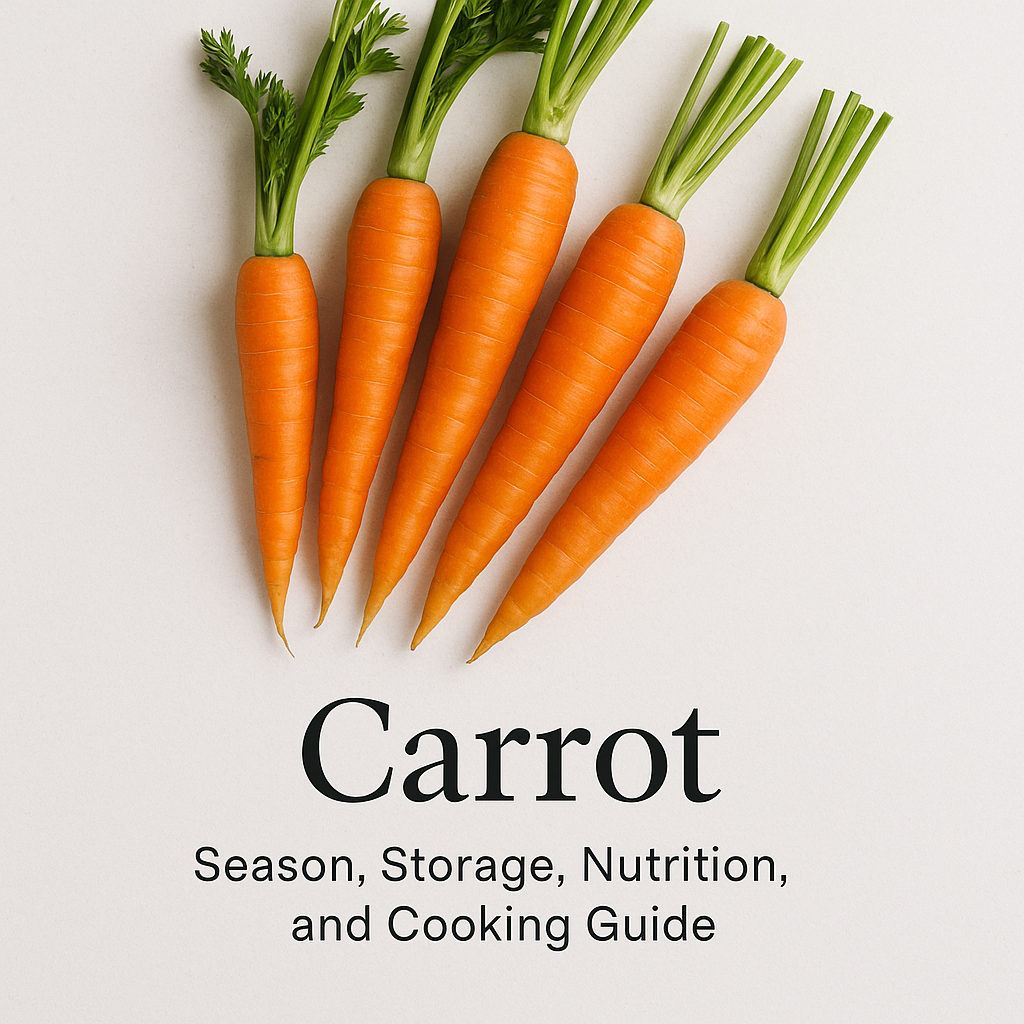
Carrots are visually striking with their typically orange hue, though they can also be found in shades of purple, red, yellow, and white. These taproots are part of the Apiaceae family, featuring a crisp texture that is as satisfying eaten raw as it is cooked. The carrot's distinct flavor balances earthy sweetness with a hint of nuttiness, making it a favorite ingredient in everything from salads and soups to desserts.
💪 Benefits
Carrots are not just appealing to the palate but also packed with nutrients. They are an excellent source of beta-carotene, which the body converts into vitamin A—a vital nutrient for maintaining good vision, supporting immune function, and promoting skin health. Additionally, carrots contain fiber, antioxidants, and an array of vitamins and minerals, all of which contribute to overall health and well-being.
🌍 Origin
The carrot's ancestry can be traced back several thousand years to regions of Persia, now part of contemporary Iran and Afghanistan. Originally cultivated for its aromatic leaves and seeds, the root we know today was not always the primary focus. Over centuries, selective breeding honed its cultivation, transforming it into the popular orange root vegetable familiar around the globe.
📅 Harvest Season
Carrots enjoy a lengthy growing season and are usually harvested in late spring through late fall, depending on the climate and region. Due to modern agricultural practices, carrots are now available year-round. However, those grown and harvested in season often boast superior flavor and nutritional content, making spring and autumn the prime times to savor fresh, local varieties.
🧺 Varieties
The carrot family is diverse, with numerous varieties each offering unique flavors, textures, and colors. Common types include:
- Nantes: Known for their sweet flavor and tender texture, they are cylindrical with rounded ends.
- Imperator: The classic "supermarket" carrot, long and thick with substantial crunchiness.
- Danvers: A conical shape ideal for heavy or clay soil, offering a robustly sweet taste.
- Chantenay: Short and stubby, these carrots are sweet and well-suited for heavy soils.
- Purple Haze: Purple on the outside and orange within, providing a slightly spicier flavor profile.
🛒 How to Choose (Checklist)
- Firmness: Opt for carrots that feel firm to the touch, avoiding any that are limp or soft.
- Color: Choose carrots with bright, vibrant colors; a deep orange indicates high beta-carotene content.
- Shape: Uniformly shaped carrots are ideal, but minor blemishes are usually harmless.
- Leaves: If still attached, fresh-looking green tops indicate recently harvested carrots.
- Size: Select smaller to medium-sized carrots for tenderness and sweetness.
🍽 Cooking & Eating Methods
Carrots are incredibly versatile in the kitchen. Raw, they add crunch to salads and can be enjoyed as a nutritious snack. Cooking carrots brings out their natural sweetness and enhances their flavor:
- Steaming: Retains most of the carrot's nutrients and produces a tender texture.
- Roasting: Brings out caramelized flavors, ideal when seasoned with herbs and spices.
- Boiling: Suitable for soups and purees, though some nutrient loss may occur.
- Grilling: Imparts a smoky flavor and tenderizes the carrots.
- Juicing: Popular in smoothies and juices, offering a concentrated burst of nutrients.
❄ Storage Tips
Proper storage of carrots is key to maintaining their freshness and nutritional value. Here are some tips:
- Remove the tops: Cut off greens before storing to prevent moisture loss.
- Refrigerate: Store in a perforated plastic bag in the vegetable drawer of your refrigerator.
- Avoid washing: Before storing, keep carrots dry to prevent rot.
- Preserve: Consider pickling or freezing if you have a large quantity.
❓ FAQ
Q1: Can you eat carrot tops?
A1: Yes, carrot tops are edible and can be used in salads, soups, and pesto. They have a slightly bitter, earthy taste and should be used in moderation.
Q2: Why do some carrots taste bitter?
A2: Bitterness can occur due to certain growing conditions, for instance, stress from heat or drought. Over-mature carrots or improper storage can also affect flavor.
Q3: Are baby carrots the same as regular carrots?
A3: Baby carrots might be immaturely harvested regular carrots or manufactured from larger carrots that are peeled and cut into uniform sizes. Nutritionally, they are similar.