🍓 Cabbage: Season, Storage, Nutrition, and Cooking Guide
Cabbage is a versatile and nutritious vegetable that forms a staple ingredient in cuisines around the world. Known for its hearty texture and ability to absorb flavors, cabbage can be an excellent addition to your diet. Whether you're looking to understand its origin or tips on how to store it, this guide covers everything you need to know about cabbage.
✨ Characteristics
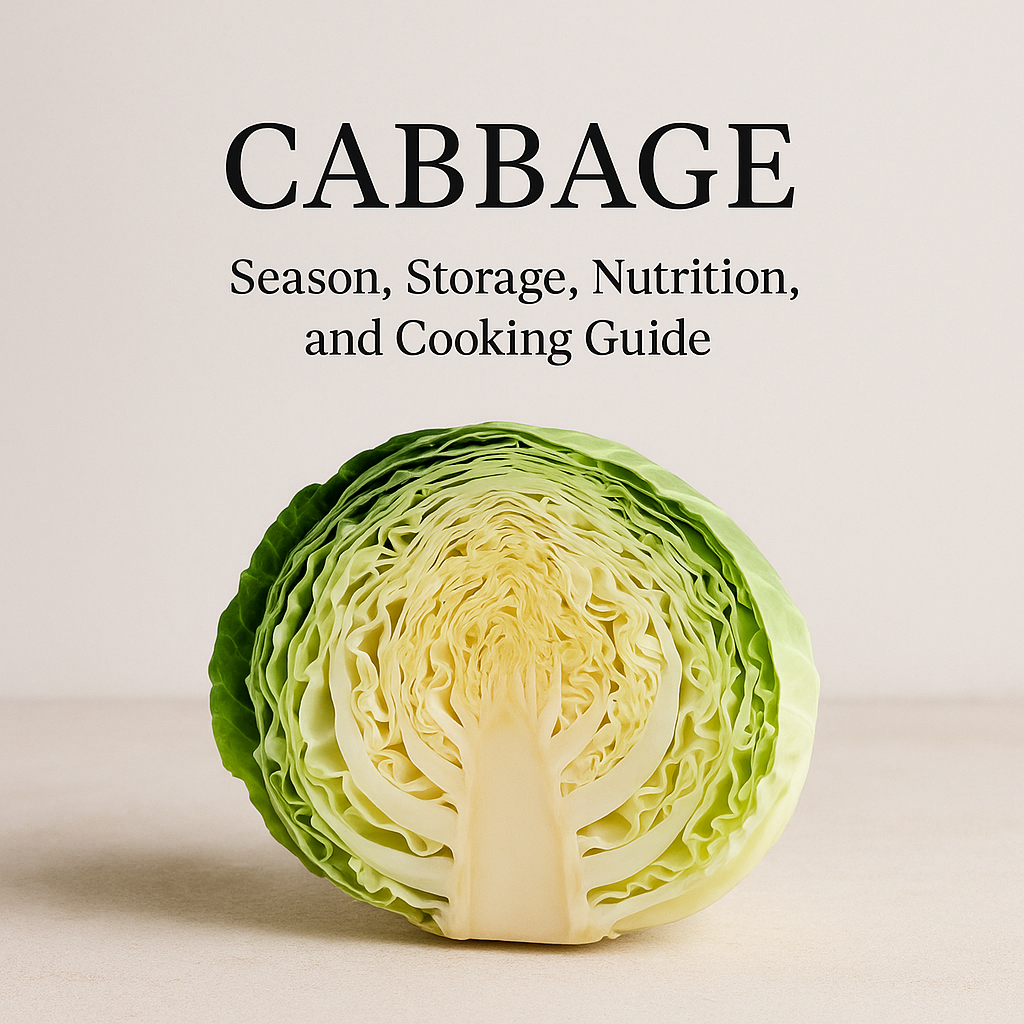
Cabbage belongs to the Brassica family of vegetables, which also includes broccoli, cauliflower, and Brussels sprouts. It is a leafy green, red, or white biennial plant that grows in a compact, leafy head. The leaves of cabbage can vary in color from the lightest of greens to deep purple. Compact and crisp, cabbage offers a subtle peppery taste, making it suitable for a variety of recipes. Its dense structure and high water content give it a satisfying crunch.
💪 Benefits
Cabbage is a nutritional powerhouse, packed with essential nutrients like Vitamin C, Vitamin K, and dietary fiber. Consuming cabbage can support digestive health and provide antioxidants that may contribute to general well-being. Cabbage is also low in calories, making it an appealing choice for those seeking nutrient-dense foods for weight management. Its high content of plant compounds like sulforaphane may support various bodily processes.
🌍 Origin
Cabbage has a rich history that dates back around 4,000 years, originating from the wild Brassica species in Europe. It was cultivated and bred into the cabbage varieties we know today throughout the Roman Empire, extending its reach to Asia and eventually to the New World with European colonization. Through centuries of cultivation and selection, many diverse types of cabbage have developed, finding their way into various cultural dishes around the globe.
📅 Harvest Season
Cabbage is a cold-weather crop, which means it’s typically in season during fall and early winter, though it can often be found year-round due to its long storage potential. Depending on the climate and variety, cabbage can be grown in the spring or fall. The cooler temperatures of these seasons allow cabbage to develop its characteristic sweetness, especially after a light frost.
🧺 Varieties
There are several varieties of cabbage, each with unique flavors and textures:
- Green Cabbage: The most common variety, featuring round heads with smooth, pale green leaves.
- Red Cabbage: Known for its deep purplish-red color and a slightly peppery taste, often used raw in salads and slaws.
- Savoy Cabbage: Recognized by its wrinkly leaves, it has a mild flavor and is tender enough to be used in wraps.
- Napa Cabbage: Also known as Chinese cabbage, it is long, with crinkly leaves, and is often used in Asian cuisine.
- Bok Choy: A type of Chinese cabbage that is leafy with a white stalk, known for its crunchy texture and mild, mustard-like flavor.
🛒 How to Choose (Checklist)
- ✨ Look for firm and dense heads that feel heavy for their size.
- ✨ Check that the leaves are crisp and tightly packed.
- ✨ Avoid cabbages with brown or bruised leaves.
- ✨ For varieties like Savoy, ensure the leaves are vividly colored and have no wilting.
- ✨ Opt for a fresh, faintly sweet smell.
🍽 Cooking & Eating Methods
Cabbage is an incredibly versatile ingredient, suitable for a variety of cooking methods:
- Raw: Shred cabbage for salads or coleslaws to savor its crunchiness.
- Fermented: Traditional preparations like sauerkraut and kimchi utilize lacto-fermentation, adding probiotic benefits.
- Sautéed: Lightly cook with olive oil, salt, and pepper—great as a side dish.
- Steamed: Retains its nutritional content well and softens the leaves.
- Roasted: Brings out the cabbage's natural sweetness and adds a caramelized flavor.
- Stir-fried: An excellent addition to stir-fries, offering texture and flavor without overpowering the dish.
- Stuffed: Traditionally, blanched leaves are filled with a mix of meats and grains due to their ability to hold filling.
❄ Storage Tips
Proper storage is key to maximizing the lifespan of cabbage. For uncut cabbage, store it in a plastic bag in the refrigerator's crisper drawer to maintain moisture levels. It can keep for about 2 weeks when stored this way. Cut cabbage should be tightly wrapped in plastic wrap and kept in the fridge for about 3-5 days. Avoid washing before storage, as moisture can promote spoilage. For long-term preservation, cabbage can be blanched and frozen.
❓ FAQ
Q1: Can I eat cabbage raw?
A1: Yes, cabbage can be eaten raw and is commonly added to salads and coleslaw where it provides a satisfying crunch and mild flavor.
Q2: How can I reduce the strong odor of cabbage when cooking?
A2: To minimize the pungent smell, try cooking cabbage quickly with an acid like vinegar or lemon juice, or cook it uncovered to allow some of the sulfurs to escape.
Q3: What are some common dishes that use cabbage?
A3: Cabbage is a key ingredient in coleslaw, sauerkraut, kimchi, cabbage rolls, and stir-fries, as well as being used in soups and stews in various cuisines.