🍓 Button Mushroom: Season, Storage, Nutrition, and Cooking Guide
Button mushrooms, scientifically known as Agaricus bisporus, are among the most commonly consumed mushrooms worldwide. Known for their smooth, white caps and versatile flavor, button mushrooms serve as a staple ingredient in various dishes. This guide provides insights into their characteristics, benefits, seasonal availability, varieties, selection process, and storage tips, ensuring you make the best of this delightful fungi.
✨ Characteristics
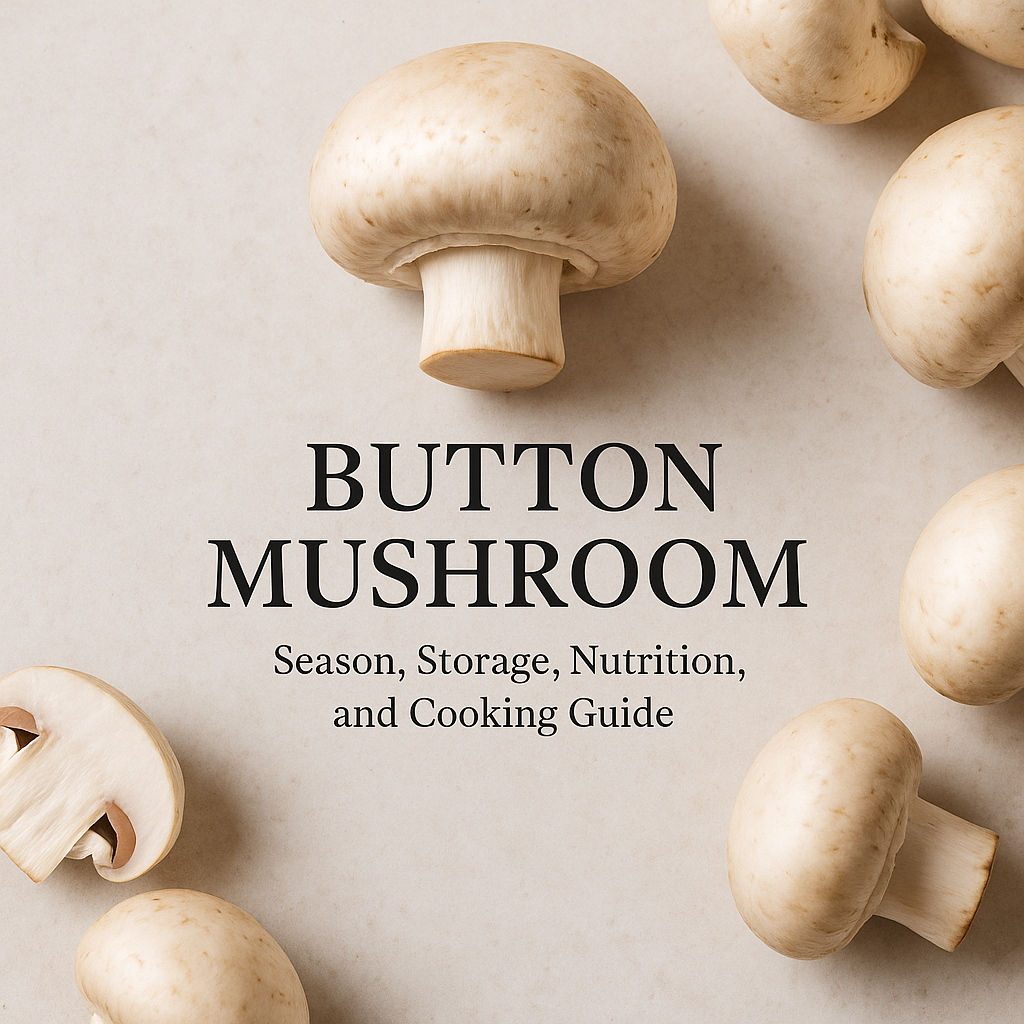
Button mushrooms are characterized by their small to medium-sized caps with a smooth, white surface. Beneath the cap are tightly packed gills shielded by a fragile veil. Growing in clusters, these mushrooms are harvested at different maturation stages. Their mild flavor makes them a beloved choice in both raw and cooked dishes.
💪 Benefits
Button mushrooms are not only delicious but also pack numerous benefits. They are low in calories yet high in essential nutrients like B-vitamins, selenium, and potassium. Their fiber content aids in digestion, while their antioxidant properties contribute to overall health. Regular consumption can bolster the immune system and support metabolic processes.
🌍 Origin
Though their exact origin is debated, button mushrooms are believed to have been cultivated in Europe and North America as early as the 1700s. Over time, their cultivation spread globally, making them a significant crop in countries such as the United States, China, and India. Today, they are a staple food item worldwide, available year-round.
📅 Harvest Season
Button mushrooms are generally cultivated indoors in controlled environments, allowing them to be available year-round. However, peak harvest times often occur in the cooler months of fall and winter when conditions are naturally favorable for growth, resulting in a fresher and potentially more flavorful yield.
🧺 Varieties
While the term "button mushroom" often refers to the white variety, Agaricus bisporus also includes cremini and portobello mushrooms. Cremini mushrooms are essentially a more mature version of button mushrooms, exhibiting a browner hue and slightly richer flavor. Portobellos are fully mature, with a large cap and robust taste, suitable for hearty dishes.
🛒 How to Choose (Checklist)
Selecting the best button mushrooms involves paying attention to several characteristics to ensure freshness and quality:
- Color: Choose mushrooms with a bright white color, free from any discoloration or dark spots.
- Texture: The surface should be firm and smooth, avoiding any that are wrinkled or slimy.
- Smell: Fresh mushrooms have a mild, earthy aroma. Avoid those with a strong, pungent smell.
- Gills: If visible, gills should be tightly closed against the stem, indicating freshness.
- Packaging: Ensure packaged mushrooms are well-ventilated and free from excessive moisture.
🍽 Cooking & Eating Methods
Button mushrooms are incredibly versatile and can be enjoyed in numerous ways:
- Raw: Add sliced raw mushrooms to salads for an earthy crunch.
- Sautéed: Cook with olive oil, garlic, and herbs for a simple, flavorful side dish.
- Grilled: Brush with a marinade and grill for a smoky flavor, perfect for skewers.
- Stuffed: Fill with cheeses, herbs, or meat for an appetizing starter.
- Soups and Stews: Enhance the depth of flavor in broths and stews by adding sliced mushrooms.
❄ Storage Tips
Proper storage of button mushrooms can extend their shelf life and maintain quality:
- Refrigeration: Store mushrooms in a paper bag to allow them to breathe, and place them in the refrigerator's crisper drawer.
- Avoid Moisture: Keep mushrooms dry, as excessive moisture can lead to spoilage.
- Freezing: For long-term storage, sauté mushrooms before freezing to preserve flavor and texture.
- Check Regularly: Regularly inspect stored mushrooms for any signs of spoilage and remove those affected.
❓ FAQ (3 questions)
Q1: Can button mushrooms be eaten raw?
A: Yes, button mushrooms can be consumed raw. They offer a mild, earthy flavor that complements many salads and cold dishes. Always ensure they are thoroughly cleaned before eating.
Q2: Are there any allergens in button mushrooms?
A: While button mushrooms are generally safe for consumption, some individuals may experience allergic reactions. If you have a known allergy to other fungi, consult a healthcare professional before consuming.
Q3: How long do button mushrooms last in the fridge?
A: When stored correctly in a paper bag or a breathable container in the fridge, button mushrooms can last for about 5 to 7 days. Be sure to frequently check for signs of spoilage.