🍓 Butternut Squash: Season, Storage, Nutrition, and Cooking Guide
Butternut squash is a versatile winter squash celebrated for its nutty flavor and vibrant color. Whether roasted, pureed, or added to soups and stews, this nutrient-dense food is a favorite in kitchens worldwide. In this comprehensive guide, we'll explore the characteristics, benefits, and origins of butternut squash, while offering tips on selecting, storing, and cooking this delightful ingredient.
✨ Characteristics
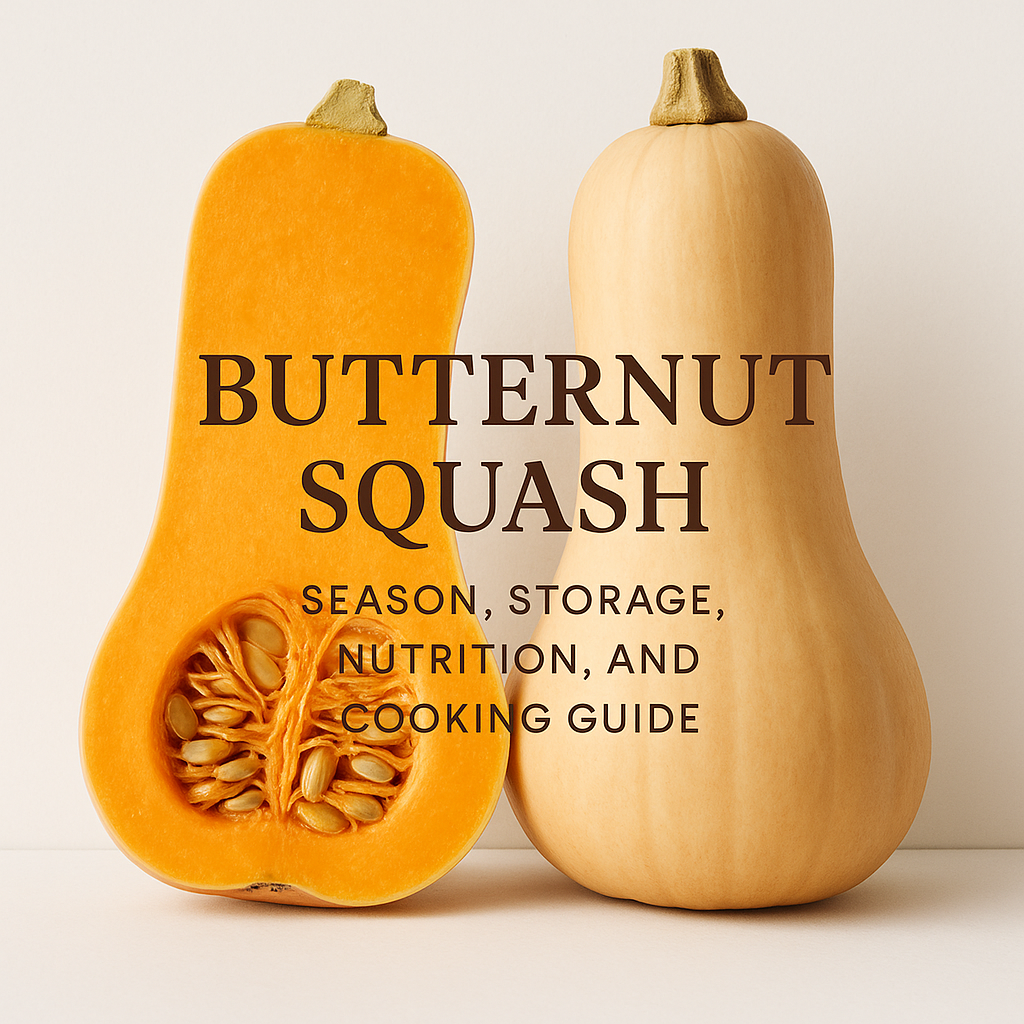
Butternut squash is easily recognizable thanks to its long neck and bulbous bottom, covered with pale, creamy skin. The flesh inside is a deep orange, indicative of its high beta-carotene content. When cooked, butternut squash has a sweet, nutty flavor, reminiscent of sweet potatoes or pumpkins. It boasts a smooth texture, making it perfect for purees, soups, and stews.
💪 Benefits
Rich in vitamins and minerals, butternut squash is a powerhouse of nutrition. It is an excellent source of vitamin A, providing more than 450% of your daily requirement in just one serving. Vitamin A is essential for maintaining healthy vision, skin, and immune function. Butternut squash is also high in vitamin C, potassium, and fiber, promoting digestive health and aiding in the maintenance of a healthy heart. The antioxidants within butternut squash help reduce inflammation and protect the body against free radicals.
🌍 Origin
Butternut squash is native to the Americas and has been cultivated for thousands of years by indigenous peoples. It is a member of the Cucurbitaceae family, which includes gourds, melons, and cucumbers. Over time, the popularity of butternut squash has spread across the globe, and it is now a staple ingredient in many cuisines. Its ease of growth and long shelf life make it an ideal crop in many regions.
📅 Harvest Season
Butternut squash thrives in warm climates, with a growing season from late spring to early fall. It is typically harvested before frost sets in, usually between September and November in the Northern Hemisphere. Though technically a winter squash, it is harvested in the fall and has the capacity to be stored for several months, providing nutritious goodness throughout the winter months.
🧺 Varieties
While butternut squash is a distinct variety in itself, there are several cultivars that offer slight variations in size, shape, and flavor:
- Waltham: The most commonly found variety in supermarkets, known for its uniform shape and sweet taste.
- Early Butternut: A smaller, faster-growing variety that matures earlier in the season.
- Honeynut: A miniature version of the butternut squash, known for its intensely sweet flavor and deep orange flesh.
🛒 How to Choose (Checklist)
When selecting butternut squash, consider the following checklist to ensure you pick the perfect one:
- Look for a squash that feels heavy for its size, indicating a dense flesh.
- A matte, unblemished exterior is preferable to a shiny skin, which could indicate that the squash was harvested too early.
- Choose a squash with a firm, even color and a hard, smooth skin.
- Check for an intact stem, as this helps with storage longevity.
🍽 Cooking & Eating Methods
Butternut squash is incredibly versatile in the kitchen and can be prepared in a multitude of ways:
- Roasting: Cut into cubes, toss with olive oil and seasoning, and roast until golden and tender for a caramelized sweet taste.
- Pureeing: Boil or steam the flesh and blend it into a smooth puree, perfect for soups or as a side dish.
- Soups and Stews: Add chunks of butternut squash to your favorite soup recipe for enhanced flavor and texture.
- Baking: Incorporate butternut squash into baked goods, such as muffins or bread, for added moisture and nutrients.
❄ Storage Tips
Proper storage is key to enjoying butternut squash for months after harvest. Here are some tips:
- Store whole butternut squash in a cool, dark place with good ventilation – a pantry or cellar is ideal.
- Once cut, wrap the pieces tightly in plastic wrap or store in an airtight container in the refrigerator for up to five days.
- For longer storage, consider freezing. Cook and puree the squash first, then transfer it to freezer-safe containers.
❓ FAQ
1. Can you eat the skin of a butternut squash?
The skin of a butternut squash is technically edible; however, it is quite tough and may not be very palatable. For smoother textures, it's best to peel the skin before cooking.
2. How can you tell if butternut squash has gone bad?
Signs of spoilage include mold, a strong odor, or watery spots on the flesh. If you notice any of these, the squash should be discarded.
3. Is butternut squash suitable for a low-carb diet?
While butternut squash contains more carbohydrates than some other vegetables, it can still be included in moderation in a low-carb diet due to its nutritional benefits and high fiber content.