🍓 Broccoli: Season, Storage, Nutrition, and Cooking Guide
Broccoli is a versatile and nutritious vegetable that has earned its place as a staple in kitchens around the world. This guide delves into everything you need to know about broccoli, from its characteristics and benefits to practical tips on choosing, storing, and cooking this green powerhouse. Whether you're a seasoned cook or new to exploring vegetables, this comprehensive guide will provide you with insights to make the most of broccoli in your culinary adventures.
✨ Characteristics
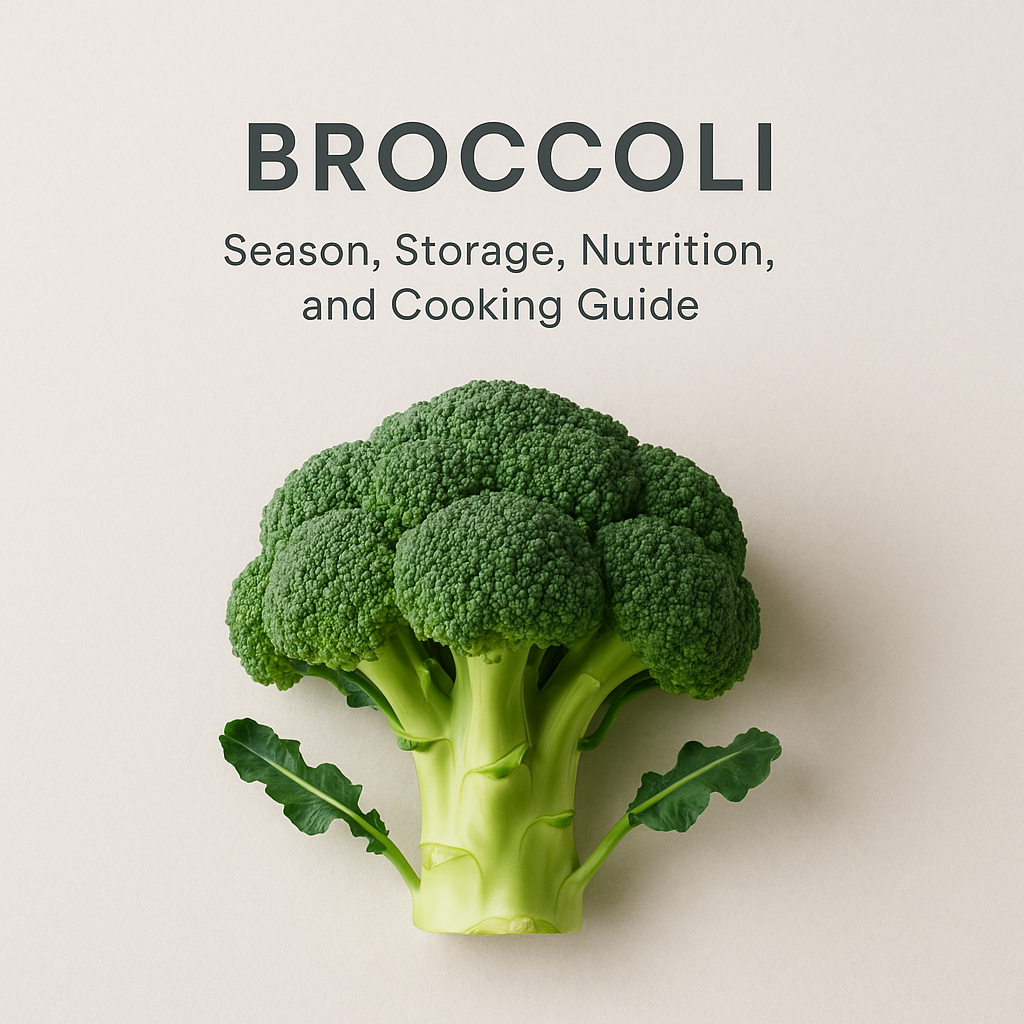
Broccoli, a member of the Brassicaceae family, is known for its vibrant green color and dense clusters of flower buds. Typically, broccoli is composed of a stalk and a clustered head, which is often referred to as the "crown." Each structure is edible, with the stems offering a crunchier texture compared to the tender florets. The taste profile of broccoli is mildly earthy with slight bitter notes, especially when it is raw. Broccoli's unique composition not only makes it visually appealing but also nutritionally significant.
💪 Benefits
Broccoli is praised for its extensive health benefits, being a rich source of vitamins, minerals, and dietary fiber. It is particularly known for its high vitamin C content, essential for immune support and skin health. Additionally, broccoli is packed with vitamin K, which plays a crucial role in bone health, and folate, important for cell function and tissue growth. Broccoli also offers a good amount of fiber, aiding digestive health and providing a feeling of fullness, which can be beneficial in weight management.
🌍 Origin
The history of broccoli can be traced back to the Mediterranean region, specifically Italy, where it was first cultivated as early as the 6th century BC. The word "broccoli" comes from the Italian term "broccolo," meaning the flowering top of a cabbage. Over the centuries, broccoli spread across Europe before making its way to America during the colonial period. Today, broccoli is grown in many parts of the world, contributing to global culinary traditions with its distinct taste and nutritional offerings.
📅 Harvest Season
Broccoli is a cool-season crop that thrives in cooler climates. Its peak season typically spans from fall through spring, although it can be grown year-round in certain regions with mild temperatures. Planting is usually done in late summer to allow the plant to mature as the temperature cools, thereby enhancing its flavor. During peak season, broccoli tends to be more flavorful and affordable, making it an ideal time for consumers to enjoy this vegetable at its best.
🧺 Varieties
There are several varieties of broccoli that offer different textures and flavors:
- Calabrese Broccoli: The most common variety, known for its large green heads and thick stalks.
- Sprouting Broccoli: Features smaller heads and thinner stalks, offering a more tender texture.
- Romanesco: Recognized by its fractal patterns and lime-green color, with a slightly nuttier taste.
- Purple Broccoli: Known for its vibrant purple hue, which turns green when cooked, offering mild sweetness.
🛒 How to Choose (Checklist)
- Look for firm, tightly packed florets that are deep green in color.
- Avoid yellowing buds or browning on the edges, indicating aging or spoilage.
- The stem should be firm and free from soft spots or splitting.
- Leaves, if attached, should be fresh and vibrant rather than wilted.
- Ensure there are no strong or unpleasant odors emanating from the broccoli.
🍽 Cooking & Eating Methods
Broccoli can be enjoyed through various cooking methods, each bringing out different flavors and textures:
- Steaming: Preserves nutrients and keeps the broccoli tender-crisp. A quick method that enhances the natural flavors.
- Blanching: Ideal for preserving the broccoli's vibrant color before adding to salads or stir-fries.
- Roasting: Adds a caramelized flavor to broccoli, bringing out a nutty, slightly sweet profile.
- Sautéing: Offers a quick way to cook broccoli with added flavors from oils and spices.
- Raw: Retains the most nutrients and provides a crunchy texture, perfect for salads and snacks.
❄ Storage Tips
Proper storage is essential to maintaining the freshness and nutritional value of broccoli:
- Store unwashed broccoli in the refrigerator, ideally in a perforated plastic bag to allow air circulation.
- Keep it in the crisper drawer to maintain consistent humidity and temperature.
- To extend shelf life, blanch and freeze broccoli, which can help preserve nutrients for several months.
- Avoid storing broccoli with ethylene-producing fruits like apples and pears, as this can cause faster spoilage.
❓ FAQ
- Can you eat broccoli leaves? Yes, broccoli leaves are edible and can be used in a similar manner to spinach or kale, adding them to salads, stir-fries, or soups.
- Is it okay to eat yellow broccoli? While broccoli can develop yellow florets over time due to aging, it is still safe to eat but may have a more bitter taste. It's best to consume broccoli while it's fresh and green.
- How do you prevent broccoli from turning mushy when cooking? To avoid mushy broccoli, avoid overcooking. Opt for methods like steaming or blanching and cook until just tender-crisp.