🍓 Bottle Gourd: Season, Storage, Nutrition, and Cooking Guide
Bottle gourd, a versatile and nutritious vegetable, is cherished worldwide for its subtle flavor and numerous culinary applications. This guide explores everything you need to know about bottle gourds, ensuring you can make the most out of this humble but valuable produce.
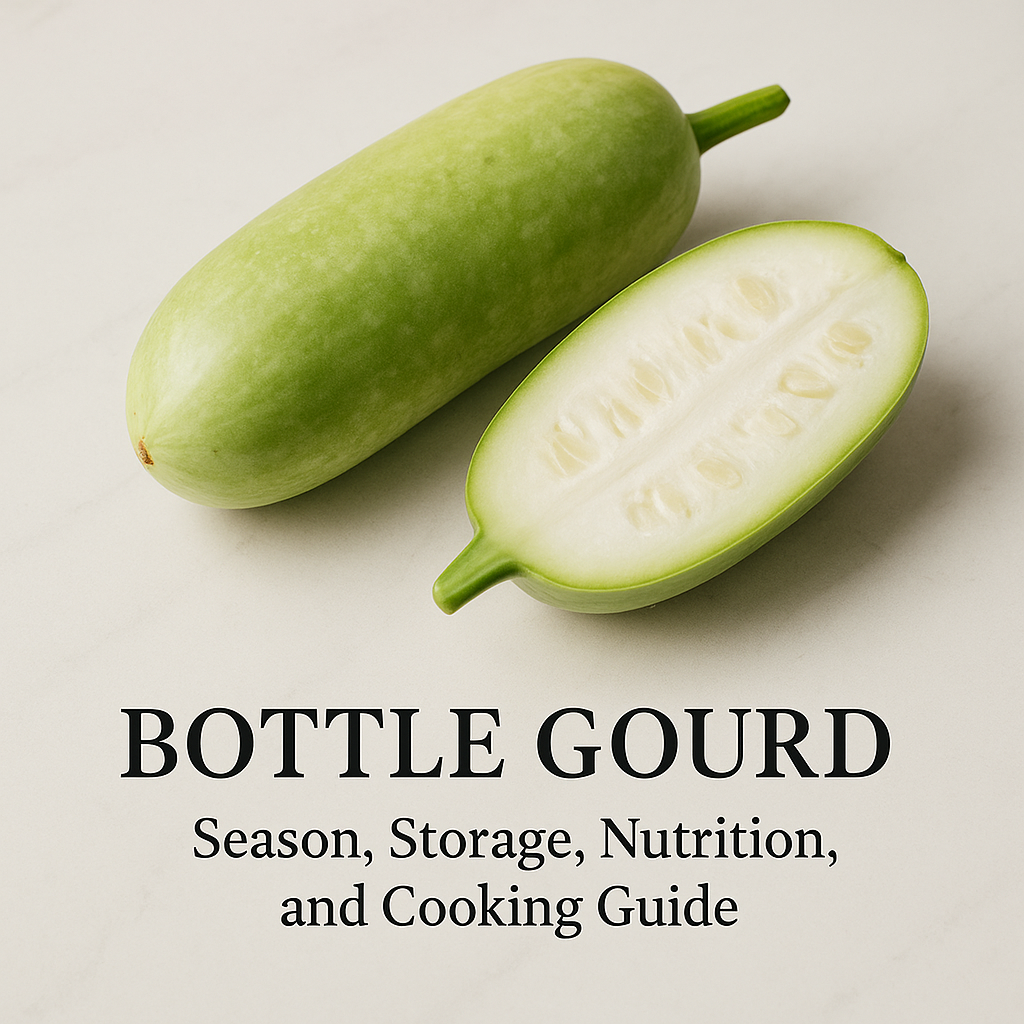
✨ Characteristics
Bottle gourd, scientifically known as Lagenaria siceraria, is a climbing plant that belongs to the gourd family. Usually light green, it has smooth skin and a long shape reminiscent of a bottle, which gives it its name. The vegetable can vary in shape and size, from small and round to long and slender, adapting well to various climates. Its flesh is white and spongy, with tiny seeds that are soft and edible.
💪 Benefits
Bottle gourd is often included in a healthy diet due to its many excellent attributes:
- Low in Calories: Ideal for weight management as it provides a feeling of fullness with less caloric intake.
- Hydrating: With a high water content, bottle gourd helps maintain hydration, especially during hot weather.
- Rich in Nutrients: Provides vitamins such as vitamin C, calcium, and iron, contributing to overall health and wellness.
- Digestive Health: Its fiber content aids in digestion and helps maintain a healthy digestive tract.
🌍 Origin
The bottle gourd has a rich history and is believed to have been one of the first cultivated plants. Originating in Africa, it spread to Asia, the Middle East, and eventually to the Americas. Today, it is grown in many subtropical and tropical regions worldwide. Its adaptability and versatility have made it a staple in many traditional cuisines across cultures.
📅 Harvest Season
Typically, bottle gourd grows in warm climates and is harvested during the summer months. In regions where the climate is favorable, it can be grown year-round. The best quality bottle gourds are available from mid-summer to late autumn. To ensure optimal freshness and flavor, it’s crucial to pick them when they're still young and tender.
🧺 Varieties
Bottle gourds come in various shapes and sizes, each suited to different culinary uses:
- Round Bottle Gourd: Ideal for stuffing and making curries.
- Long Bottle Gourd: Perfect for slicing and adding to stews and stir-fries.
- Miniature Varieties: Often used for ornamental purposes or in decorative crafts.
🛒 How to Choose (Checklist)
When selecting bottle gourds, here’s a checklist to ensure you pick the best ones:
- Look for a light green skin with a uniform color.
- Avoid gourds with brown spots or blemishes.
- Choose firm and sturdy ones that feel heavy for their size.
- Gently press the skin with your thumb; it should not feel too soft or mushy.
- Smaller gourds tend to be more tender and less bitter than larger ones.
🍽 Cooking & Eating Methods
Bottle gourd’s mild flavor makes it versatile in the kitchen. Here are some popular ways to prepare it:
- Curries and Stews: Slice and cook it with spices for a hearty dish.
- Stuffing: Hollow out and stuff with a filling of your choice for a delicious meal.
- Juices and Smoothies: Blend with other fruits for a refreshing drink rich in nutrients.
- Frying: Slice, batter, and fry for a quick snack.
- Soups: Puree cooked bottle gourd for gentle-flavored, nutritious soups.
❄ Storage Tips
Proper storage is essential to keep bottle gourds fresh:
- Refrigeration: Store bottle gourds in the crisper drawer, wrapped in a paper towel to absorb excess moisture.
- Cut Pieces: If partially used, wrap the remainder in plastic wrap or place in an airtight container.
- Freezing: For extended storage, peel, slice, and blanch before freezing. Use within a few months for optimal taste.
❓ FAQ
1. Can bottle gourd be eaten raw?
While it is technically possible to eat bottle gourd raw, it is usually recommended to cook it to enhance its flavor and texture, making it more palatable.
2. How does bottle gourd taste?
Bottle gourd has a very mild, slightly sweet flavor, which is why it pairs well with bold spices and flavors in various dishes.
3. Is bottle gourd the same as calabash?
Yes, the terms 'bottle gourd' and 'calabash' are often used interchangeably to refer to the same type of gourd.