🍓 Bok Choy: Season, Storage, Nutrition, and Cooking Guide
Bok choy, a type of Chinese cabbage, is a versatile and nutritious vegetable celebrated in kitchens around the world. Its crisp texture and mild flavor make it an excellent ingredient in a variety of dishes. This guide explores the characteristics, benefits, origins, and practical tips on how to choose, store, and cook bok choy, offering insights into this beloved leafy green.
✨ Characteristics
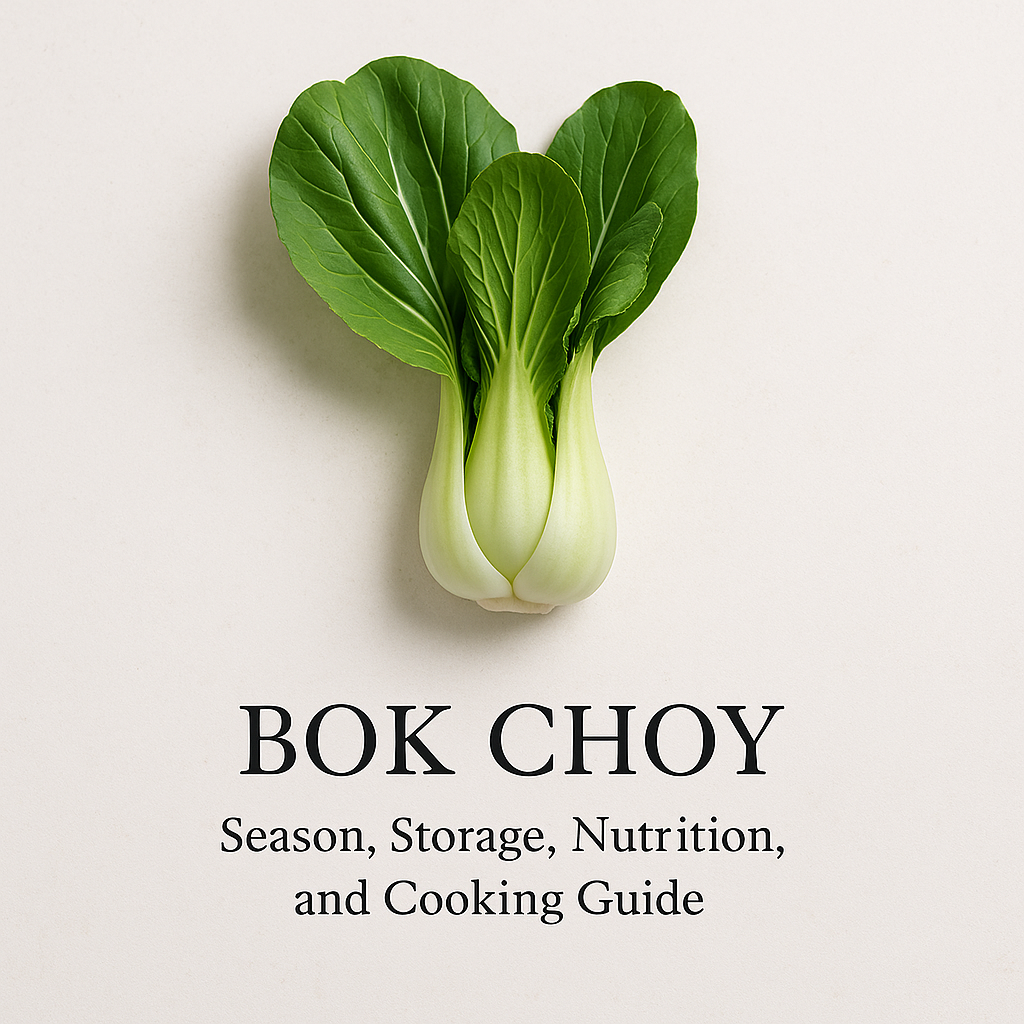
Bok choy, also known as pak choi or Chinese white cabbage, is characterized by its distinctive structure: green, crinkly leaves on top and a crisp, white stalk at the bottom. It belongs to the Brassica family, alongside other nutritious vegetables like broccoli, kale, and Brussels sprouts. Bok choy is celebrated for its mild, slightly sweet flavor, which lends itself well to a multitude of culinary applications.
💪 Benefits
Bok choy is nutrient-dense, offering a significant amount of vitamins, minerals, and antioxidants while being low in calories. It is a great source of vitamin C, vitamin K, vitamin A, calcium, and iron. The antioxidants found in bok choy help protect cells from oxidative stress. It is also known to promote healthy digestion due to its fiber content, contributing to overall wellness when included as part of a balanced diet.
🌍 Origin
Native to China, bok choy has been cultivated for centuries and remains a staple in Asian cuisine. Over time, its popularity has spread globally, becoming a staple ingredient in various cultural dishes outside of Asia as well. Its adaptability to different climates has made bok choy a versatile crop, easily integrated into diverse agricultural systems around the world.
📅 Harvest Season
Bok choy is a cool-season crop, typically thriving in moderate temperatures. The primary harvesting period is during the spring and fall, though it can be grown throughout the year in regions with milder climates. During its peak seasons, bok choy is most abundant and flavorful, making it an ideal time to incorporate it into your meals.
🧺 Varieties
There are several varieties of bok choy, each with unique features. The most common types include:
- Shanghai Bok Choy: Smaller in size with lighter green leaves and a tender texture.
- Baby Bok Choy: A miniature version of the full-sized plant, tender and ideal for quick cooking.
- Choy Sum: Known for its edible yellow flowers, this variety offers a slightly sweeter taste.
- Hong Kong Bok Choy: Features thicker stems, which require longer cooking times to become tender.
🛒 How to Choose (Checklist)
- Look for firm, crisp stalks without any signs of wilting.
- The leaves should be vibrant green and free from yellowing or browning.
- Check for small, compact heads for baby bok choy, ensuring they feel heavy for their size.
- Avoid any bok choy with an off smell or mushy texture.
🍽 Cooking & Eating Methods
Bok choy can be enjoyed in a variety of ways, making it a versatile addition to any meal. Here are some popular methods:
- Stir-frying: Quick-cook bok choy with garlic and ginger for a flavorful side dish.
- Steaming: Lightly steam the leaves and stalks to preserve their crunch and nutrients.
- Soups and Stews: Add bok choy to soups, allowing it to cook gently and absorb flavors.
- Salads: Shred raw bok choy to add a crispy texture to salads.
❄ Storage Tips
Proper storage of bok choy ensures it remains fresh and edible for longer periods. Follow these tips:
- Wrap bok choy in a damp paper towel and store it in a perforated plastic bag in the refrigerator's crisper drawer.
- Try to consume within three to five days for optimal freshness and flavor.
- Avoid washing bok choy until you are ready to use it to prevent excess moisture from hastening spoilage.
❓ FAQ
- Q: Can I eat the leaves and stems of bok choy?
A: Yes, both the leaves and stems of bok choy are edible. The leaves have a delicate flavor, while the stems add a satisfying crunch. - Q: Is bok choy suitable for eating raw?
A: Absolutely, bok choy can be eaten raw. It adds a crisp texture to salads and slaws, though cooking enhances its flavor profile. - Q: Does bok choy need to be refrigerated?
A: Yes, refrigerating bok choy is recommended to preserve its freshness. Keeping it in the crisper drawer extends its shelf life.