🍓 Bitter Melon: Season, Storage, Nutrition, and Cooking Guide
Bitter melon, often known for its unique appearance and distinctive taste, is a cherished component in various global cuisines. This versatile gourd is not only valuable for its culinary qualities but also for the host of benefits it offers. Whether you're new to bitter melon or looking to optimize your experience with this intriguing vegetable, this guide provides comprehensive insights into its seasonality, storage, nutritional benefits, and culinary applications.
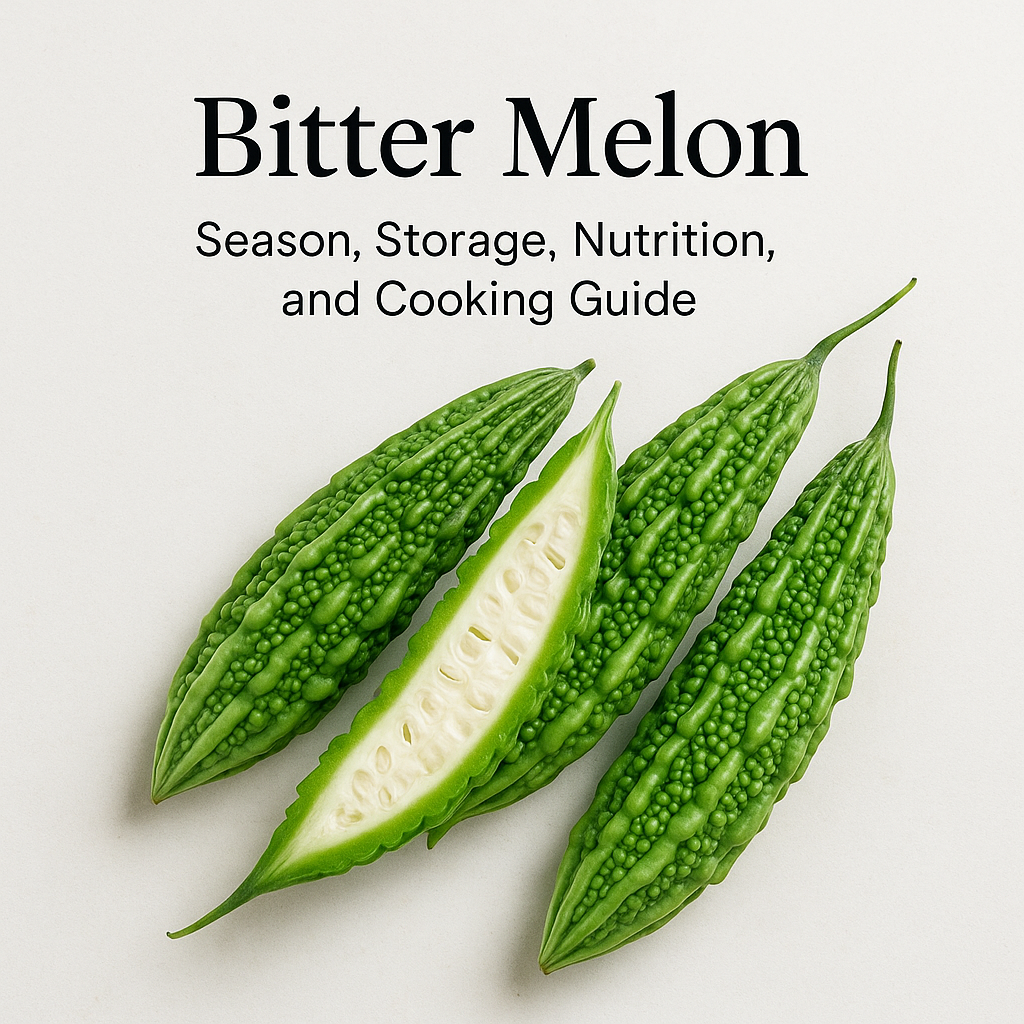
✨ Characteristics
The bitter melon, scientifically known as Momordica charantia, is a tropical and subtropical vine that belongs to the cucurbit family. Its fruit is notably bumpy and oblong, ranging in color from vibrant green to yellowish-orange as it matures. The interior consists of a white pith with several seeds, which become more pronounced as the fruit ripens. Despite its name, bitter melon is not overly pungent when cooked properly; its bitterness can be an acquired taste that enhances the depth of various dishes.
💪 Benefits
Bitter melon has long been valued in traditional cuisines and is rich in important nutrients like vitamins C and A, fiber, and several phytochemicals that contribute to its characteristic bitterness. Regular consumption of bitter melon can support digestion due to its high fiber content, while its antioxidant properties help in maintaining overall health. However, it's important to consume it as part of a balanced diet to reap its benefits effectively.
🌍 Origin
Originating in the Indian subcontinent, bitter melon has found its way into culinary traditions across the world. It thrives in tropical climates and is cultivated extensively in regions such as Southeast Asia, China, Africa, and the Caribbean. Each region has adapted the vegetable to its local cuisine, resulting in an impressive variety of recipes that highlight the unique flavor profile of bitter melon.
📅 Harvest Season
Bitter melon is typically harvested during the warmer months when it reaches its optimal growth cycle. In tropical areas, you can find this vegetable year-round, but in regions with distinct seasons, it is most abundant in the peak summer months. In countries with colder climates, bitter melon is often grown in greenhouses to extend its availability throughout the year.
🧺 Varieties
Bitter melon comes in several varieties, each offering a slightly different flavor and appearance:
- Indian Variety: Characterized by its darker green color and pronounced ridges, this variety tends to have a stronger bitter flavor.
- Chinese Variety: This type is lighter in color, less bitter, and has a smoother surface compared to its Indian counterpart.
- Jummon: A smaller, milder option often found in tropical regions. It's suitable for those new to bitter melon.
🛒 How to Choose (Checklist)
- Look for firm, unblemished skin with a vibrant green color.
- Avoid bitter melons that are too soft or have yellowing patches.
- Select smaller, younger melons for a milder taste.
- Check for uniform ridges and texture.
🍽 Cooking & Eating Methods
Despite its strong flavor, bitter melon can be prepared in various ways to suit different palates:
- Stir-Frying: A quick fry with garlic, soy sauce, and other vegetables can help balance the bitterness.
- Stuffed Bitter Melon: Fill the hollowed-out vegetable with meats or grains before steaming for a hearty dish.
- Curry Dish: Incorporate bitter melon into curries where spices can help neutralize its bitter edge.
- Juices or Smoothies: For the adventurous, bitter melon juice mixed with fruits can add a nutritious kick.
❄ Storage Tips
To maximize its shelf life:
Store bitter melons in a plastic bag in the refrigerator where they can last for about a week. It's best to use them fresh, but if that's not possible, you can blanch and freeze them to preserve their flavor and nutritional benefits. Avoid cutting them until ready to use, as this can cause them to spoil more quickly.
❓ FAQ (3 questions)
- Q: Can bitter melon be eaten raw?
A: While it can be eaten raw, it is extremely bitter and often enjoyed more when cooked or juiced with other ingredients to balance the taste. - Q: Are there any traditional dishes featuring bitter melon?
A: Yes, many Asian cuisines include bitter melon in dishes such as stir-fries, soups, and stuffed preparations. - Q: How do I reduce the bitterness of bitter melon?
A: Blanching or salting the melon before cooking can help reduce its bitterness, making it more palatable in various recipes.