🍓 Beetroot: Season, Storage, Nutrition, and Cooking Guide
Beetroot, or simply beet, is a versatile root vegetable known for its vibrant color and myriad of uses in the culinary world. Join us as we explore everything you need to know about this nutritional powerhouse, from selecting the perfect beet to preparing it in your kitchen.
✨ Characteristics
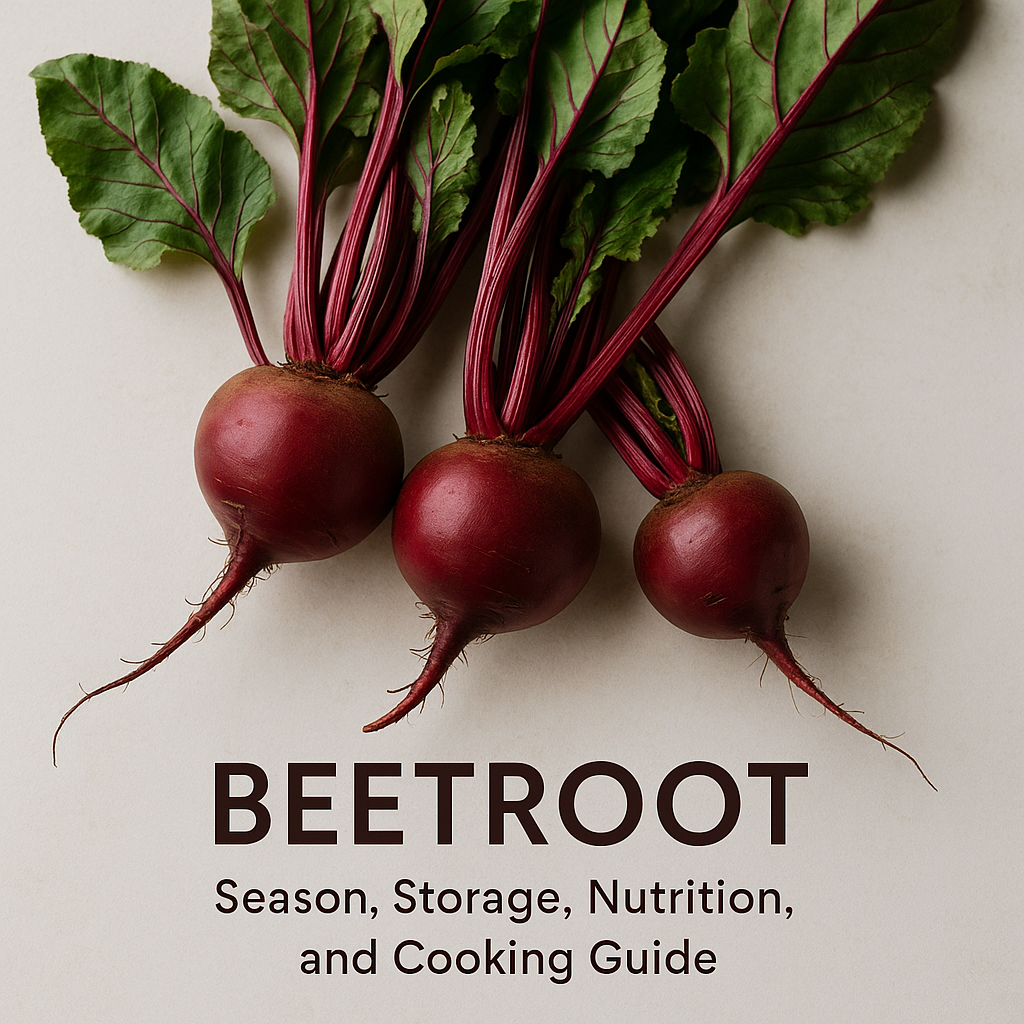
Beetroot is characterized by its deep red or purple bulbous root, with long green leaves that extend above ground. The leaves are also edible and similar in taste to chard. The root is often round, though some varieties may have distinct shapes such as cylindrical or oval. The flesh of the beetroot is juicy, earthy, and can be sweet when cooked. Its staining pigment, betalain, gives beets their signature color, which can also range into golden or white depending on the variety.
💪 Benefits
Beetroots are celebrated not only for their taste but also for their nutritional profile. Rich in essential nutrients, fiber, vitamins, and minerals, beetroots provide several benefits when incorporated into a balanced diet:
- Dietary Fiber: Beets are a good source of fiber, supporting healthy digestion.
- Vitamins and Minerals: High in vitamin C, iron, and manganese.
- Nitrates and Antioxidants: The natural nitrates and antioxidants in beets contribute to overall health and wellbeing.
🌍 Origin
Beetroot has its roots deeply planted in the Mediterranean region. Historically, it was primarily cultivated for its leaves. The transition to appreciating the root itself is relatively recent. Nowadays, beetroots are grown worldwide and are a staple in many traditional cuisines, particularly in Eastern European dishes like borscht.
📅 Harvest Season
The prime season for beetroots is from June through October, although they can be found year-round in markets, thanks to modern farming techniques and storage methods. Harvested beets are often available fresh, canned, or pickled.
🧺 Varieties
Beetroot comes in several varieties, each with its own unique flavor and color profile. The most common varieties include:
- Red Beets: The classic variety, known for its deep, earthy flavor and vivid color.
- Golden Beets: Milder and sweeter than their red counterparts, with a bright yellow-orange color.
- Chioggia Beets: Also known as candy cane beets, they have a unique ringed interior of red and white.
- White Beets: Less common, with a milder taste and no staining pigments.
🛒 How to Choose (Checklist)
Ensuring the highest quality beets is essential for both flavor and nutritional value. Use this checklist to select the perfect beetroot:
- Look for beets with a firm, smooth skin, free of blemishes.
- Choose beets that are heavy for their size, which indicates juiciness.
- If selecting beets with greens attached, choose crisp, vibrant greens.
- Avoid beets that are soft or shriveled.
🍽 Cooking & Eating Methods
Beetroot is incredibly versatile in the kitchen, lending itself to a variety of cooking methods, each bringing out distinct flavors and textures:
- Raw: Use a mandolin to thinly slice beets for salads or carpaccio.
- Roasted: Roasting concentrates the flavors and sweetness of beets. Simply toss with olive oil, salt, and pepper, and roast at 400°F for about 45 minutes.
- Boiled: Boiled beets can be used in salads, soups, or mashed as a side dish.
- Pickled: Pickling adds a tangy dimension, perfect for sandwiches or as a side dish.
- Juiced: Combine with other vegetables or fruits for a refreshing and nutrient-packed juice blend.
❄ Storage Tips
Proper storage of beetroots can significantly extend their shelf life while preserving their flavor and nutritional value:
- Remove greens from the root and store separately; they can be treated like spinach or chard.
- Store beetroots unwashed in a plastic bag in the fridge's crisper drawer to maintain moisture.
- Beetroots can last for several weeks to months when stored properly.
❓ FAQ (3 questions)
Q: Can beetroot be eaten raw?
A: Yes, beetroots can be eaten raw. They add a crunchy texture and are delicious when thinly sliced or grated into salads.
Q: How can I reduce the earthy taste of beetroot?
A: Pairing beetroots with fresh citrus or acidic ingredients like vinegar can balance their earthy flavor. Roasting also enhances their natural sweetness, which can help reduce the earthiness.
Q: Are beet leaves edible?
A: Yes, beet leaves are edible and nutritious. They can be cooked similarly to other leafy greens like spinach and are rich in vitamins.