🍓 Beet Greens: Season, Storage, Nutrition, and Cooking Guide
Beet greens, often overshadowed by the popular beetroot, are a nutritious and versatile vegetable in their own right. This article explores all you need to know about beet greens, from their characteristics and benefits to how you can store, cook, and make the most of them throughout their seasonal availability.
✨ Characteristics
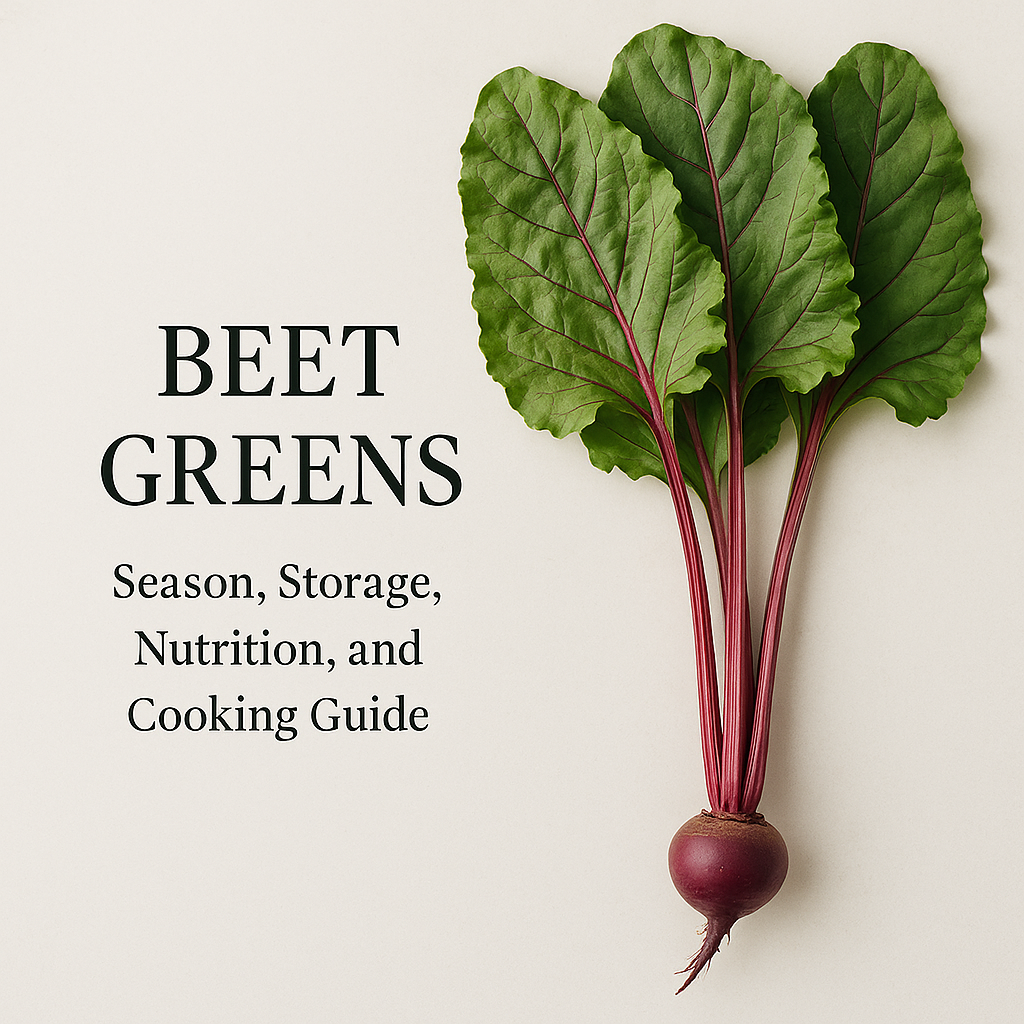
Beet greens are the leafy tops of the beetroot plant. These vibrant green leaves come with red veins running through them, much like Swiss chard, to which they are closely related. The leaves are tender and have a sweet, earthy flavor, which intensifies when cooked. They are packed with fiber and can serve as an excellent substitute for other leafy greens like spinach or kale in various recipes.
💪 Benefits
Beet greens are highly nutritious and an excellent addition to a healthy diet. Here are some key benefits:
- Rich in Vitamins and Minerals: Beet greens are an excellent source of Vitamin K, Vitamin A, iron, and calcium, essential nutrients for maintaining healthy bones and body functions.
- Boosts Heart Health: These greens are abundant in nitrates, which are compounds that can help enhance blood vessel function, promoting cardiovascular health.
- Supports Digestive Health: The high fiber content in beet greens aids in promoting a healthy digestive tract.
🌍 Origin
Beet greens have a long history and are believed to have originated from the coastal regions of the Mediterranean. Their use dates back to antiquity where they were cultivated not only for their roots but primarily for their nutritious greens. Over time, beets and their greens have spread worldwide and are now enjoyed on global menus, particularly in Europe and North America.
📅 Harvest Season
Beet greens are typically available during the late spring through late fall. They are often harvested alongside the beetroot, and both parts are used in various culinary applications. Depending on the climate, beet greens can be available year-round if grown in controlled environments or warm regions.
🧺 Varieties
While most people are familiar with the common red beet, there are several varieties of beets, each with their distinct colored leaves, including:
- Golden Beets: Known for their bright golden yellow roots, these beets have greens that are slightly sweeter in taste.
- Chioggia Beets: Originally from Italy, these beets feature attractive concentric circles of red and white in the root, with greens that boast a mild flavor.
- White Beets: These beets have a more subtle flavor and less earthy taste; their greens are tender and less sweet.
🛒 How to Choose (Checklist)
When selecting beet greens at the market, make sure to check the following:
- Look for vibrant, unwilted greens with firm stems.
- Check for any signs of discoloration or holes, which can indicate pest damage.
- The roots attached should be firm with smooth skin.
- Avoid bundles with mushy or soft leaves.
🍽 Cooking & Eating Methods
Beet greens can be used in a variety of culinary creations. Here are some popular methods for cooking and consuming beet greens:
- Steamed or Sautéed: Quick and easy, steaming or sautéing beet greens enhances their flavor and makes them a perfect side dish.
- In Soups and Stews: Add chopped beet greens towards the end of cooking to soups and stews for a nutritious boost.
- Raw in Salads: Use young, tender beet greens raw in salads for a crisp texture and fresh taste.
❄ Storage Tips
To maximize the freshness and shelf life of beet greens, consider the following storage tips:
- Separate the greens from the beetroot if still attached.
- Rinse the greens under cold water to remove any dirt and pat dry.
- Wrap the greens in a damp paper towel and store them in a plastic bag in the refrigerator's crisper drawer.
- Avoid washing the greens until you're ready to use them to prevent spoilage.
❓ FAQ
What do beet greens taste like?
Beet greens have a slightly earthy taste similar to Swiss chard. Their flavor profile is a mix between mild spinach and stronger kale notes, and cooking them can enhance their natural sweetness.
Can I freeze beet greens?
Yes, you can freeze beet greens. It is best to blanch them first by boiling briefly in water, then plunging them into ice water to halt the cooking process. After drying thoroughly, place them in airtight containers or freezer bags for future use.
Are beet greens safe to eat raw?
Yes, beet greens are safe to eat raw. They make a great addition to salads and smoothies, offering a refreshing and nutritious touch to raw dishes.