🍓 Bamboo Shoot: Season, Storage, Nutrition, and Cooking Guide
Bamboo shoots are the edible sprouts of various bamboo species that offer unique flavors and numerous culinary applications. Whether you are a seasoned gourmet or a curious food explorer, understanding more about bamboo shoots can enhance your cooking repertoire and provide you with valuable insights into this versatile ingredient. This guide covers everything from their characteristics and benefits to their origin, varieties, and cooking methods.
✨ Characteristics
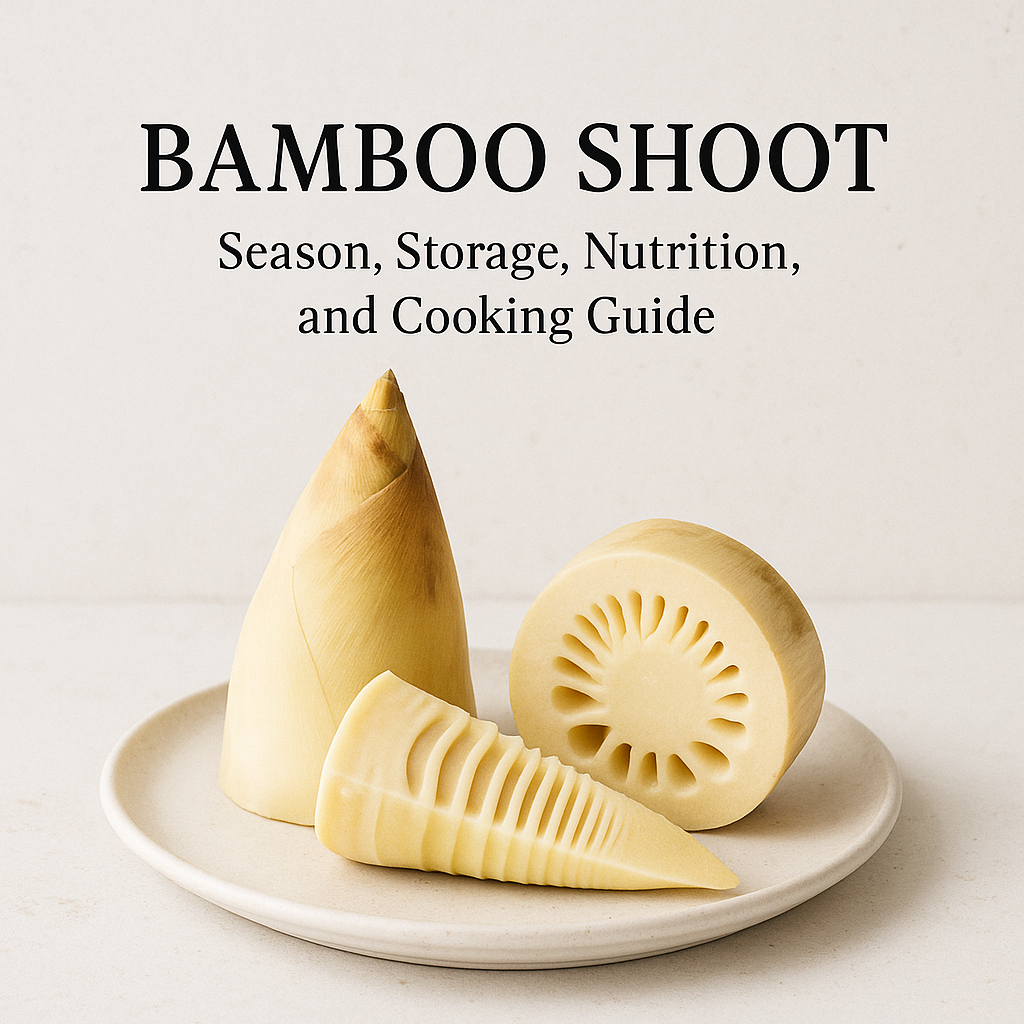
Bamboo shoots are young, tender stems of the bamboo plant, typically harvested shortly after they emerge from the ground. They are crisp and crunchy with a subtle flavor that can be likened to corn or asparagus. The outer sheath of the bamboo shoot is tough and fibrous, which needs to be peeled away to reveal the ivory-colored flesh inside. When prepared correctly, bamboo shoots add a delightful texture and mild taste to various dishes, making them a popular ingredient in Asian cuisine.
💪 Benefits
Bamboo shoots are not only appreciated for their culinary versatility but also for their nutritional profile. They are low in calories and fat, making them an excellent choice for those watching their weight. Bamboo shoots are also a good source of dietary fiber, which aids in digestion and helps maintain a healthy gut. Additionally, they provide essential vitamins and minerals such as vitamin B6, potassium, and manganese. The fiber content helps in reducing cholesterol levels and offers some protection against heart disease.
🌍 Origin
Bamboo as a plant is native to Asia, Africa, and parts of the Americas, with bamboo shoots being predominantly used in Asian cuisine. China is one of the largest producers and consumers of bamboo shoots, but they are also popular in countries like Japan, Thailand, and India. In these regions, bamboo shoots have been an integral part of the local diet for centuries, valued for their nutritional benefits and versatility in cooking.
📅 Harvest Season
The harvest season for bamboo shoots largely depends on the species and geographic location. However, in general, the ideal time for harvesting bamboo shoots is during spring. It is during this period that the shoots are most tender and flavorful. In tropical regions, the harvest may extend into early summer or even year-round, but the peak harvest in subtropical and temperate zones typically occurs around March through May.
🧺 Varieties
There are several varieties of bamboo shoots, each with distinct features and culinary applications. The most common varieties include:
- Moso Bamboo: Predominantly found in China, Moso Bamboo shoots are large and cylindrical, preferred for their tender texture.
- Madake Bamboo: Native to Japan, these shoots are smaller, with a more delicate flavor and texture.
- Sweet Bamboo: Mostly grown in Thailand, this variety is praised for its sweeter taste and softer texture.
- Huangwenzhu Bamboo: Known for its mild flavor, making it popular in salads and light dishes.
🛒 How to Choose (Checklist)
When selecting bamboo shoots, consider the following checkpoints to ensure you choose the freshest and best quality:
- Check for firm, heavy shoots with a fresh, vibrant color.
- Avoid shoots with dry or brown outer layers.
- The shoots should not have a strong or unpleasant odor.
- Opt for smaller, thinner shoots for tender and sweeter flesh.
🍽 Cooking & Eating Methods
After acquiring fresh bamboo shoots, preparation typically involves removing the fibrous outer layers to access the edible core. Here are some popular cooking methods:
- Boiling: Sliced bamboo shoots can be boiled in water to eliminate any bitterness or astringency.
- Stir-frying: They can be added to stir-fries with vegetables and proteins for a crisp texture.
- Pickling: Bamboo shoots can be pickled for a tangy and spicy flavor addition to meals.
- Soups and Stews: Bamboo shoots are traditionally used in Asian soups and stews to enhance flavor.
❄ Storage Tips
To preserve the quality of bamboo shoots, proper storage is key. Freshly harvested bamboo shoots can be stored in the refrigerator for up to two weeks. They should be kept in a plastic bag or an airtight container to maintain freshness. For extended storage, bamboo shoots can be blanched and frozen, or they can be canned in their liquid which significantly prolongs their shelf life, allowing for preservation for up to six months.
❓ FAQ (3 questions)
- Q: Is it necessary to cook bamboo shoots before eating?
- Q: Can bamboo shoots be eaten by everyone?
- Q: Are canned bamboo shoots as good as fresh ones?
A: Yes, bamboo shoots should be cooked prior to consumption as raw shoots contain toxins, which are neutralized upon cooking.
A: While generally safe, individuals with allergies to bamboo or those advised to follow a low-fiber diet should consult their healthcare provider before consuming.
A: Canned bamboo shoots offer convenience and longer shelf life, although they may lose some texture and flavor compared to fresh shoots. Always choose canned varieties without added preservatives.